





Introduction
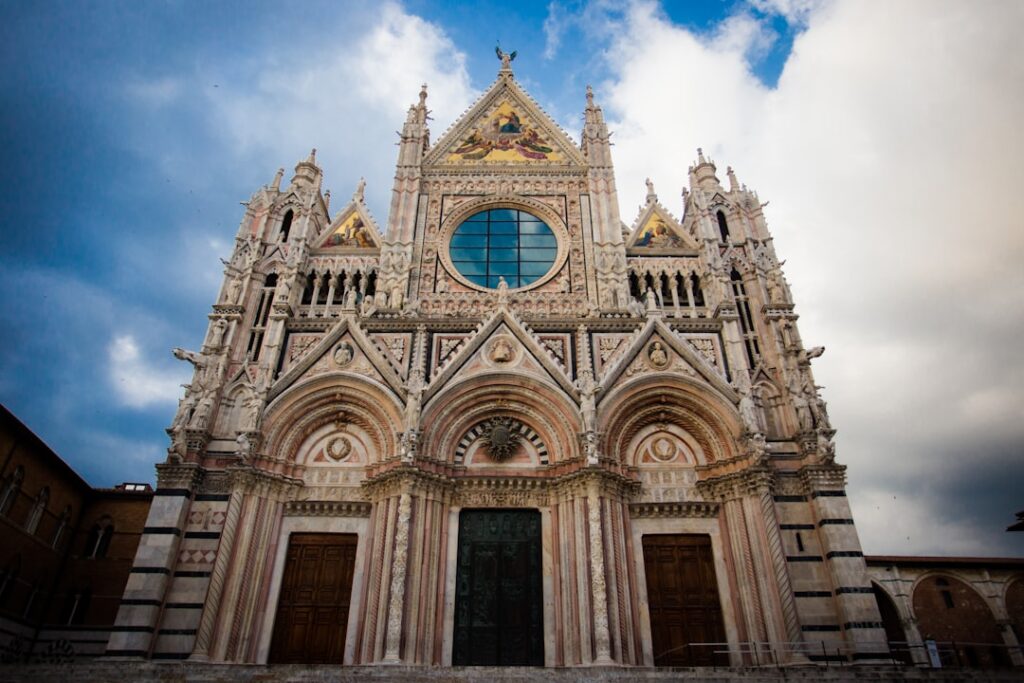
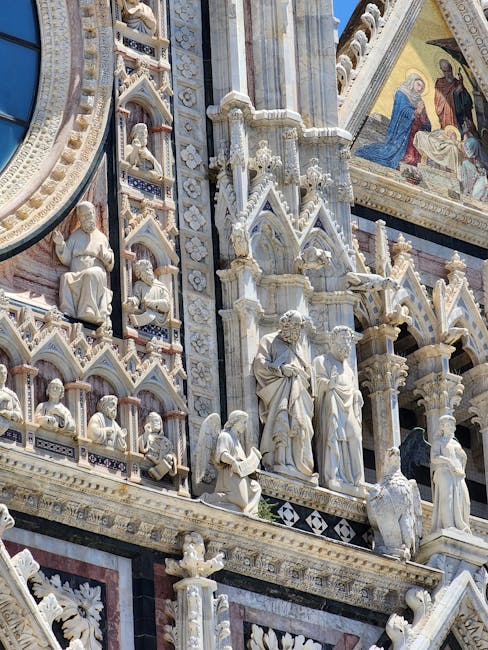
The Duomo di Siena — officially the Cattedrale di Santa Maria Assunta — is more than just one of Tuscany’s architectural gems: it’s a place where stone, light and sound have met for centuries. Sitting at the heart of the city on the Piazza del Duomo, 8, 53100 Siena SI, Italy, the building draws the eye with its polychrome marble façade of white, green and pink, but it also captivates the ear. The relationship between the Duomo and sacred music runs deep and in many forms: it includes daily liturgy, grand civic ceremonies, the evolution of vocal and instrumental techniques, and the way space was designed to shape sound.
For today’s visitor, stepping inside the cathedral is to feel the continuity of a musical practice that spans centuries. Gregorian chants that accompanied medieval offices, Renaissance polyphony, Baroque masses and modern concerts all coexist in the same nave, on the same inlaid marble floors that depict biblical scenes. Hearing a choir or organist in this space is not mere entertainment: it’s an auditory journey through the city’s religious and artistic history.
With that in mind, it’s important to consider not only the scores and manuscripts produced or kept in Siena, but also the institutions that sustained them: the Cappella Musicale del Duomo, the musical archives, the Museo dell’Opera del Duomo and the Biblioteca Piccolomini. These bodies ensured the transmission of repertoires and the training of musicians who animated the liturgy. The connection between place and music is therefore material (instruments, scores, choir stalls), architectural (vaults, bays, side chapels) and human (maestri di cappella, choristers, organists).
This article offers a thorough exploration of that historical link. We’ll look at how musical practices evolved in the Duomo, how the architecture affects the acoustics, the specific places where music is still heard today — like the Biblioteca Piccolomini and the Museo dell’Opera del Duomo (Piazza del Duomo, 8, 53100 Siena) — and give practical tips for listening, visiting and extending the sound experience. Finally, you’ll find useful information: exact addresses, indicative prices in euros, opening hours for the main monuments and recommendations for getting the most out of liturgical concerts or recitals held in the city.
 Click here to book your ticket for the Cathedral and the Biblioteca Piccolomini
Musical history of the Duomo: from medieval roots to the Renaissance
The Duomo di Siena’s musical role goes back to the earliest centuries of local Christianity. In the Middle Ages, liturgy dominated the cathedral’s soundscape: Gregorian chant, processions and daily offices marked the ecclesiastical year. As an independent republic in the Middle Ages, Siena invested in its cathedral not only for religious glory but also to assert civic prestige. The gradual creation of a cappella (the Cappella Musicale del Duomo di Siena) formed a stable core of musicians — chapel masters, singing clerics, choristers — charged with leading services and composing pieces for special occasions.
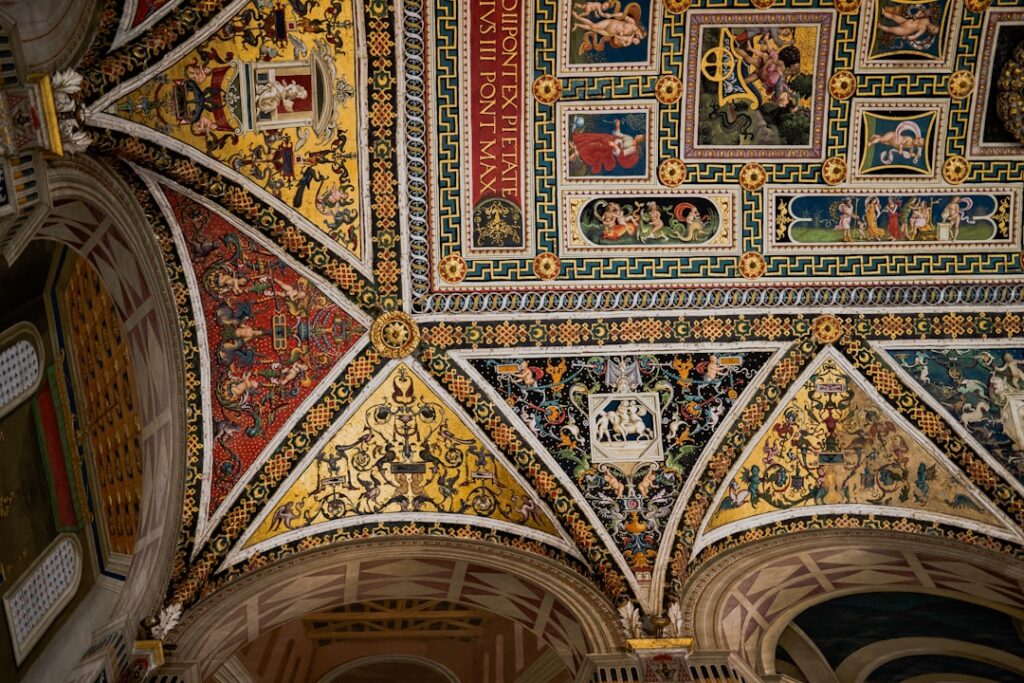
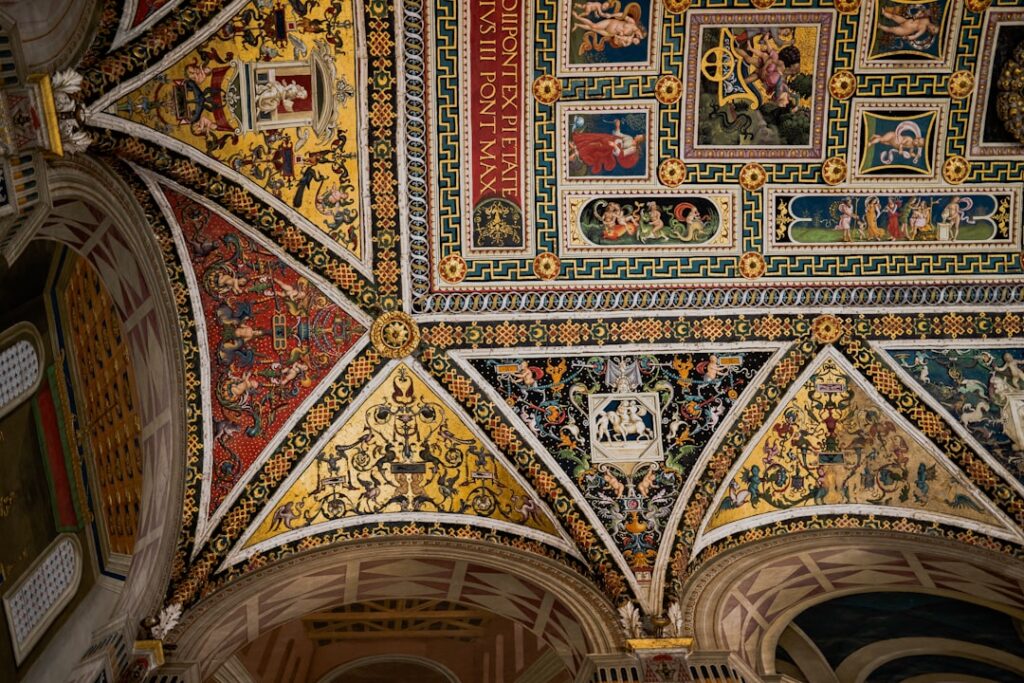
Musical archives and surviving manuscripts testify to the richness of the repertoire: antiphons, masses, motets and sequences. The Renaissance saw the high point of sacred polyphony, and Siena was no exception. Local masters embraced new polyphonic forms and techniques, and the cathedral library — especially the Biblioteca Piccolomini, located inside the Duomo (Piazza del Duomo, 8, 53100 Siena) — became a vital repository for liturgical codices and antiphonaries.
The influence of regional musical figures and innovations such as the notation system promoted by Guido of Arezzo (from Arezzo, but widely disseminated throughout Tuscany) helped standardize teaching of chant and the reading of notation. In Siena, choir organization and the training of choirboys developed around the liturgical and aesthetic demands of the time. Commissions for works for major occasions — consecrations, patronal feasts, civic councils — gave the Cappella Musicale opportunities to produce a solemn and refined repertoire.
Click here to join a guided walking tour of Siena’s Duomo
Architecture, acoustics and instruments: how the Duomo shapes sound
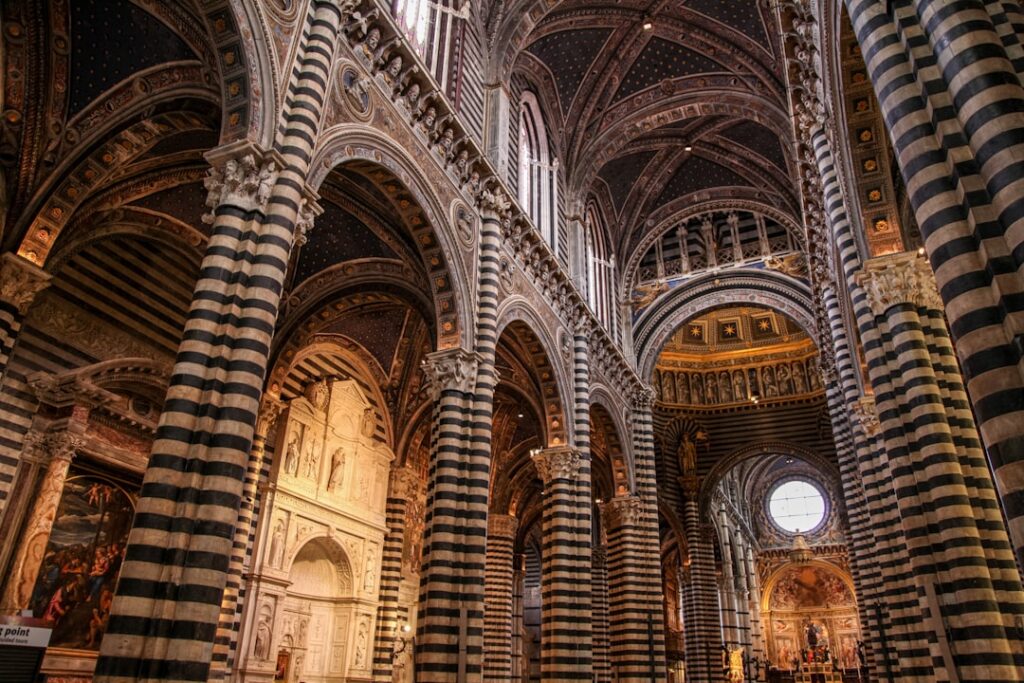
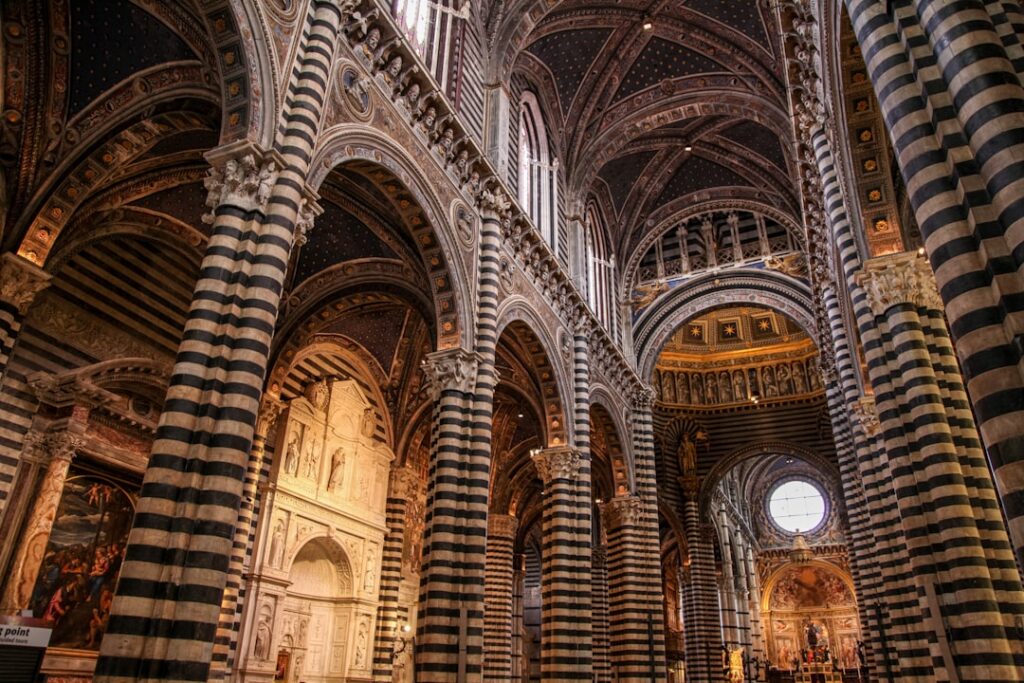
The relationship between architecture and music is obvious in the Duomo di Siena. Structural choices — pointed vaults, polychrome marbles, side chapels, the nave’s proportions — alter how sound travels. The marble’s reflective surfaces boost resonance, enriching harmonics and creating an enveloping sonic atmosphere that’s ideal for polyphony and a cappella singing. Yet that same reverberation can make some musical textures less intelligible if they aren’t adapted to the space.
The cathedral’s historic organ (organo della Cattedrale di Siena) has been renovated and restored multiple times over the centuries. Positioned in the gallery, it converses with choirs and soloists while benefiting from the building’s resonance. Organ concerts, often programmed by the Cappella Musicale or the Fondazione Opera della Metropolitana, demonstrate how integral the instrument is to the Duomo’s sound economy.
Beyond the organ, other instruments — viols, cornetti, small chamber ensembles — are used during solemn masses and concerts. Composers and chapel masters took the acoustic particularities into account, writing broad vocal textures, clear counterpoint and extended phrasing so the resonance could enhance melodic lines. For visitors, sitting in a side bay often provides a balance between clarity and depth; in contrast, at the center of the nave reverberation reaches its peak.
Click here to get your skip-the-line ticket for the Duomo
Sacred music today: concerts, liturgy and visitor experiences
Today, the Duomo di Siena still maintains an active musical life. The Cappella Musicale continues the tradition of sung offices, and numerous sacred and secular concerts are scheduled, especially during the tourist season and on major religious feasts (Christmas, Easter, the Assumption). Venues where music is heard include the Cattedrale di Santa Maria Assunta (Piazza del Duomo, 8), the Battistero di San Giovanni (near the Duomo — check addresses locally) and the Museo dell’Opera del Duomo (Piazza del Duomo, 8), which sometimes hosts thematic events.
Practical information for attending events:
- Main address: Cattedrale di Santa Maria Assunta, Piazza del Duomo, 8, 53100 Siena SI, Italy.
- Typical Duomo opening hours: April–September 10:30–19:00 (last admission 18:30); October–March 10:30–16:30 (last admission 16:00). Check the official site before your visit.
- Museo dell’Opera del Duomo: Piazza del Duomo, 8, 53100 Siena — indicative hours 10:00–17:30.
- Indicative prices: combined Duomo + Museo ticket ≈ €15 (full), €12 (reduced); museum only ≈ €8; Biblioteca Piccolomini visits sometimes included or with a supplement ≈ €3.
- Sacred concerts: prices vary, generally €10–€30 depending on the program; special concerts and festivals can reach €40–€50.
Practical tips: book tickets in advance, especially in high season; favor morning offices or late-afternoon concerts for a warmer acoustic; arrive 20–30 minutes early for a liturgical concert to secure a comfortable seat. Photography during services is generally prohibited — respect the rules of the place. For specific concerts, check the Opera della Metropolitana di Siena website or contact the Museo dell’Opera (Piazza del Duomo, 8) for schedules and reservations.
Click here to book your seat for an opera concert
Visit and listen: suggested route and local tips
To fully experience the Duomo and its sacred music, here’s a suggested route and some local tips. Start at the Piazza del Duomo: take in the exterior of the Cattedrale di Santa Maria Assunta (Piazza del Duomo, 8) at sunrise or sunset when the marbles take on golden hues. Then head to the Museo dell’Opera del Duomo (Piazza del Duomo, 8) to understand the genesis of the works, see historical instruments and view old scores on display.
After the museum visit (indicative hours 10:00–17:30; price ≈ €8), enter the cathedral. If possible, plan your visit around a sung office — a solemn Sunday mass, for example — to hear the Cappella Musicale in its liturgical setting. Combined tickets (≈ €15 full fare) often include access to the Biblioteca Piccolomini, where illuminations and manuscripts give a direct sense of the singers’ working materials.
Local practical tips:
- Dress respectfully to access religious sites (shoulders and knees covered).
- Guided groups should book in advance; the cathedral often limits group size to preserve acoustics and serenity.
- If you want to hear the organ, check recital schedules: the organ is frequently played during special concerts and summer festivals.
- For lovers of scores and early music, ask the Museo dell’Opera desk or the Biblioteca Piccolomini about archive access conditions (sometimes consultation is by appointment only).
- Allow about 1 to 2 hours for a full visit to the Duomo + Museum + Biblioteca if you plan to take your time.
Click here to book a Siena city tour with Duomo entry
Click here to buy the cathedral complex audioguide pass
Conclusion
The Duomo di Siena is not just a monument to admire — it’s a space to listen to. The cathedral, its chapels, library and museum form a setting where sacred music has found an exceptional home: architecture magnifies the sound and liturgical practice has shaped the city’s cultural life for centuries. Understanding the historical link between the Duomo and sacred music reveals how a religious and civic community conceived sound as a vehicle for devotion, identity and prestige.
For the traveler, that means a Duomo visit is best planned around a musical moment — a mass, an organ recital, a polyphony concert — to turn a simple visual discovery into an immersive experience. Locally, Sunday offices, summer concerts and events organized by the Opera della Metropolitana or the Museo dell’Opera are prime opportunities to hear music in its original context. Key addresses are simple: Cattedrale di Santa Maria Assunta, Piazza del Duomo, 8, 53100 Siena SI, Italy; Museo dell’Opera del Duomo, same address; Biblioteca Piccolomini inside the Duomo. The hours and prices mentioned in this article are indicative — it’s recommended to check up-to-date information on official sites or by contacting the Duomo offices directly.
Finally, keep a few common-sense rules in mind: respect the liturgy, be discreet with photography, book ahead for concerts and guided tours, and pay attention to acoustics — sit or stand in the suggested spots to enjoy the best sonic balance. By combining historical curiosity, a sensitive ear and respect for the site, every visitor can discover in Siena not only an architectural marvel but a living musical tradition that still resonates at the heart of the city.
Click here to book an exclusive morning Duomo visit