





Introduction
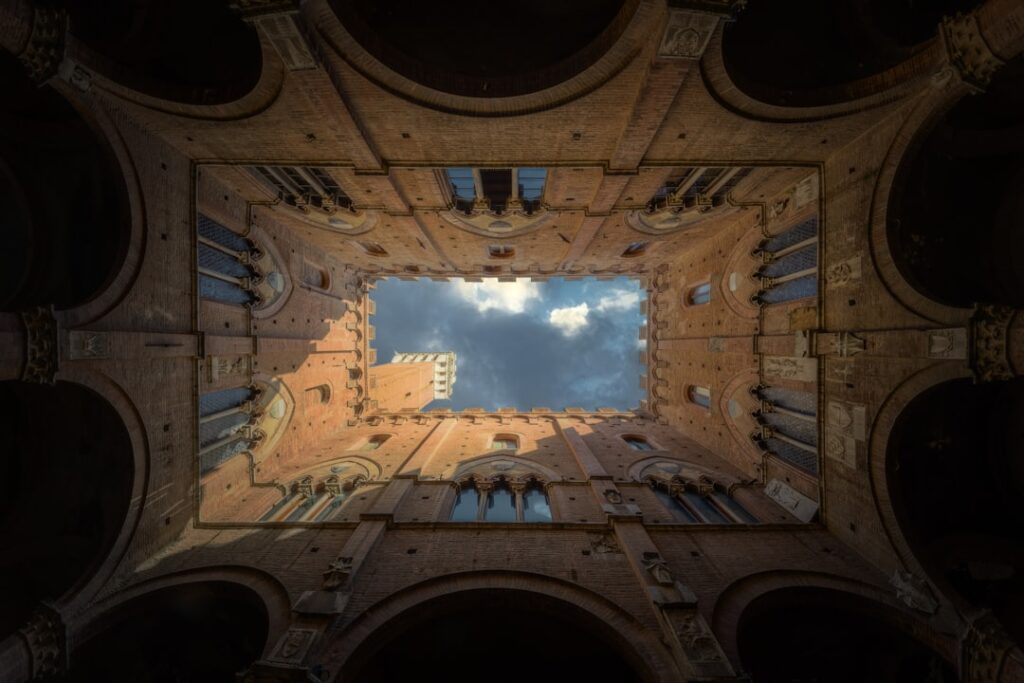
Siena reveals itself not only through its grand, monumental squares but also in the small, tucked-away gaps: intimate courtyards, silent cloisters and cortili hidden behind wooden gates or medieval porticoes. These « cortili » — small Italian inner courtyards — often concentrate the social, religious and domestic history of the city. In the shadow of terracotta façades and under the gaze of stone gargoyles, they offer another way to experience Siena: slower, tangible, and often more human. By slipping into these protected spaces you leave the crowds of the Piazza del Campo and the Duomo behind to discover hanging gardens, forgotten frescoes, modest fountains and stairways that whisper centuries of stories.
This article is a lively, practical guide to discovering Siena’s hidden cortili. It gathers exact addresses, opening hours, admission prices (when applicable), immersive descriptions and local tips — everything you need to plan visits off the usual tourist track. Each courtyard is described like a small stage where different scenes play out: sometimes religious, sometimes palatial, sometimes domestic. You’ll find suggestions for the best time of day to photograph or quietly savor each spot, recommendations to avoid queues, and tips on combining these discoveries with other Siena highlights.
If you’ve already walked the Piazza del Campo, admired the Duomo’s polychrome façade, or wound your way through the centro storico, this guide will help you access more discreet places — some easy to reach, others only open during guided visits or occasional events. Whether it’s the painted cloister of an old hospital, a palazzo courtyard with terraced gardens, or a small green oasis overlooking the roofs, each cortile has its own palette of colors, scents (lavender, boxwood, damp stone) and human stories.
Before you begin, note that opening hours in Siena can change with the season (tourist high season: April to October) and with local events (the Palio, festivals, temporary exhibitions). Prices listed in this guide are in euros and reflect typical admission rates: several places offer concessions for students, seniors and children. Above all, respect these spaces as the Sienese do: keep quiet, limit photos when requested, and dress appropriately in religious sites. Ready to stroll? Follow me into the corners where Siena reveals itself differently.

Cortile e Chiostro di Santa Maria della Scala — A hospital turned museum
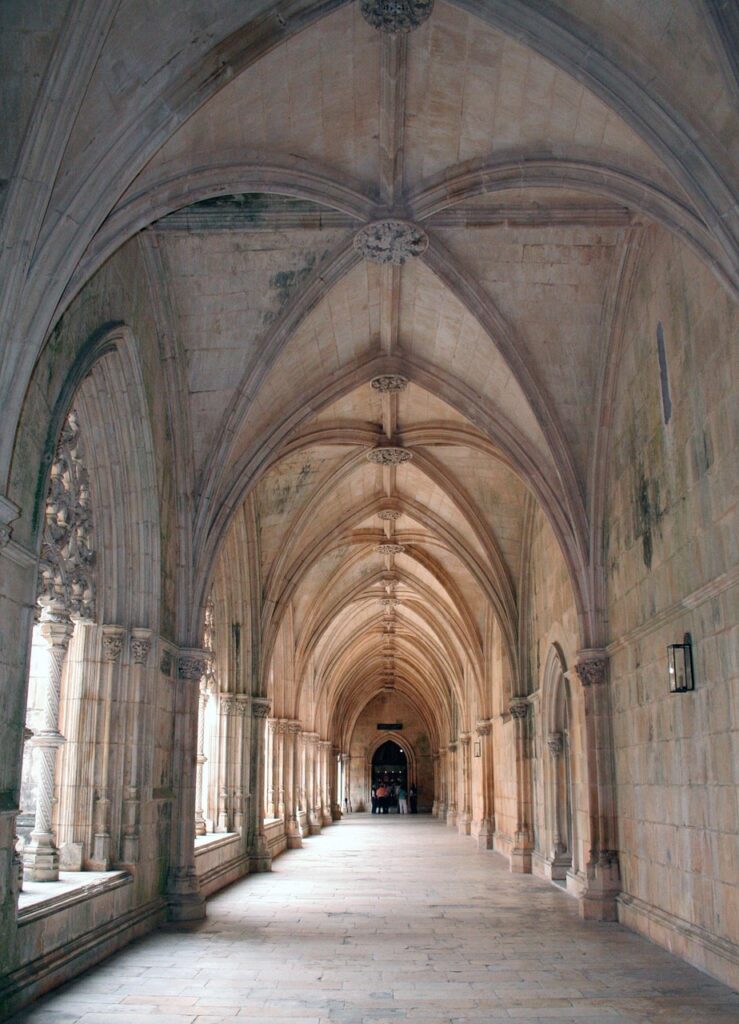
The Complesso Museale di Santa Maria della Scala occupies an entire stretch of the north side of the Piazza del Duomo and contains one of Siena’s most evocative cortili. Once a hospital for pilgrims and the poor, Santa Maria della Scala has preserved cloisters and inner courts (chiostri) where frescoes and hospital structures converse with filtered light. The exact address is: Piazza del Duomo, 2, 53100 Siena SI, Italy. The site is officially named Complesso Museale Santa Maria della Scala.
Opening hours: usually daily 10:00–19:00 (last entry 18:00). Admission: combined tickets for the Duomo area and Santa Maria della Scala vary; a simple entry to the complex is generally around ≈ €8.00 (reduced rates available). As always, check official schedules before your visit.
The main courtyard (Chiostro del Morto or the confraternities’ cloister depending on the section) mixes round arches, colonnades and resting areas. The walls still bear traces of pictorial cycles, ex‑votos and inscriptions that recount epidemics, healings and medieval charity work. Standing in the center, the stone acoustics are special: a measured footstep hums softly while guides’ whispers and passing breezes transform into a discreet kind of hymn.
Practical tips:
- Arrive early in the morning to enjoy the soft light that enters the cloister and to avoid tour groups.
- Visits often include multimedia installations; rent an audio guide if available to place the frescoes in context.
- The ticket office sometimes sells a combined ticket that includes the Duomo and the Battistero; it can be better value if you plan to visit the whole complex.
- Think about photographing the capitals’ details and the wooden door nails: they tell stories of everyday gestures from the past.
 Click here to buy the cathedral complex pass with audioguide
Cortile of the Palazzo Pubblico and Museo Civico — The courtyard of civic power
The Palazzo Pubblico, Siena’s historic government seat, faces the famous Piazza del Campo. Its official address is Piazza del Campo, 1, 53100 Siena SI, Italy. Inside, the Museo Civico occupies several rooms and, notably, an inner courtyard that long served as a meeting place, courtroom and venue for public art. The Palazzo Pubblico’s courtyard (sometimes called the Cortile del Podestà) is a space that expresses the tension between civic authority and everyday urban life.
Museo Civico opening hours: generally 10:00–19:00, daily, with variations in low season. Admission: about ≈ €10.00 for standard entry (discounts and combined tickets possible). The Palazzo Pubblico and its Torre del Mangia often offer special guided visits that include access to the inner courtyards during cultural events.
The courtyard is paved, framed by arcades and punctuated by Gothic windows and the coats of arms of families who once governed the Sienese republic. In golden hour the light chisels statues’ profiles and highlights old graffiti and the scars left by centuries. It’s not a religious cloister: it’s the hearth of a secular city, and the stone speaks of debates, trials and public festivities.
Practical tips:
- Climb the Torre del Mangia (tickets from the Palazzo Pubblico ticket office if you take a combined ticket) for a bird’s‑eye view of the courtyard and Piazza del Campo.
- Temporary exhibitions at the Museo Civico are often quieter around noon; use that time to combine indoor visits with a coffee break on the terrace near the square.
- The courtyard can be closed for official ceremonies: check the municipal calendar if you want to see it from the outside or attend an event.
Click here to book a city tour with Duomo entry
Small Garden and Cortile of the Fortezza Medicea — A panoramic oasis and urban gardens
The Fortezza Medicea is a fortified bastion that has been turned into a large urban park. Address: Viale Mazzini, 6, 53100 Siena SI, Italy. Although the Fortezza itself is a military structure, it hides green spaces and small arranged courtyards where Sienese meet for picnics, jogging or to watch the sunset. The cortile/garden of the Fortezza is less formal than a cloister, but it offers remarkable views over the Tuscan countryside and Siena’s rooftops.
Hours: the park is generally open daily 8:00–20:00 (longer hours in summer), and access to the garden is often free. Some interior parts (fortress rooms and exhibition spaces) may require a ticket during cultural events (prices vary, usually between free and €5.00 for temporary exhibitions).
The courtyard‑garden features terraced lawns, rows of trees and benches with unique perspectives on the Cattedrale di Santa Maria Assunta and the surrounding hills. It’s an ideal spot for a contemplative break away from the cobbled streets and to watch the city take on ochre hues at dusk.
Practical tips:
- Prefer early evening to enjoy the sunset over the city; bring a small blanket if you plan to sit on the grass.
- There are sometimes food markets and free concerts in summer; check the local program.
- The park is stroller‑friendly and accessible to most visitors, but some recessed areas are gravelled.
Cortile del Battistero and Cloisters around the Duomo di Siena — Sacred courts in the religious heart
Between Siena Cathedral (Duomo di Siena, officially the Cattedrale di Santa Maria Assunta) and the Baptistery of San Giovanni lie inner spaces that act as a transition between sacred fervor and civic life. Duomo address: Piazza del Duomo, 8, 53100 Siena SI, Italy. The Battistero is part of the same monumental ensemble and sometimes opens onto small side courts accessible with the combined ticket.
Duomo hours: typically 10:00–19:00, but often more restricted in summer or during religious services. Price: the combined « Opera del Duomo » ticket is estimated at ≈ €15.00 (includes access to the Duomo, Baptistery, Museo dell’Opera and sometimes the panorama). Students and EU residents may receive discounts; there are also separate tickets for specialized guided tours.
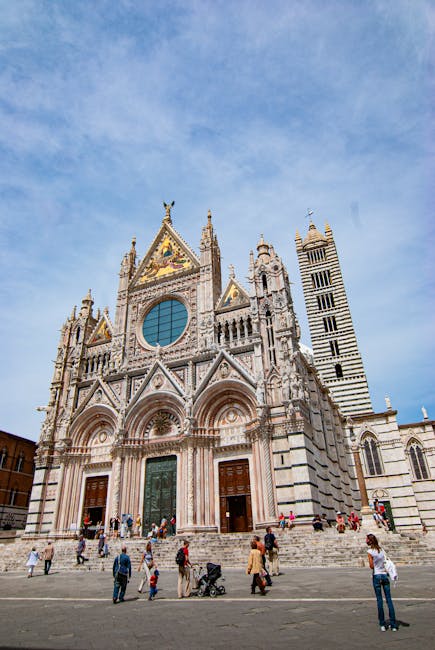
The small courts around the Duomo are transitional spaces where Romanesque and Gothic architecture speak to later Renaissance additions. Take time with reliefs, the Baptistery’s bronze doors and mosaics tucked into niches. The atmosphere is solemn: footsteps echo, light plays on polychrome marble, and the air sometimes carries the scent of church wax.
Practical tips:
- Choose an off‑season visit to avoid heavy crowds. The first hours after opening usually provide the best light for photos.
- If you want a close look at the Baptistery, buy the « Opera del Duomo » combined ticket — it’s often more economical.
- Respect service times: parts of the Duomo and its cloisters may close during mass.
Click here to book your ticket for Siena Cathedral
Click here to book a guided tour with Duomo access
Palazzo Chigi-Saracini and its small, music‑filled courtyards
The Palazzo Chigi-Saracini is a historic palazzo turned cultural center and associated with the Accademia Musicale Chigiana (although the academy’s main offices are located elsewhere in Siena, the palace name is tied to musical tradition). Address: Via di Città, 89, 53100 Siena SI, Italy (check the entrance door since access can be restricted depending on concerts and masterclasses). This palazzo hides elegant courtyards where music and stone meet: small arcades, inner gardens and salons looking onto the courtyard.
Hours and prices: access to the inner courtyards is often linked to concerts and events (variable pricing, generally €10.00–€25.00 depending on the program). It’s often possible to attend recitals during the high season (July–September) by buying a ticket at the box office or online.
Chigi‑Saracini’s courtyard has an aristocratic parlor atmosphere. During a concert the natural reverberation of the stone produces an intimate acoustic rare to find: the music seems to arise from the courtyard itself. If you’re lucky enough to attend an event, wander beforehand to admire carved window details and carefully arranged floral displays.
Practical tips:
- Book recital tickets in advance; space is limited and the setting is highly sought after.
- If you’re a musician, ask about masterclasses and public auditions: some grant access to the inner courtyards.
- Ask staff if a palace tour is scheduled the day you visit — it can give access to areas usually closed to the public.
Click here to attend an opera concert in the heart of Siena
Hidden courts and porticoes on Via di Città and Via Banchi di Sopra — A walk among domestic cortili
Siena’s historic shopping streets, particularly Via di Città and Via Banchi di Sopra, hide modest gates that open onto small private courtyards — domestic cortili still inhabited by families or converted into artisan workshops. These courts are often invisible from the street but accessible when doors are open (especially in the morning or during heritage days).
Access points and approximate addresses: wander between Piazza del Campo and the Duomo, especially around Via di Città 40–90 and Via Banchi di Sopra 10–60. Most courts are private; access depends on the goodwill of residents and owners. Usually free, but always ask permission before entering.
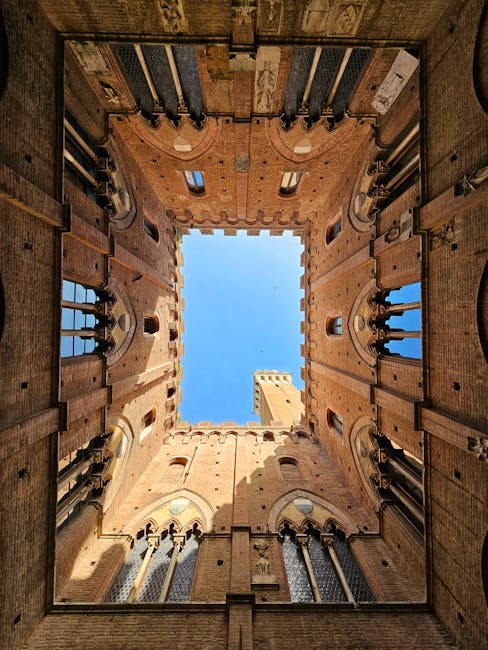
These cortili are capsules of everyday life: geranium pots, sun‑soaking cats, a bike chained to a column, laundry hung out and little fountains. The interest is less about monumental history and more about documentary value: here you see contemporary Siena living inside medieval structures. It’s a fascinating contrast between domestic modernity and architectural heritage.
Practical tips:
- Be discreet and polite: knocks, doorbells and a brief greeting are enough to ask for permission.
- Best times: morning (9:00–11:00) or late afternoon (17:00–19:00) when doors are often open.
- Avoid intrusive photos: ask before photographing people or private interiors.
Click here to book a private walk to Siena’s hidden treasures
Conclusion
Siena’s hidden cortili invite you to slow down, listen and observe. They turn a visit to a city famed for its monuments into an intimate experience: a succession of small scenes where daily gestures, devotions and civic ceremonies that shaped the vita cittadina are inscribed. By passing through Santa Maria della Scala, the Palazzo Pubblico courtyard, the Fortezza Medicea, the Duomo precincts and the private courts along Via di Città and Via Banchi di Sopra, you’ll build a personal map of Siena made of stone, shadows and voices.
Practically, plan visits according to the hours indicated and favor combined tickets when available — they often save time and money (indicative prices: Santa Maria della Scala ≈ €8.00, Museo Civico ≈ €10.00, Opera del Duomo ≈ €15.00). For private cortili, the key is politeness and patience: a smile and a respectful request can sometimes open doors that postcards never show. Finally, wear comfortable shoes (the cobbles get slippery in the rain) and bring a small blanket if you plan to sit in a garden at dusk.
These discreet spaces are also ideal for those seeking different photos: side light, texture contrasts, carved details, compositions framed by arcades and sky. To extend your discovery, pair a stop for local flavors: an espresso on a nearby piazzetta, a slice of panforte bought at a central bottega, or an aperitivo before sunset from the heights of the Fortezza Medicea.
Ultimately, exploring Siena’s cortili means accepting surprise — by the economy of space, the richness of historical layers and the sometimes reserved hospitality of the Sienese. Each courtyard is a promise: a story to read in silence, a window onto daily life and an image you’ll long remember after you’ve left.
Click here to taste wines and charcuterie in the heart of Siena

