





Introduction: Siena, a Medieval Heart and a Poem in Marble
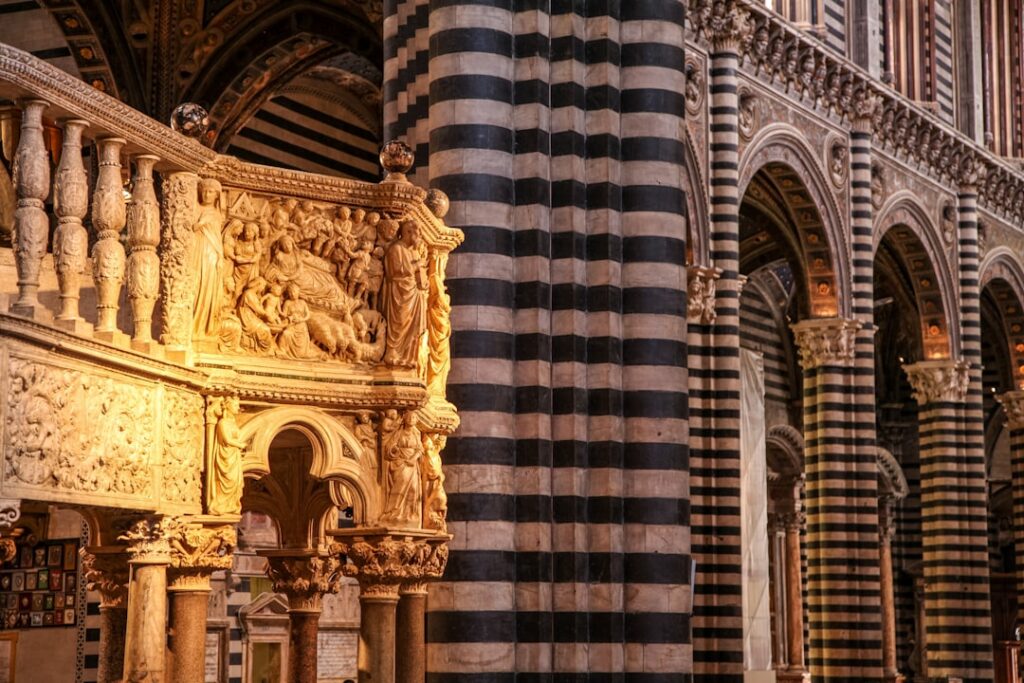
Siena is a place where every stone tells a story, where narrow streets converge like verses toward a single architectural and spiritual nucleus: the Duomo di Siena, officially the Cattedrale di Santa Maria Assunta. Strolling around the Duomo is more than sightseeing a cathedral; it’s stepping into a collective work of art where frescoes, sculptures, inlaid marble floors and private chapels have been in conversation since the 13th century. This route is tailored for art lovers who want to go beyond a quick visit and understand how religious, political and aesthetic ambitions layered over one another to create one of Italy’s most refined urban ensembles.
The Duomo, surrounded by the Piazza del Duomo, the Museo dell’Opera del Duomo, the Battistero di San Giovanni and the Complesso Museale di Santa Maria della Scala, offers a microcosm of Sienese Gothic and Renaissance art. You’ll encounter the Piccolomini Library with its delicate stuccoes and subtle colors, the marquetry-like marble pavements that narrate biblical episodes, the dramatic reliefs of Giovanni Pisano and Byzantine mosaics reinterpreted by local masters. This artistic loop around the Duomo is not merely descriptive: it lays out a chronological and thematic itinerary, practical tips for photographing without disturbing worshippers, money-saving ticket advice, and suggested vantage points to appreciate the shifting light that transforms marble.
Following this route you’ll learn how to spot artists’ signatures (from Donatello to Pinturicchio and the line of Sienese masters), read the symbols of the confraternities who funded chapels, and find your bearings in an urban fabric designed to impress both pilgrims and citizens. Whether you have an hour or a whole day, this guide helps you shape your visit according to your interests — painting, sculpture, architecture, or simple contemplation. Prepare to climb a few steps, pass through cloisters and be surprised by tiny chapels that sometimes hide unsuspected treasures.
1. The Duomo di Siena (Cattedrale di Santa Maria Assunta): Architecture, Floors and Interior Details
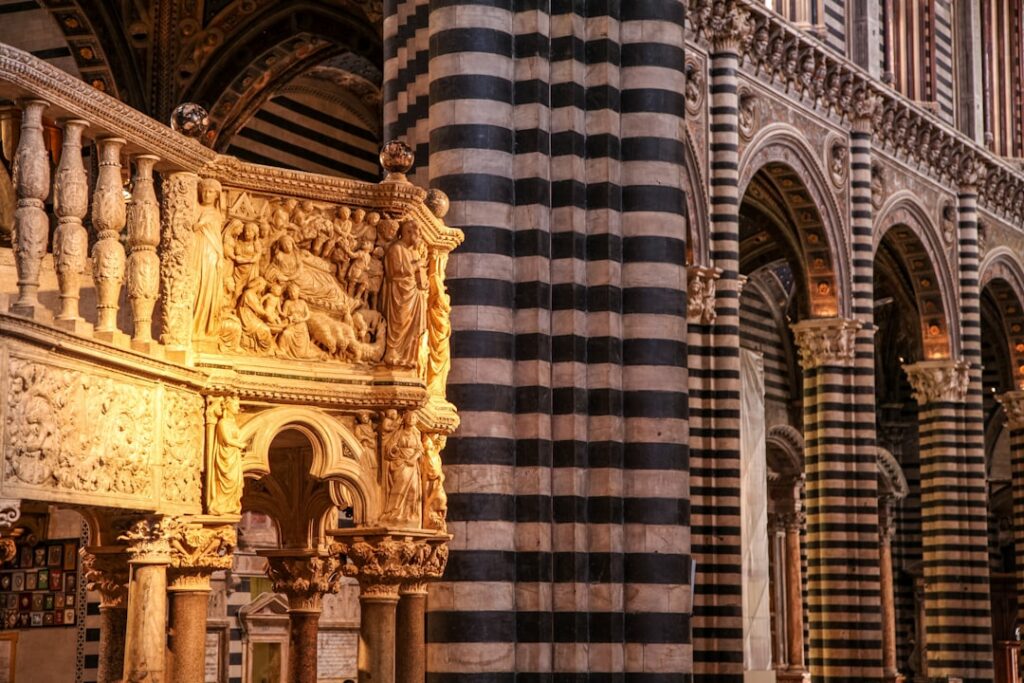
Your natural starting point is the cathedral itself: Duomo di Siena, Piazza del Duomo, 8, 53100 Siena SI, Italy. Built between the 12th and 14th centuries, the structure blends Italian Gothic with local reinterpretations. The exterior’s bands of white and dark green marble catch the eye, but your artistic route truly begins inside. Opening hours: typically 10:30–19:00 (hours vary with season and religious services). Entry price: the combined « Opera del Duomo » ticket is around €15–€18 (indicative; discounts for students and seniors; family tickets available). Check current rates on the official site before you go.
Inside, don’t miss the inlaid marble pavement (pavimento), a delicate collective masterpiece whose entire mosaics are only fully accessible during special openings (often between July and October); a guided visit to the pavement usually costs an extra €5–€8. The floors depict scenes from Genesis and the lives of saints, carved by multiple artists across centuries — look closely at ornamentation details, the « commesso » technique and workshop signatures.
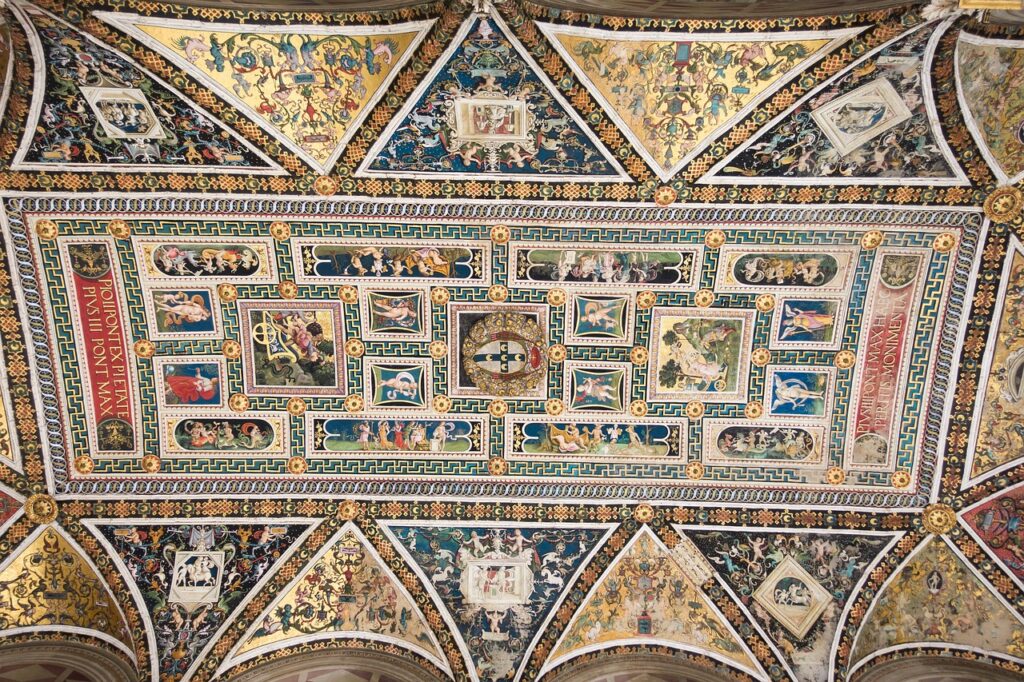
The Libreria Piccolomini (Piccolomini Library) is an adjoining room adorned with frescoes by Pinturicchio and his workshop: portraits, vivid colors and gilding transport you into the humanist atmosphere of the 15th century. Access to the library is often included in the combined ticket. Practical tip: arrive early to avoid tour groups and take advantage of the morning side light that enhances the fresco colors.
 Click here to book your ticket for the Cathedral and the Piccolomini Library
Visiting tips: dress respectfully (shoulders and knees covered) if the cathedral is hosting services; use an audio guide if you want a deeper analysis of the works; and favor weekday mornings for a more contemplative experience. Seating is limited, though some chapels offer places to sit; bring a water bottle and wear sturdy shoes, as the marble floors can be slippery and uneven.
2. Museo dell’Opera del Duomo and the Facciatone Terrace: Views, Sculptures and Relics
A short walk from the cathedral is the Museo dell’Opera del Duomo, located at Piazza Jacopo della Quercia, 1, 53100 Siena SI. It’s the perfect place to deepen your understanding of the original sculptures and works moved for conservation. Opening hours: generally 10:00–18:00 (sometimes closed on Mondays; check the site for updates). Entry price: around €12–€14 (combined tickets available with the Opera and the Duomo).
Don’t miss access to the terrace of the so-called « Facciatone » — the unfinished façade of the monumental expansion planned for the 14th century. From the terrace and balconies the view over Siena’s rooftops and the Piazza del Campo is spectacular, especially at sunset. Climbing usually is included with museum admission or carries a small extra fee (expect about €4–€6 if charged separately). Informational panels explain why the expansion was halted and how the city turned that incompletion into an asset.
The Museo dell’Opera also displays reliquaries, silver platters, commemorative cases and preparatory drawings. For photographers, the museum’s soft light (high windows and marble slabs) brings out textures and patinas. Practical tip: buy a skip-the-line ticket online during high season; in summer expect security checks and an outdoor queue.
Click here to buy skip-the-line tickets for the Duomo visit
3. Battistero di San Giovanni and Side Chapels: Baptism, Sculpture and Quiet Devotion
The Battistero di San Giovanni adjoins the Duomo at Piazza del Duomo, 8, 53100 Siena SI (access often via the cathedral or the Museo dell’Opera). It’s a place of ritual and sculpture, housing a group of statues and a different pavement from the cathedral’s. Opening hours: typically 10:00–17:30 (variable). Price: often included in the combined Duomo ticket; otherwise expect about €3–€6.
Inside, look for the high altar and the baptismal font, surrounded by bas-reliefs and freestanding sculptures. The Duomo complex’s side chapels — small but richly decorated — offer refuge to panels and workshop pieces by Sienese masters. Some chapels are privately funded by families and guilds; you’ll notice coats of arms, streamlined narrative cycles and a devotional staging that emphasizes the worshipper’s proximity to the sacred image.
Practical tips: keep silence and avoid flash; iconography enthusiasts should carry a small notebook to jot down recurring symbols (lamb, pelican, ears of wheat) and carved dates. If you’re following a thematic route — for example « sacred vs. profane » — mark chapels containing late medieval panel paintings, as they reveal the stylistic shift between Gothic ornamentation and emerging Renaissance humanism.
4. Complesso Museale Santa Maria della Scala and Its Exhibitions: Frescoes, a Medieval Hospital and Devotional Art
Directly opposite the cathedral on the Piazza del Duomo is the Complesso Museale di Santa Maria della Scala, address: Piazza del Duomo, 2, 53100 Siena SI. Once a medieval hospital, Santa Maria della Scala is one of Siena’s richest museum complexes, connecting social history with artistic production. Hours: typically 10:00–19:00 (closures possible; check the site). Admission: around €10–€12 (frequent discounts; combined Duomo tickets available).
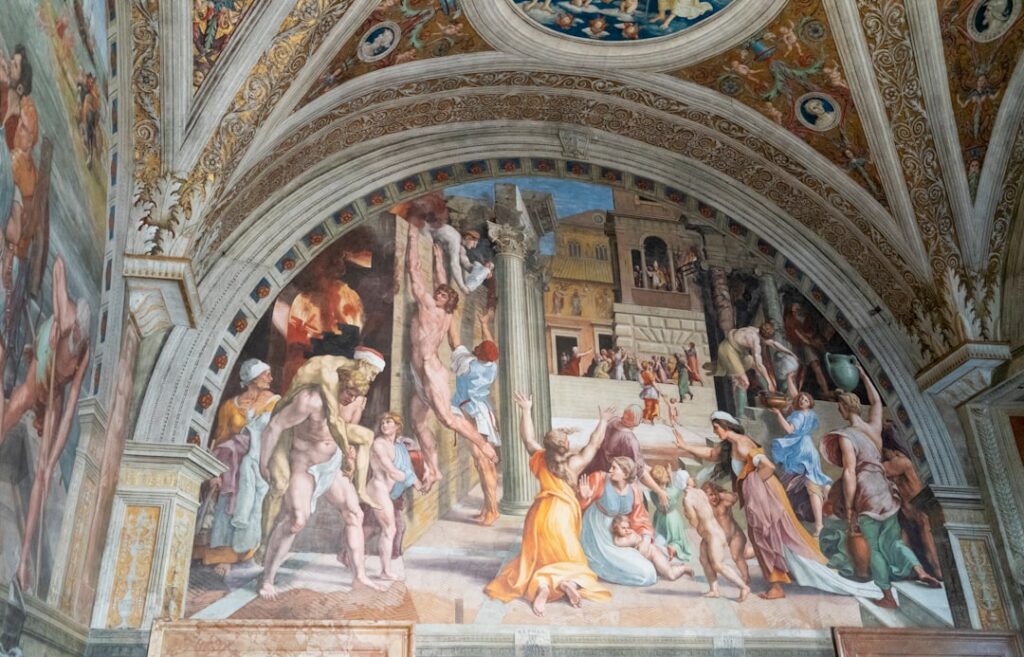
The interior architecture preserves cloisters, chapels and hospital rooms decorated with frescoes and pictorial works. Temporary exhibitions often focus on conservation, restorations or thematic collections (e.g., Sienese panel painting, confraternity goldsmithing). You’ll also find objects related to patients’ daily life — beds, ex-votos — and representations of patron saints.
Click here to Book a guided walking tour and cathedral visit
Practical tips: allow at least 60–90 minutes to explore the museum if you want to read labels and see the highlights. Santa Maria della Scala often offers audio guides and brochures in French; ask for them at reception. Visiting after the Duomo gives you a clearer sense of the Church’s social and medical role in Siena, adding valuable context to the masterpieces you’ve just seen.
5. Complementary Routes and Practical Tips: Cafés, Bookshops and When to Capture the Best Photos
After exploring the main sites, enrich your route with sensory and practical detours. The Piccolomini Library faces the Piazza del Duomo; for a pause, head to Via del Capitano and Via di Città where small cafés serve cappuccino and local biscotti. Recommendation: the café « La Taverna di San Giuseppe » (approximate address: Via Giovanni Dupre 132, a 5–8 minute walk from the Duomo) offers traditional biscuits and views onto medieval lanes — confirm exact address and opening hours locally.
For art purchases and reproductions, look for galleries and art bookshops around Via delle Terme and Via Banchi di Sopra. Shops sell print reproductions, photo prints and small icon copies. Buying tip: for the best value, favor workshops that provide a certificate of authenticity for reproductions and offer custom framing.
Click here to Reserve a city tour with Duomo and panoramic views
Photography: morning light (roughly 8:30–10:30) is ideal for capturing the Duomo’s façade in relief. Sunset gilds Siena’s rooftops when viewed from the Facciatone terrace. Avoid flash inside; instead use moderate ISO and a compact tripod if permitted. Also, consider skip-the-line tickets to make the most of the best light.
Transport and accessibility: the Piazza del Duomo is walkable from the historic center (ZTL zone; be mindful of traffic restrictions). Regional buses stop near stazione di Siena (the train station); count on a 20–30 minute uphill walk to the Duomo. For visitors with reduced mobility, check specific access options for the Duomo and museums; some escalators or lifts may be available but it’s best to call ahead.
Conclusion: Experiencing the Duomo’s Art Beyond the Image
Around the Duomo di Siena, the artistic route I propose aims to turn a visit into an experience: understand the sculptors’ gestures, feel how marble responds to light, read painted narratives on panels and sense the interplay between devotion, citizenship and prestige. Each site — the Duomo di Siena (Piazza del Duomo, 8), Museo dell’Opera del Duomo (Piazza Jacopo della Quercia, 1), Battistero di San Giovanni (access via Piazza del Duomo), and the Complesso Museale di Santa Maria della Scala (Piazza del Duomo, 2) — composes a sequence where art functions as both object and social context. The prices and hours mentioned (Duomo tickets around €15–€18, Museo dell’Opera €12–€14, Santa Maria della Scala €10–€12) are recent reference points, but I recommend checking online updates before you travel, especially in high season or during liturgical festivities.
To make the most of your route: plan for the cathedral early in the morning, book combined tickets online to save time, climb the Facciatone terrace for evening light, and allow yourself to be surprised by side chapels where delicate details can outshine the grand scenes. Don’t forget to explore everyday life around the Duomo: cafés, art bookshops and small stores lend local flavor to the visit. Finally, pace your curiosity: take notes, ask questions of local guides, and allow pauses for contemplation — sometimes the finest artwork isn’t the piece on the wall, but the way the whole town frames its cathedral.