






Introduction
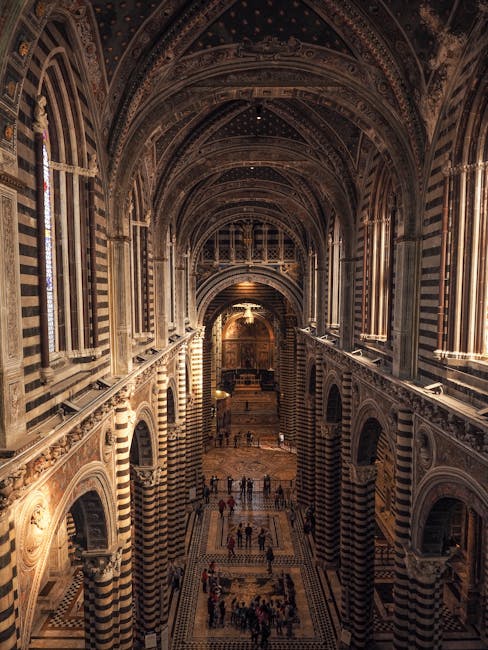
The cathedral of Siena, the Duomo di Siena (Cattedrale di Santa Maria Assunta), stands as a Gothic masterpiece on the Piazza del Duomo and draws visitors from across the globe. What many consider the cathedral’s most discreet and precious treasure isn’t its polychrome façade or its side chapels, but the floor: a marble pavement inlaid with an exceptional wealth of iconography and technical skill. The pavimento of the Duomo is a collection of carved, engraved and assembled panels whose craftsmanship took several centuries to reach the form we admire today. Each panel is an artwork in its own right, conceived by renowned artists — such as Domenico di Bartolo, Giovanni di Stefano, Vecchietta and Domenico Beccafumi — and executed using techniques of « intarsio marmoreo » and « commessi, » combining colored marbles, hardstones and delicate inlays.
The pavement is unique in more ways than one: it’s not on permanent display. To preserve it, nearly all the panels are covered for much of the year and are only revealed during specific periods, usually in the warmer months. This has given rise to a summer tradition in Siena — the « opening of the floor » — which draws specialists, art historians and visitors eager to see biblical, mythological and allegorical scenes carved directly into stone. The motifs span a surprising range: religious and secular figures, moral allegories, biblical scenes and mythological characters, all staged with perspective and detail that reflect the evolution of Sienese art between the 14th and 16th centuries.
This article aims to explain, in a practical and detailed way, what the Duomo pavement of Siena is: its history, the artists, the techniques, the panels you shouldn’t miss, how, when and where to see it, and practical tips to make the most of your visit. You’ll find precise information: exact address, indicative prices, usual opening hours and local recommendations for a respectful and immersive visit. If you’re planning a stay in Siena, understanding the pavement will help you appreciate not only the visible beauty but also the intellectual and symbolic dimension that guided its creation. The Duomo pavement is not just a marble floor; it’s a visual library of carved images that tells the religious, civic and artistic identity of one of Italy’s most fascinating cities.
 Click here to book your ticket for the cathedral and the library
History and authors of the pavement: from the 14th to the 16th century
The history of the Duomo pavement in Siena is long and fragmented. The decision to decorate the cathedral floor was taken progressively over the centuries, from the late Middle Ages into the Renaissance. Commissions were entrusted to local artists and workshops who worked according to often complex iconographic programs, discussed with ecclesiastical authorities and the confraternity in charge, the Opera della Metropolitana di Siena. Most of the panels we admire today date from the 14th to the 16th centuries, a period when Siena enjoyed intense artistic production.
Among the most noteworthy names you’ll encounter are Lorenzo di Pietro, known as Vecchietta, active in the 15th century and renowned for his sculptural sense and ability to combine relief and perspective; Domenico di Bartolo, who brought a narrative sensitivity; Giovanni di Stefano and especially Domenico Beccafumi, who in the 16th century introduced very innovative plastic solutions to the pavement, almost painting in marble. Beccafumi is particularly famous for scenes with dramatic light and shadow effects that seem to animate the stone.
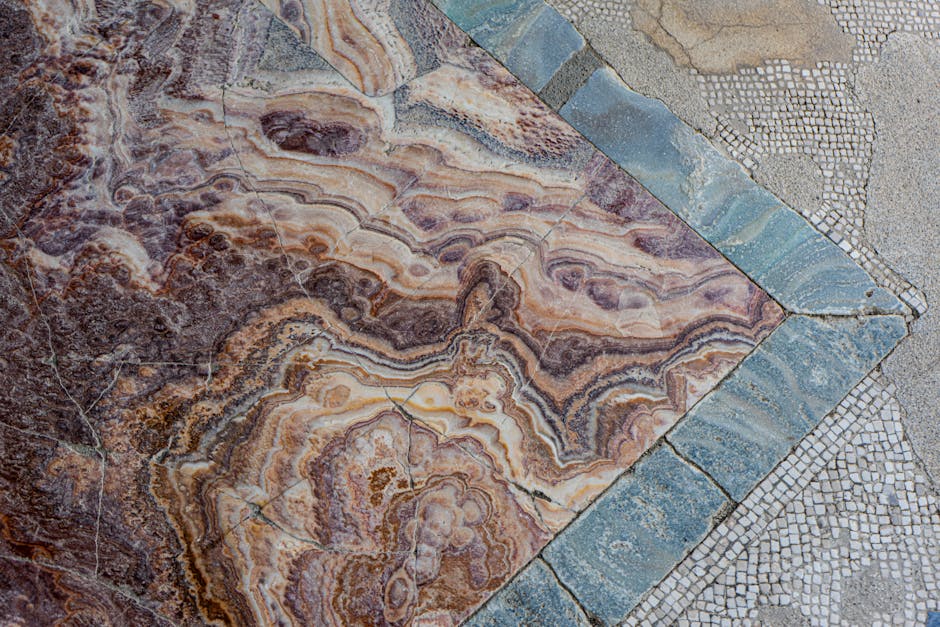
The chosen subjects reflect Siena’s dual nature: devout and proudly civic. You’ll find biblical episodes (from both Old and New Testaments), stories of local saints, moral allegories and mythological figures. Many compositions also point to symbolic struggles — virtue versus vice, wisdom versus ignorance — which served as moral lessons for the Sienese community. Artists sometimes worked from cartoons or preparatory drawings and then executed or supervised the assembly of stones in the workshop. Each panel is made from many pieces of differently colored marble — Carrara white, serpentine green, porphyry and other fine stones — matched with almost musical precision.
Click here to book a guided walking tour of Siena
Click here to book a guided walking tour with Duomo entry
Technique and conservation: how these panels are made and preserved
The technique used for the pavement is a mixed art of low-relief sculpture and inlay — in Italian « tarsia marmorea » or « commesso. » Craftsmen cut slabs of marble and hardstones to match the desired design, then assembled them like a puzzle. Variations in color, veining and density are exploited to create volume effects, textures and contrasts. Many panels combine engraving (for fine details) with modeled relief (to give depth and perspective).
Conserving these works is an ongoing challenge. To limit wear from worshippers and visitors, most of the pavement is covered by protective flooring for the majority of the year. The « apertura del pavimento » (opening of the pavement) therefore corresponds to a limited window of visibility. Restoration interventions are regular, carried out by the Opera della Metropolitana di Siena and specialized conservators using reversible methods and compatible materials. Recent restorations have stabilized weakened fragments and cleaned surfaces without altering the historic patina.
For visitors, it’s important to follow conservation rules: don’t walk on the panels, avoid contact, respect cordoned-off areas and refrain from using flash photography, as intense artificial light can, over time, affect some inlays. The Opera della Metropolitana sometimes offers guided visits and explanatory booklets to help understand the state of conservation and the restoration choices made. In addition, the scientific documentation available at the Museo dell’Opera del Duomo (Piazza del Duomo, 8 — see the practical box below) allows a deeper understanding of recent interventions.
Click here to book an exclusive morning visit to the Duomo
Visiting the pavement today: practical info, hours, prices and tips
To see the Duomo pavement in Siena, go to the following address: Piazza del Duomo, 8, 53100 Siena SI, Italy. The pavement is not on permanent display; it is generally exposed to visitors during the summer period and on specific days (usually between late May and mid-October, with exact dates varying by year). It’s therefore essential to check the precise dates before your trip on the official site of the Opera della Metropolitana di Siena or by contacting the Museo dell’Opera.
Indicative prices (subject to change):
- Combined ticket Duomo Complex / Museo dell’Opera / Baptistery / Facciatone: around €16 for a full-price adult ticket.
- Reduced rate (students, seniors, groups): around €12.
- Specific entry or supplement for a commented visit of the pavement during open periods: often €3–€5 in addition to the standard ticket.
The usual opening hours (to be confirmed at the time of your visit):
- Duomo di Siena: generally open from 10:30 to 19:00, with temporary closures for religious services.
- Museo dell’Opera del Duomo (Piazza del Duomo, 8): often open from 10:00 to 18:00.
- Biblioteca Piccolomini (inside the Duomo): specific hours and a guided visit are recommended.
Local practical tips:
- Arrive early in the morning or late afternoon to avoid queues and to enjoy softer interior light that highlights the pavement.
- Book online if possible — this helps guarantee access during highly requested « apertura del pavimento » periods.
- Bring a guidebook or rent an audio guide: the panels are rich in symbolism; an informed commentary will turn looking into understanding.
- Respect conservation rules: no touching, no flash, and observe cordoned areas.
- Combine the visit with the Museo dell’Opera (same address), the Biblioteca Piccolomini and the Baptistery for a full reading of the cathedral complex.
Click here to book a city tour with Duomo entry
Click here to buy the cathedral pass with OPA SI audio guide
The panels you mustn’t miss and a route for reading them
Among the most remarkable panels of the pavement, some stand out for their narrative complexity and artistic quality. Here’s a suggested reading route for a focused visit:
- Genesis panel and biblical scenes: often grouped together, they recount key episodes of the Old Testament, presented with a visual language emphasizing morality and providence.
- Allegories and virtues: symbolic figures representing Justice, Prudence, Fortitude or Temperance. These panels served as civic and spiritual examples for the Sienese community.
- Marian scenes and hagiography: directly linked to devotion to the Virgin Mary, patroness of the cathedral.
- Works by Domenico Beccafumi: his compositions stand out for an almost pictorial treatment of marble — contrast, movement and drama — worth observing closely to grasp his modernity.
Reading tip: don’t be satisfied with a single overview. Crouch down (without touching) to read the depth of the reliefs, observe the joints between stones and how light emphasizes the engravings. Take time to compare two nearby panels: you’ll perceive the evolution of styles, from late Gothic to the Renaissance, and how each artist interprets the same theme.
Click here to book a city tour with Duomo entry
Conclusion
The Duomo pavement of Siena is a visiting experience that combines aesthetics, history and conservation: it’s a visual book made of marble, cut and assembled by artists’ hands across several generations. Knowing where to go — Piazza del Duomo, 8, 53100 Siena SI, Italy — and understanding access arrangements adds to the experience: the period when the floor is open, indicative prices (around €16 for a combined ticket, with possible reductions) and opening hours (check the Duomo and Museo dell’Opera schedules) are essential elements to plan a successful visit.
Beyond practical information, visiting the pavement invites time for contemplation and interpretation. Take the time to read the panels, listen to a guided explanation and soak up the special atmosphere of the Duomo: the stone tells of faith, politics and Siena’s artistic genius. Respect the conservation rules and use the resources of the Museo dell’Opera to deepen your knowledge. Finally, remember that the pavement is revealed intermittently: its rarity makes it all the more precious and each opening is a window onto the living history of a city that has always managed to blend art and civic identity.
Enjoy your trip to Siena — and enjoy discovering the pavement, a true stone jewel that continues to speak to today’s visitors with the same power it held for the contemporaries of the artists who created it.