




Introduction: Stillness and Life — Photographing the Duomo di Siena
The Duomo di Siena — in Italian Cattedrale di Santa Maria Assunta — sits at the historic heart of Siena where medieval art and everyday city life meet. For photographers, whether hobbyist or pro, this monument is a playground: polychrome marbles, intricate floor mosaics, ornate façades and domes that dance with Tuscan light. But getting great shots takes more than pointing your camera and pressing the shutter. You need to understand the volumes, feel the best hours, know access points, and respect the silence and conservation rules that apply in a major religious site.
In this guide I’ll cover not only the technical side of photographing the Duomo di Siena, but also the essential practical info: exact addresses, indicative ticket prices, opening hours, top interior and exterior vantage points, tips for working with light and managing challenges (high dynamic range, crowds, flash bans). You’ll find a comprehensive, immersive approach — history, composition, camera settings, suggested shot sequences for a successful morning or evening session, plus local tips (where to park, how to buy tickets, coffee breaks and rules of conduct).
The Duomo sits on a compact square filled with decorative elements and diverse viewpoints: Piazza del Duomo, the steps in front of the Piccolomini Library, the Facciatone terrace and the narrow lanes that slope down toward Piazza del Campo. Each spot has its own light and atmosphere. And with such a variety of subjects to photograph — sculpted Gothic façades, the pavement mosaics, the colorful frescoed Libreria Piccolomini, the Baptistery of San Giovanni, and the panorama from the Facciatone — planning is essential to avoid disappointment and make the most of your time.
Finally, photographing inside a house of worship requires ethical behavior: observe silence, be aware that tripods or flash may be banned, and be considerate of other visitors. This guide offers practical solutions to work around those constraints without breaking rules or offending local sensibilities.
Know the Place: Addresses, Access, Hours and Tickets
To get started, here are the practical, official details to organize your shoot:
- Full name: Cattedrale di Santa Maria Assunta (Duomo di Siena)
- Address: Piazza del Duomo, 8, 53100 Siena SI, Italy
- Associated sites to visit:
- Museo dell’Opera del Duomo — Piazza del Duomo, 9, 53100 Siena SI
- Libreria Piccolomini — access through the cathedral, Piazza del Duomo, 331, 53100 Siena SI
- Battistero di San Giovanni — Piazza del Duomo, 53100 Siena SI (part of the complex)
- Terrazza del Facciatone (Museo dell’Opera / Facciatone) — Piazza del Duomo, 9, 53100 Siena SI
- Opening hours (indicative):
- Duomo di Siena (Cathedral): generally 10:00 – 19:00 (closing times vary; masses and services may affect access).
- Museo dell’Opera / Terrazza del Facciatone: generally 10:00 – 18:30.
- Libreria Piccolomini & Baptistery: open according to the Duomo complex schedule, often 10:00 – 18:00.
Note: hours change in low season, on religious holidays and for special events. Always check the official website before your visit.
- Ticket prices (indicative, in euros):
- Combined ticket « Il Complesso del Duomo »: around €15 – €18 per adult (access to the cathedral, Museo dell’Opera, Baptistery, Libreria Piccolomini, Facciatone).
- Reduced ticket (youth, seniors, students): often €10 – €12 depending on conditions.
- Entry to the cathedral alone: sometimes free but with restricted access (check: paid entrances for specific areas like the Library and the pavement).
Tip: buying the combined ticket is usually more economical and grants access to the Facciatone terrace for must-see panoramas.
 Click here to book entry for Siena Cathedral and Piccolomini Library
Shooting Techniques: Light, Composition and Settings
Photographing the Duomo di Siena requires careful attention to light and composition. Here are practical recommendations:
- Natural light: the stone and polychrome marble react strongly depending on the hour. Early morning (first light) bathes the western façade and some side arches in warm tones — perfect for architectural shots. Late afternoon (golden hour) gently sculpts the exterior sculptures and columns.
- Interior — high contrast: the interior features strong areas of shadow and light (stained glass, light wells, high windows). Shoot RAW to recover highlights and shadows. Use exposure bracketing if necessary, or moderate HDR in post to preserve the character of the place.
- Recommended settings:
- Manual mode or aperture priority (f/5.6–f/11 depending on desired effect) for sharpness and depth of field.
- Low ISO (100–400) when possible; increase only to avoid motion blur when faster shutter speeds are required.
- Shutter speed: for interior architecture, 1/30s or slower requires a tripod — which is often prohibited; aim for 1/60s with image stabilization, or raise ISO.
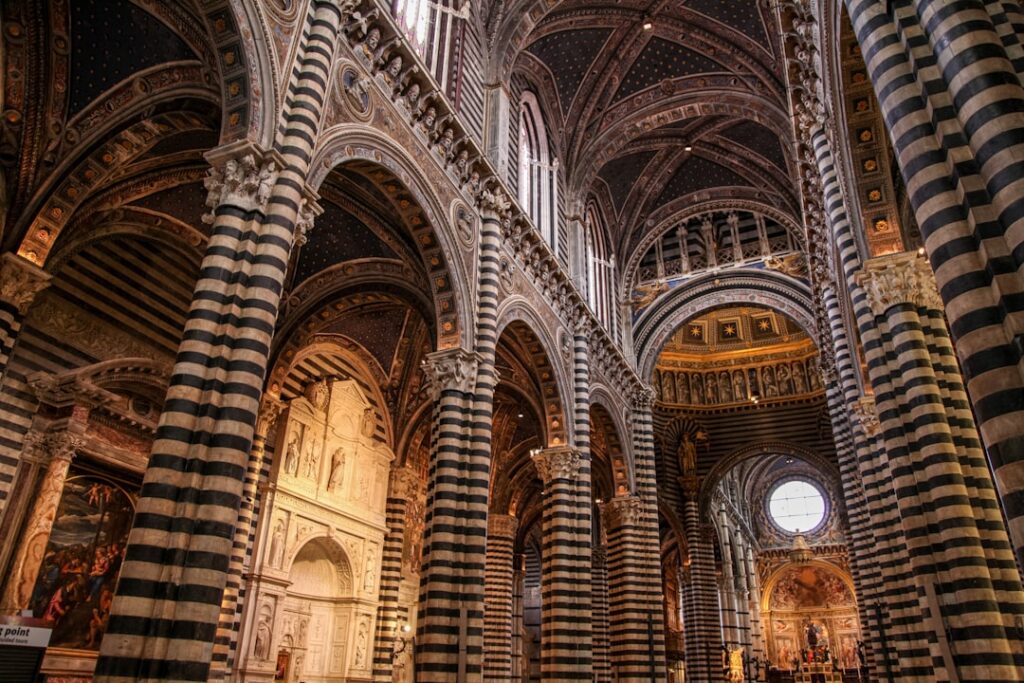
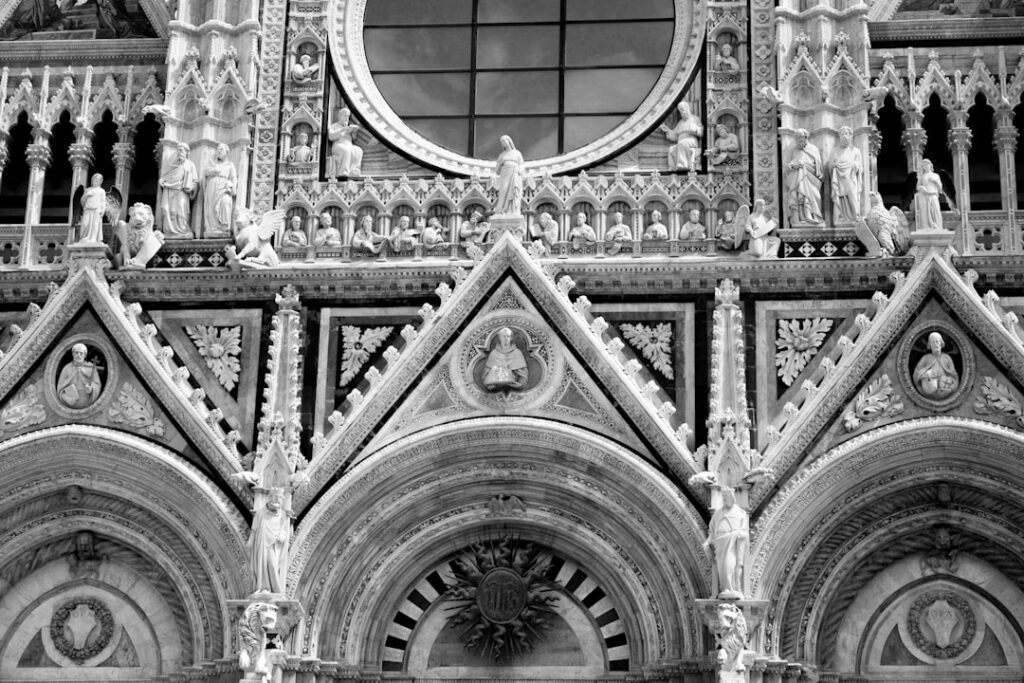
- Composition: look for leading lines — the central nave, the black-and-white striped columns, floor patterns, stacked arches. Low-angle shots emphasize verticality and vaults, while close-ups highlight marble texture and sculptors’ handiwork.
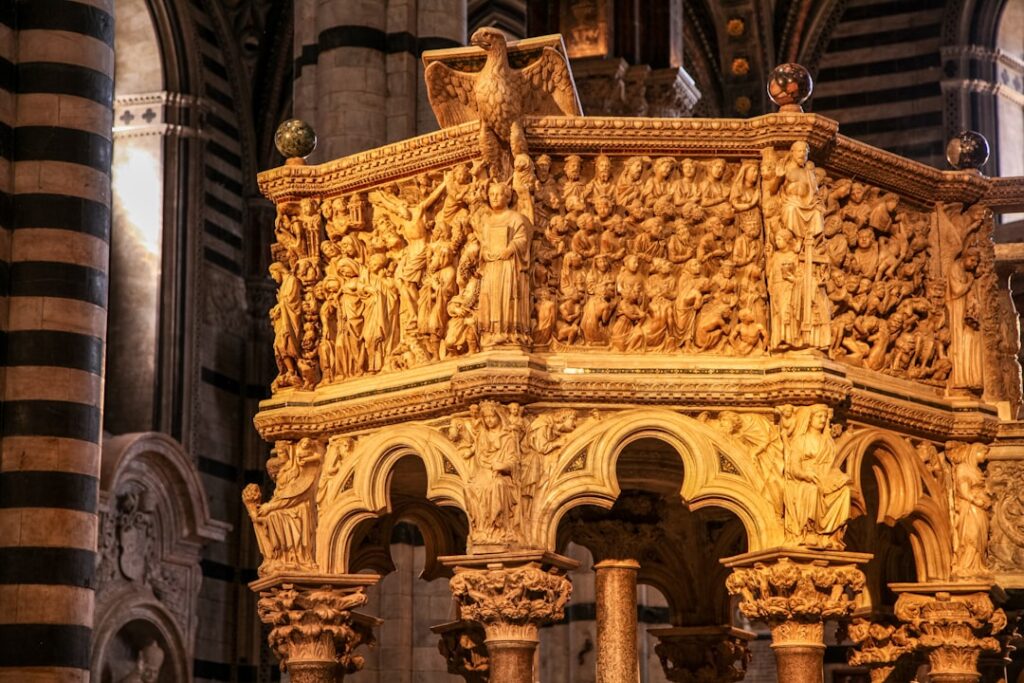
- Narrative elements: include visitors in silhouette to convey scale, or zoom in on details (mosaics, capitals, inscriptions). Respect restricted areas and avoid using flash in chapels where it’s banned.
Must-See Vantage Points and Shot Sequences
To get the most out of the Duomo di Siena, plan your shots in sequences by time and vantage point. Here’s an efficient photo itinerary:
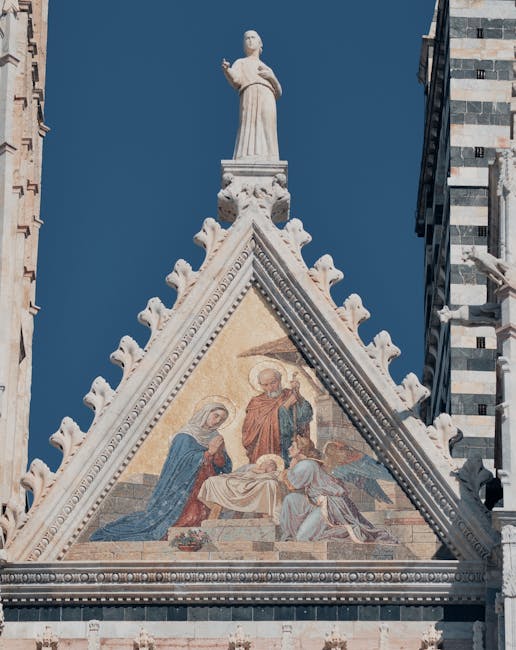
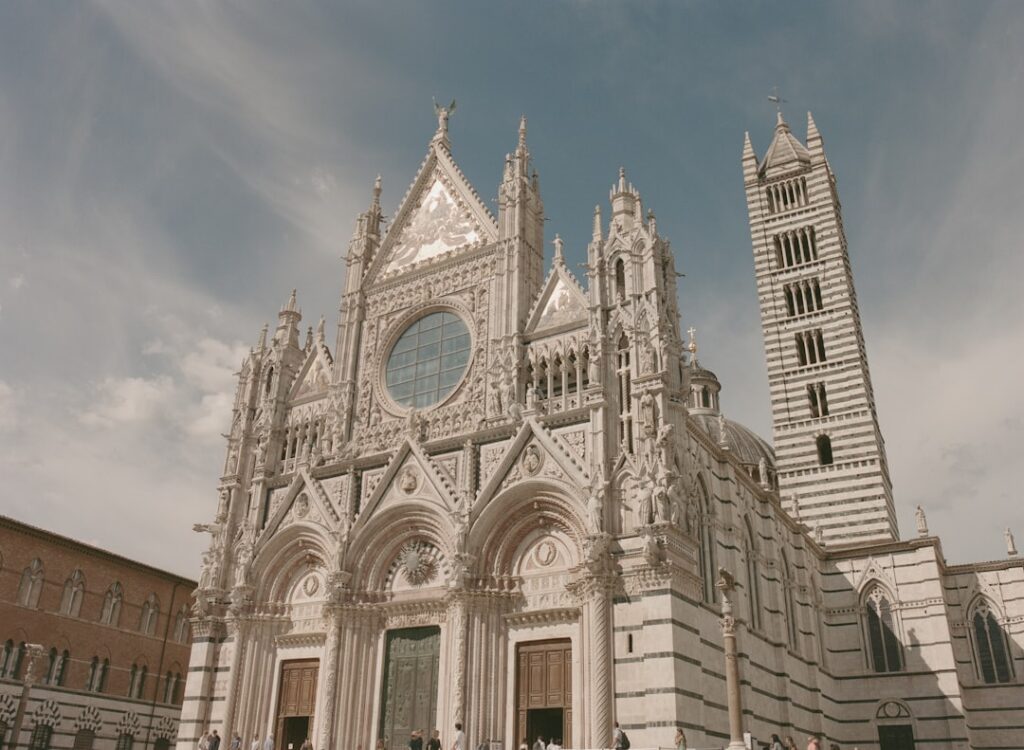
- Exterior — main façade (Piazza del Duomo): start early to beat the crowds. From the square use a wide-angle (16–35mm) to capture the whole Gothic façade and its sculptures. Try asymmetrical compositions that include adjacent arcades.
- Steps and view over Siena’s roofs: climb the steps toward the adjacent street to frame the Duomo with Siena’s red roofs in the background — ideal in late afternoon for warm colors.
- Inside the cathedral: capture the nave, the black-and-white marble columns, and especially the pavement (unique and often covered for much of the year — check full exposure dates). Downward frames from a gallery or secondary staircase make graphic compositions.
- Libreria Piccolomini: the library features Pinturicchio frescoes in vivid color. Use a standard lens (35–50mm) to render perspective and color richness accurately.
- Terrazza del Facciatone: this is the prime spot for a panorama over Siena and the Duomo from above. Shoot wide for the whole scene and use telephoto lenses to isolate façade details against the city.
Plan your sequence: exterior in the morning, interior around midday (when light streams through the windows), Facciatone in late afternoon. That helps you manage lighting conditions and tourist traffic.
Local Practical Tips: Logistics, Etiquette and Safety
Siena is compact and largely pedestrian, but the Duomo area can be very busy. Here are concrete tips to save time and follow local rules:
- Arrive early: best hours are 08:30–10:00 for exterior shots and 10:00 right at opening for interior shots. Organized tours often arrive later in the morning.
- Tickets: buy combined tickets online from the official Complesso del Duomo site (or at the Museo dell’Opera ticket office) to avoid queues. The combined ticket (≈ €15–€18) is recommended if you want the Libreria Piccolomini and the Facciatone.
- Gear: if tripods are banned, bring a lightweight monopod and a fast zoom (24–70mm f/2.8 is ideal). ND filters are unnecessary for most scenes except when you want long-exposure effects outdoors.
- Respect and restrictions: avoid flash indoors, don’t touch artworks, mute your devices and don’t block passageways. Religious services may prohibit photography during celebrations.
- Safety: keep an eye on your gear — tourist areas can attract pickpockets. Use an anti-theft camera bag and carry lenses close to your body.
- Food and breaks: for a meal, Trattoria la Torre (Via dei Montanini, 53100 Siena) is a short walk away; expect mid-range prices around €12–€25. For a quick coffee, Pasticceria Nannini (Piazza del Campo, 53100 Siena) is ideal.
Click here to purchase the Siena Cathedral complex pass
Go Further: Post-Processing, Printing and Series Work
After shooting, the job continues in post-production. Here are tips to elevate your Duomo images:
- RAW post-processing: correct exposure, reduce noise if ISO was high, recover highlights from stained glass and restore shadow details. Adjust the tone curve to deepen marble tones without crushing texture.
- Colors: the Libreria Piccolomini needs careful color work to reproduce the warm tones of the frescoes. Use local adjustments (brushes) to tweak saturation and contrast without affecting visitors’ skin tones.
- Rectification: for architecture, correct perspective (converging verticals) to get straight lines, especially for façades and columns.
- Photographic series: consider themed series: “Sculpted Details,” “Black-and-White Marble,” “Morning Light,” or “Siena from the Terrace.” A coherent series has more impact for an exhibition or portfolio.
Conclusion: Prepare and Respect to Reveal the Duomo
Photographing the Duomo di Siena is an adventure that blends technique, patience, historical observation and respect for the place. Knowing the exact address (Piazza del Duomo, 8, 53100 Siena SI), the main access points (Museo dell’Opera, Libreria Piccolomini, Baptistery, Terrazza del Facciatone), the indicative opening hours and combined prices (≈ €15–€18) will let you plan with confidence. That way you won’t miss golden hour or access to the terrace for an unforgettable panorama. Apply the recommended settings (RAW, appropriate aperture, controlled ISO) and favor compositions that tell a story — a carved detail, a human silhouette, a nave lit by a shaft of sunlight.
Beyond technique, the key to a successful series is respect: respect for worship times, photography rules, and other visitors. A well-trained photographer sometimes forgoes a shot to preserve the atmosphere of a place. And don’t forget to give yourself time to look before you shoot: let your eyes wander across surfaces, spot repeating patterns, feel the direction of the light and visualize your frames. With preparation, sensitivity and a bit of luck with the weather, you’ll leave Siena with images that convey the grandeur, finesse and life of the Duomo di Siena.