Introduction
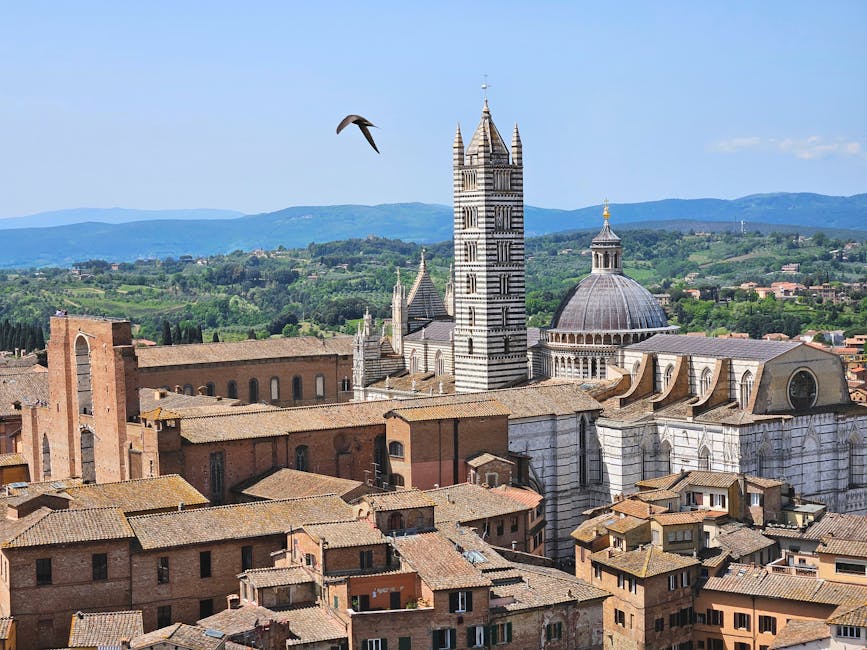
The Duomo di Siena, officially the Cattedrale Metropolitana di Santa Maria Assunta, stands as one of Italy’s undisputed Gothic masterpieces and a beating spiritual and urban heart of Siena. Located in the historic center at Piazza del Duomo, 8, 53100 Siena SI, Italy, this monument draws visitors from around the world eager to admire its polychrome façade, alternating marble bands, soaring vaults and interiors filled with outstanding works of art. Beyond its beauty, the Duomo is an open book on the history of the Sienese city-state: every capital, mosaic and paving slab tells stories of devotion, rivalry and artistic innovation that shaped the city since the Middle Ages.
Built between the 13th and 14th centuries, the cathedral blends Romanesque and Gothic elements into a unique silhouette. The white and dark green marble façade, punctuated by carved ornamentation, statues and a large oculus, also reads as a political statement: Siena competed with Florence and other cities, flaunting its prosperity and refinement. Inside, the striking black-and-white motif — symbolic colors of Siena — draws the eye toward the apse, Nicola Pisano’s sculpted pulpit, the stained glass and especially the monumental inlaid marble pavement, a collective masterpiece executed by Siena’s finest workshops over several centuries.
Visiting Siena’s Duomo is more than visual sightseeing: it’s a sensory experience. Sunlight filtering through stained glass, the polished coolness of marble under your fingertips, the scent of wax and incense during services and the echo of footsteps in the nave all create a timeless atmosphere. Curious travelers will find not only major works — like the Pinturicchio-decorated Libreria Piccolomini, the Baptistery of San Giovanni, the recently showcased Crypt and the Museo dell’Opera Metropolitana — but also practical ways to explore in depth through combined tickets, audio guides and themed guided tours.
 Click here to join a day trip to Siena, San Gimignano and Pisa
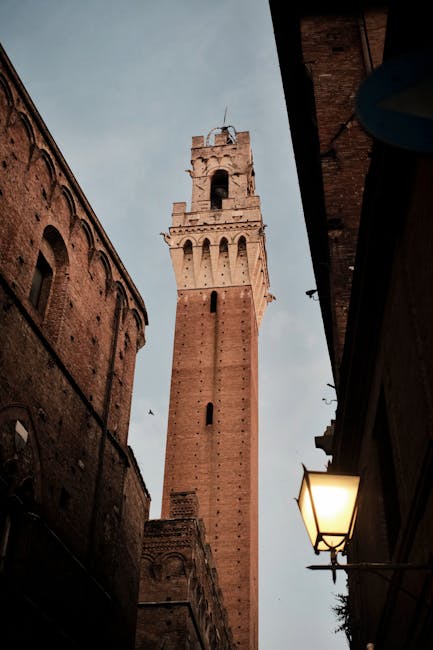
This article offers an architectural and practical reading of Siena’s Duomo: a detailed description of Gothic elements, practical information (opening times and prices, addresses for sites in the complex), visiting tips and suggestions for photographing and appreciating the monument under the best conditions. Whether you’re an amateur architect, budding historian or curious traveler, you’ll find clear, concrete pointers to get the most out of your visit to the Cattedrale di Santa Maria Assunta.
The façade and exterior: Gothic symbolism and aesthetic choices
The façade of the Duomo di Siena is one of the most spectacular in Italy. Executed in alternating bands of white and bluish-green marble — with veins of red used for lavish framing — it showcases the Sienese ability to combine narrative sculpture, floral ornamentation and allegorical figures. Constructed primarily in the 13th and 14th centuries by artists such as Giovanni Pisano (whose influence is visible in the dramatization of sculpted scenes), the façade mixes detailed bas-reliefs, pointed arches typical of Italian Gothic, and a composition that channels attention toward the central portal.
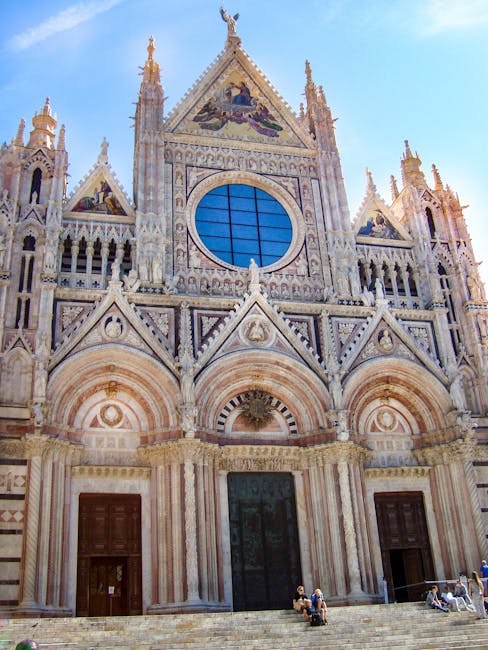
The richly decorated portals display biblical scenes, angels and prophets. The black-and-white marble scheme, a hallmark of Sienese tradition, goes beyond simple aesthetics: it creates a striking play of light and shadow, especially at dawn and late afternoon. A visitor’s eye is drawn to the ornate banding and the line of statues marking the triforium. To the left of the cathedral sits the Museo dell’Opera Metropolitana (address: Piazza del Duomo, 8, 53100 Siena SI), which preserves fragments of polychromy, original sculpted elements and offers an elevated perspective on the façade.
Right next to it, the famous « Facciatone » — a large unfinished façade from the cathedral expansion project — provides an outstanding panorama of Siena and the surrounding Tuscan countryside. The Facciatone is accessible through the Museo dell’Opera Metropolitana (or the route devoted to the Opera del Duomo) and is an ideal spot for grasping the scale of the original Gothic project, which, if completed, would have made the Duomo one of Europe’s largest cathedrals.
The interior: vaults, pavement and the theatricality of Sienese Gothic
From the moment you step inside, the Duomo’s interior reveals the richness of Gothic architecture used to tell sacred stories. Ribbed vaults, pointed arches and slender columns create a verticality that lifts the gaze. But the most striking feature is the pavement: an exceptional ensemble of inlaid marble intarsia made up of around fifty panels crafted between the 14th and 19th centuries by a host of artists — Domenico di Niccolò, Francesco di Giorgio and others — depicting biblical, mythological and allegorical scenes. These panels are often covered and only revealed during certain periods (check exhibition dates) for conservation.
Nicola Pisano’s pulpit is another highlight. Sculpted with narrative virtuosity, it illustrates episodes from Christ’s life and prophetic figures, showing the shift from Romanesque sculpture toward a more expressive Gothic sensibility. The stained glass, created between the 13th and 15th centuries, bathes the space in warm colors and depicts saints’ lives and Gospel scenes: the choir glass, attributed to workshops that collaborated with Duccio di Buoninsegna, is particularly refined.

The Piccolomini Library (Libreria Piccolomini), attached to the cathedral, deserves a special stop: decorated by Pinturicchio, its frescoes and illuminated panels recall the life and papal ascent of Enea Silvio Piccolomini (later Pope Pius II). A short walk away, the Crypt, recently highlighted after restoration work, reveals capitals, frescoes and a more intimate liturgical space that lets you appreciate the evolution of techniques and styles across centuries.

The Duomo complex: baptistery, Museo dell’Opera and practical info
Siena’s Duomo functions as a complex: the cathedral itself, the Battistero di San Giovanni (Baptistery), the Crypt, the Libreria Piccolomini and the Museo dell’Opera Metropolitana. All of these elements are grouped on and around the Piazza del Duomo. To plan your visit, here are essential practical details to bear in mind (check official updates before you go):
- Main address: Piazza del Duomo, 8, 53100 Siena SI, Italy.
- Tickets: « Opera del Duomo » combined ticket: ≈ €15 (standard price; reduced rates for students/young people, possible free entry for children). Individual entries: Museo dell’Opera ≈ €7, Libreria Piccolomini ≈ €6, Facciatone viewpoint ≈ €6. These prices are indicative; it’s recommended to buy online on the official site or at the central ticket office.
- Opening hours (indicative): Duomo and complex generally open from about 10:30 to 18:00 in low season; in high season (May–Sept.) hours sometimes extend to 10:00–19:00. The Libreria Piccolomini and the Crypt may have specific time slots. Religious services can affect access to the choir; check notices at the entrance.
- Getting there: On foot from the Piazza del Campo (about a 7–10 minute walk via Via Dupré/Salicotto). Vehicle access to the piazza is usually restricted; paid parking is available on the city edges (for example Parcheggio Il Campo / Via del Capitano).
Practical tips: buy the combined ticket to save time and to access the Facciatone viewpoint; favor an early morning visit or after 4pm for ideal slanting light and fewer crowds; observe the dress code (shoulders and knees covered) if entering during services; avoid the Palio di Siena days (July 2 and August 16) if you want a calm visit — the city is extremely busy then and partial closures may occur.
Click here to book your ticket for the cathedral and the Piccolomini Library
Click here to buy the pass for the whole Duomo complex
Visiting tips, photography and local context
To get the most from your visit, divide it into stages. Start with an exterior study of the façade and the Facciatone to understand the scale and Gothic concept. Then head into the nave following the flow of light: study the pavement at eye level, then look up to take in the stained glass and vaults. Visit the Libreria Piccolomini next for its frescoes; finish at the Museo dell’Opera to see original treasures and to climb up to the Facciatone or the panoramic terrace.
Click here to book a guided walking tour with Duomo access
Click here to book a city tour including Duomo entry
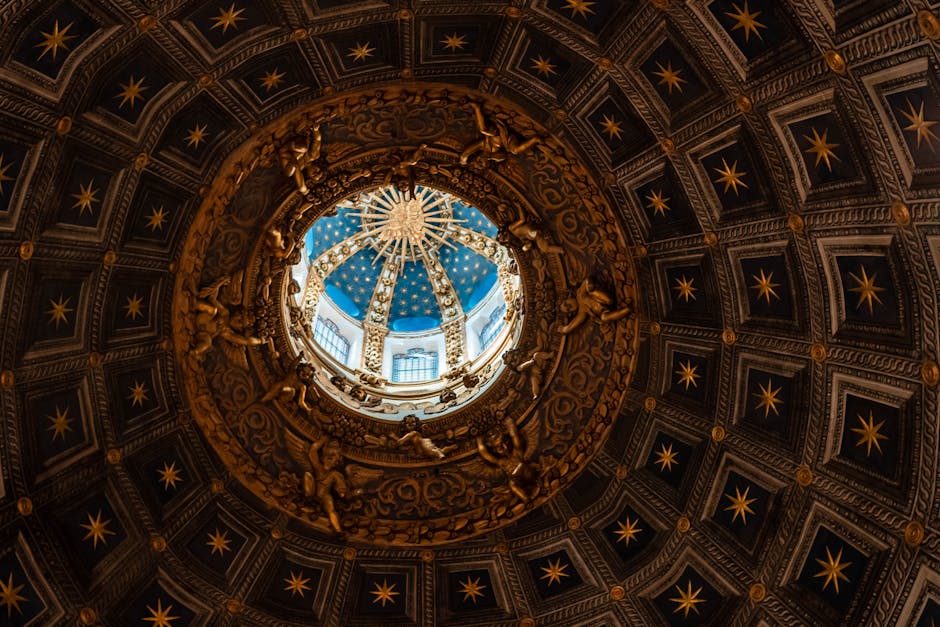
Photography: most areas of the Duomo allow photography without flash, though some spaces have restrictions (Libreria Piccolomini, private chapels). The pavement is fragile; you’ll often be asked not to walk on certain exposed slabs, and during exhibition periods it may be partly closed off. For successful shots, bring a wide-angle lens for interiors and a longer focal length for sculptural details. The best time for façade shots is early morning or late afternoon, when side-lighting enhances the relief.

Local context: Siena is a compact city of steep medieval streets — wear comfortable shoes. Take advantage of the proximity to the Piazza del Campo (address: Piazza del Campo, 53100 Siena SI) to pair your visit with a Tuscan meal: try a local dish like pici all’aglione or finish with cantucci and vin santo at one of the restaurants around the square (average meal price: €12–€30 per person depending on the place). Ticket offices accept cards but it’s handy to have a few euros for small shops and drinks.
Restorations, symbolic meanings and legacy
The Duomo di Siena has undergone successive restorations to preserve marble, wall paintings and the pavement. Recent interventions have uncovered ancient polychromies, consolidated vaults and brought the Crypt back into prominence. These works underscore how the cathedral was conceived as a matrix of symbolic intentions: the black-and-white marble contrast symbolizes the duality of good and evil, the narrative cycles of the pavement offer a moral and didactic reading, and the lavish sculpture expresses Siena’s civic power.
As a heritage center, the Duomo has been a hub for artists and sculptors, fueled local schools and influenced religious iconography. The Museo dell’Opera now preserves a corpus of works that explain the stylistic evolution of the site and allows researchers and visitors to reconstruct the building phases. Preserving the pavement, which requires rotating displays and protective coverings to shield it from seasons and crowds, is an example of active heritage management.

Quick practical info
- Main address: Piazza del Duomo, 8, 53100 Siena SI, Italy.
- Indicative combined ticket: ≈ €15 (Opera del Duomo pass).
- Indicative opening hours: 10:00–18:00 (varying by season; check before you go).
- Dress code: shoulders and knees covered for access to the nave during services.
- Access: on foot from Piazza del Campo (7–10 minutes).
Conclusion
The Duomo di Siena is far more than a cathedral: it’s a concentrate of history, art and architecture that showcases Gothic creativity in Tuscany. From the polychrome façade and the delicate vaulting to Nicola Pisano’s pulpit, the Libreria Piccolomini and the incredible inlaid marble pavement, every visitor will find something to feed their eyes and mind. Travelers can approach the Duomo in different ways: a quick exterior glance, an in-depth tour of the complex or a themed exploration (sculpture, stained glass, pavements) with a guide.
Practically, prepare your visit by checking official times and prices (the details in this article are indicative), favor quieter hours for ideal light and contemplation, and consider the « Opera del Duomo » combined ticket to make the most of your time. Respect conservation rules and dress codes, and take the time to look closely at the details that make Siena’s Duomo unique: the faces of the prophets, the finesse of the inlays, and the sculptors’ gestures frozen in marble.
Finally, don’t miss extending your visit into the surrounding streets: the Piazza del Campo, the medieval quarter and the viewpoints give essential context for understanding the Duomo’s place in city life. Between heritage, gastronomy and landscape, Siena and its cathedral promise a full emotional and intellectual experience. Whether your visit is brief or long, let yourself be guided by slowness and attention: the Duomo reveals itself fully to those who take the time to look, to read the stones and to listen to the stories they tell.
Click here to taste Chianti wines and olive oil with cellar visit