





Introduction: The Duomo di Siena, a Showcase of Art and History
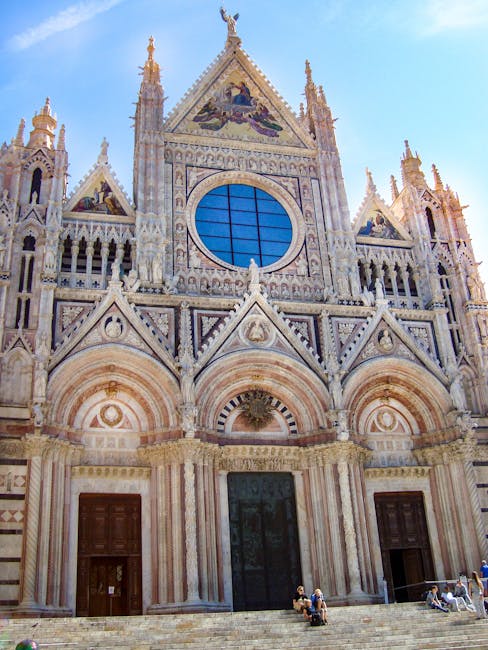
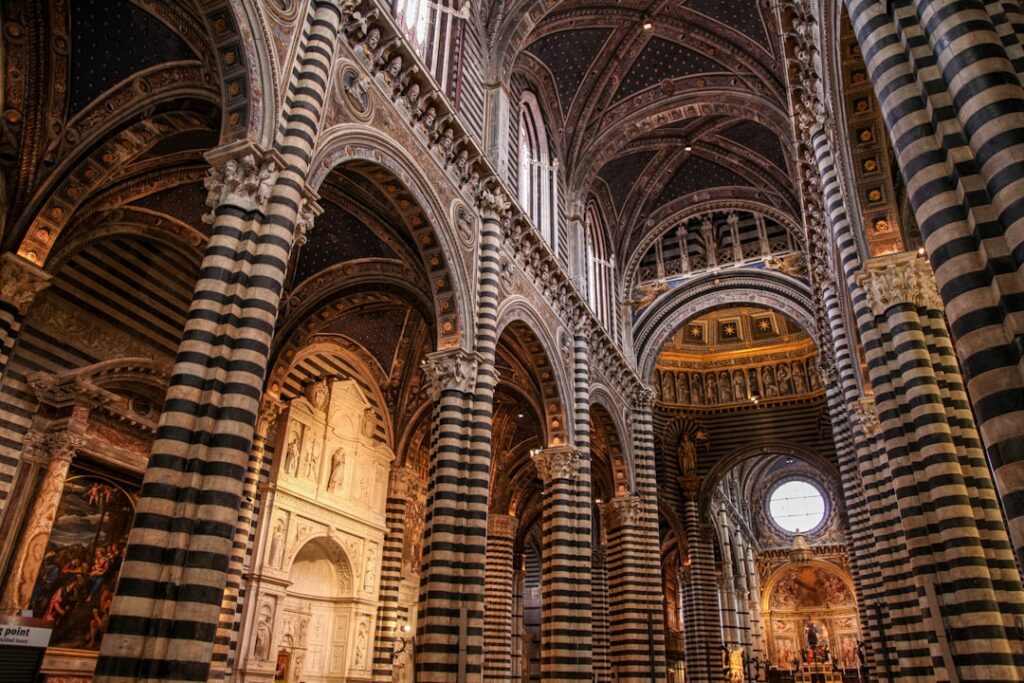
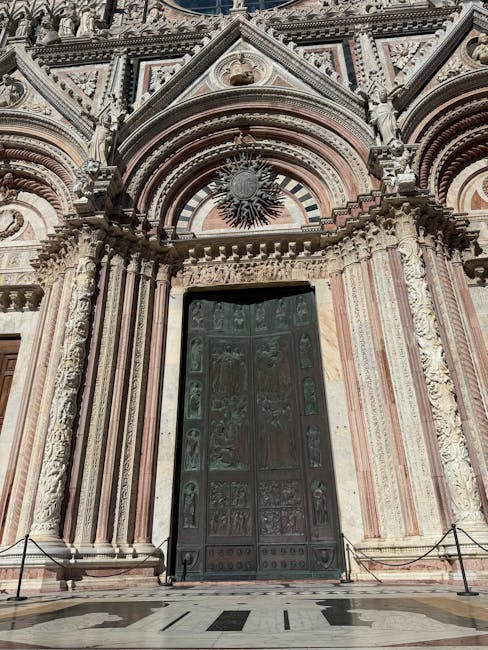
The Duomo di Siena, sitting in the medieval heart of Tuscany, is more than a cathedral: it’s a living museum where Gothic architecture, sculpture, painting and sacred crafts meet. Officially known as the Cattedrale di Santa Maria Assunta, this building dominates the Piazza del Duomo and tells, through its polychrome marbles and lavish decoration, the prestige and ambitions of a city-state that once rivaled Florence. For anyone interested in the artists and works that shaped Siena’s visual identity, the Duomo is a concentrated display of masterpieces where every chapel, pavement and stained glass window bears the often collaborative signature of major names from the Renaissance and the Middle Ages.
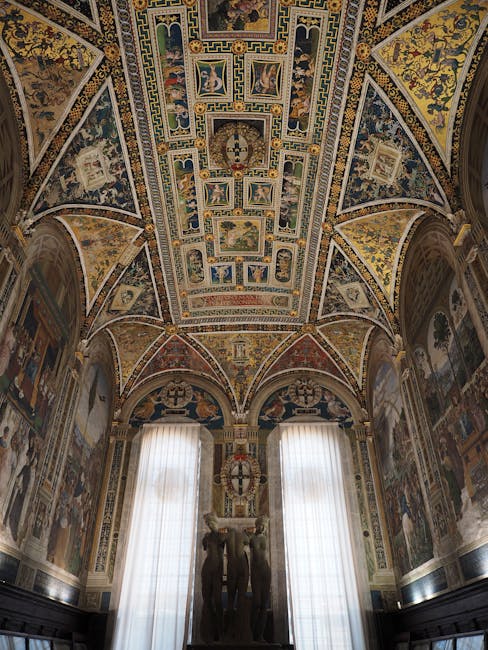
The famous artists of the Duomo of Siena aren’t limited to painters: sculptors, mosaicists and glassmakers all contributed to the building’s visual symphony. Visitors will encounter works linked to figures like Donatello, Nicola Pisano and Pinturicchio, as well as local schools such as the Scuola Senese. The complex also hides quieter treasures, like the Piccolomini Library, decorated by Pinturicchio and his workshop — illuminations and frescoes that tell the life story of a Sienese pope, Pius II (Enea Silvio Piccolomini).
Strolling through the Duomo is also stepping into Siena’s social and political history: family chapels reveal how powerful households carved their memory in marble and bronze. The mosaics and pavements, produced by workshops active from the 14th to the 19th century, combine biblical scenes, allegories and symbolic portraits meant to impress and instruct the faithful.
In this article we offer an in-depth guide to the artists and works to know at the Duomo of Siena. Through the sections you’ll learn the major names and their contributions, exact addresses to plan your visit, practical information such as prices in euros and opening hours, and local tips to make the most of every corner of this monumental complex. Whether you’re an art history buff, a photographer hunting distinctive compositions, or a curious traveler, this guide will help you spot the must-see works and understand their historical and aesthetic significance.
 Click here to book a guided walking tour of Siena and the Duomo
The Great Masters and Their Contributions: Donatello, Nicola Pisano and Others
Among the names that resonate most strongly at the Duomo di Siena, a few come to mind immediately. Donatello, the famed Florentine sculptor of the early Renaissance, left a significant mark at the Duomo despite his Florentine roots. His inventive work in bronze and marble brought new anatomical vitality and expressive power, evident in several pieces in the cathedral and associated museums.
Nicola Pisano, a master sculptor of the 13th century, is considered one of the founding fathers of monumental Italian sculpture. His influence can be seen in the reliefs and ornamental motifs across parts of the Duomo complex, particularly in his command of narrative relief panels that recall the Romanesque tradition while foreshadowing Gothic sensibilities.
The Scuola Senese (Sienese school) also played a crucial role. Less focused on naturalistic study than the Florentine school, Sienese painting developed a linear elegance and vibrant color palette visible in the Duomo’s frescoes and decorative panels. Artists like Duccio di Buoninsegna, though his major work, the Maestà, is housed in the Museo dell’Opera del Duomo, influenced the whole of Sienese religious art. Active in the 14th century, Duccio helped define a pictorial language where sacred storytelling met a unique ornamental delicacy.
Pinturicchio (Bernardino di Betto), active at the end of the 15th century, is one of the Renaissance painters who decorated the Piccolomini Library with fresco cycles of remarkable narrative brightness. The scenes painted by Pinturicchio, sometimes executed with the help of notable assistants like Silvio Cosini, depict the life of Enea Silvio Piccolomini (the future Pope Pius II) in a light palette and with a taste for richly decorative detail.
Beyond these well-known figures, the Duomo keeps works by numerous lesser-known artists and workshops that are essential to understanding the collaborative chain of artistic production in medieval and Renaissance Italy. Local glassmakers, mosaicists and goldsmiths frequently completed the big-name commissions, producing liturgical objects, stained glass and panels that strengthen the monument’s stylistic unity.
Click here to book a 3-hour private walking art tour
The Piccolomini Library and Pinturicchio: A Renaissance Gem
The Piccolomini Library is located within the Duomo complex, on the second floor of the adjacent episcopal palace. Address: Piazza del Duomo, 13, 53100 Siena SI, Italy. It’s one of the most photogenic and admired spots in the Duomo: Pinturicchio and his workshop created a fresco cycle here dedicated to the life of Enea Silvio Piccolomini, who became Pope Pius II. The room is famous for its narrative vitality, vivid colors and lavish painted ornament.
The library, fitted out in the 15th century, served both as a reading room and a ceremonial space. The walls are completely covered with scenes that mix biographical episodes, allegories and painted architectural decoration. The finesse of the drawing, the use of gold to highlight certain details and the sense of storytelling make this room a model of Renaissance pictorial refinement.
Opening hours (check before visiting): the Piccolomini Library is generally open from 10:00 to 17:00, with seasonal variations. Admission: access is often included in the combined « Opera del Duomo » ticket (see the ticketing section), but separate entry for special exhibitions can cost around €6–€9.
Practical tip: to fully appreciate the frescoes, allow extra time and avoid peak hours (12:00–15:00). The subtle lighting and saturated colors call for patient viewing: pause at each register, observe how Pinturicchio constructs perspective and plays with small anecdotal details—costumes, instruments, animals—that bring the narrative to life. Also consider using the audioguides available at the entrance or downloading the Museo dell’Opera’s official app for contextual explanations of the scenes.
Click here to book your ticket for the cathedral and the Piccolomini Library
The Marble Pavements and Mosaics: Makers, Techniques and How to Read Them
The pavement of the Duomo of Siena is one of the site’s most unique and intricate attractions. Made up of inlaid marble panels (started in the 14th century and augmented through the 19th century), it brings together the work of successive artists and workshops, often anonymous or poorly documented. These panels depict biblical scenes, allegories, mythological combats and symbolic motifs that reward careful study.
The techniques used—joining marbles of different colors, incisions and engravings—require exceptional craftsmanship. The pavement is covered by boards for most of the year to protect it, but on certain days (especially in the low season and during special guided tours) sections are uncovered for viewing. Panels are often attributed to local masters, sometimes in collaboration with more famous artists who supervised the overall iconographic program.
Address for visits: Piazza del Duomo, 8, 53100 Siena SI (main cathedral entrance). Access and prices: special guided visits to see the pavements uncovered or to access normally closed areas may be included in higher-tier tickets or organized irregularly by the Museo dell’Opera del Duomo. Typically, the basic combined ticket (Duomo + Museum + Baptistery + Ponente Area) costs around €15–€18, with special rates available (youth, senior, groups).
Practical tips: wear comfortable, flat shoes for wandering. Ask permission before photographing if signage requires it (rules can vary by area). The best times to admire the pavements are early morning, when soft light filters through the stained glass, or during a guided tour that explains the panels’ meaning. Take your time: each panel is a « window » into stories that blend sacred and allegorical themes, and reading them in sequence illuminates Siena’s theological and civic worldview.
The Museo dell’Opera del Duomo: Masterpieces and Practical Info
The Museo dell’Opera del Duomo di Siena houses a large portion of the Duomo’s original works, moved for protection and conservation. Address: Museo dell’Opera del Duomo, Piazza del Duomo, 8, 53100 Siena SI, Italy. The museum displays sculptures, panels, reliquaries and architectural fragments, including panels by Duccio, sculptures by Giovanni Pisano and masterpieces attributed to other regional masters.
Opening hours (indicative): generally open from 10:00 to 19:00, daily except some holidays. Check the official site for exceptional closures or special evening openings. Admission: the combined Opera Pass (covering the Duomo, Piccolomini Library, Battistero di San Giovanni, the Museo dell’Opera and the panorama from the « Facciatone ») normally ranges from €16 to €20. Reduced rates: €8–€10 for students and seniors, free entry for young children (conditions apply). Prices can vary during temporary exhibitions.
Highlights include fragments of the old façade, pulpit statues and painted panels by artists such as Duccio di Buoninsegna (for instance, certain panels from the Maestà are preserved and studied here). The museum also offers reconstructions and multimedia aids to explain the chronology of artistic interventions.
Practical tips: buy tickets online to avoid queues, especially in high season (April–September). The museum often provides audioguides and illustrated brochures in multiple languages. If you’re particularly interested in medieval sculpture, ask for detailed labels and take note of recent restorations—many pieces have benefited from conservation work that explains their current appearance.
Click here to buy the Opera del Duomo pass with audioguide
The Baptistery of San Giovanni and the Nicola Pisano Pulpit: A Crossroads of Arts
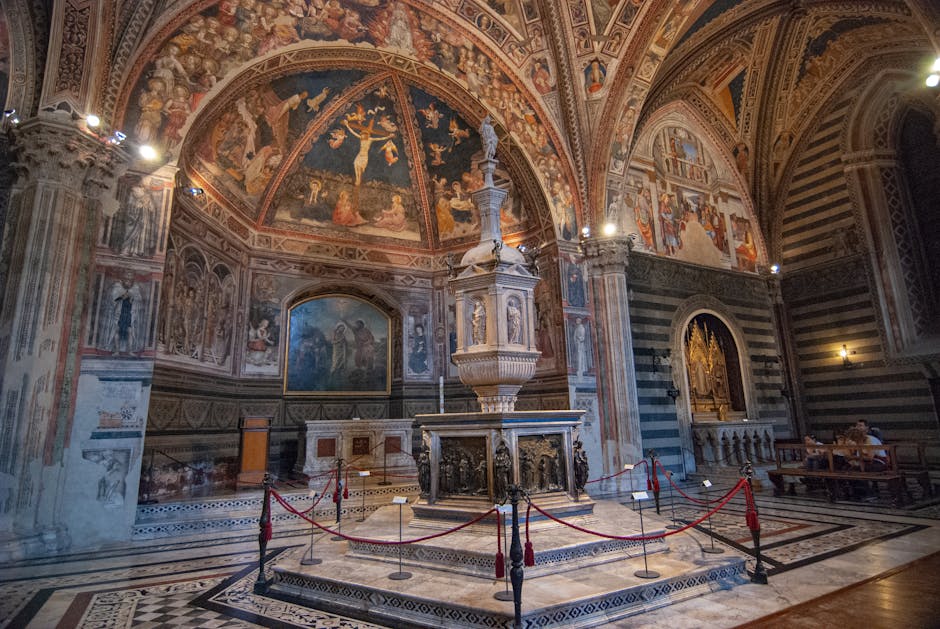
The Battistero di San Giovanni sits adjacent to the Duomo and completes the artistic reading of the complex. Address: Piazza del Duomo, 2, 53100 Siena SI, Italy. The baptistery is known for its marble pulpit and reliquaries, and for the sculptural reliefs influenced by the Pisan tradition. Although Nicola Pisano’s most famous pulpit is in Pisa, his narrative, compact style is echoed in the reliefs of Siena’s baptistery.
Opening hours and prices: often included in the combined « Opera del Duomo » ticket. When the baptistery opens separately, hours generally align with the Duomo (10:00–18:00). Admission: check at the Museo dell’Opera welcome desk; individual entry costs around €3–€6 if not included in the full pass.
Immersive description: stepping through the baptistery door, visitors immediately feel a more intimate atmosphere, bathed in light from high windows. The reliefs recount Gospel episodes and symbolic motifs connected to the sacrament of baptism. Details in the sculpture—drapery, angelic figures, liturgical gestures—show technical mastery inherited from the great Tuscan workshops. The contrast between the Duomo’s monumental scale and the baptistery’s human proportions offers a complementary experience: here you sense a more domestic spirituality centered on community and local liturgy.
Practical tips: the baptistery is a place for quiet. Take the time to listen to the acoustics, sometimes used for small a cappella concerts. Check information panels for baptismal schedules (which can restrict access). If you want to study the reliefs closely, consult the display cases and ask museum staff for documentation on restoration campaigns to better understand the works’ chronology.
Visiting the Duomo: Prices, Hours, Addresses and Logistics
Planning a visit to the Duomo di Siena takes a bit of organization. Here are the essential practical details:
- Main address of the Duomo: Piazza del Duomo, 8, 53100 Siena SI, Italy.
- Museo dell’Opera: Piazza del Duomo, 8, 53100 Siena SI, Italy (same complex).
- Piccolomini Library: Piazza del Duomo, 13, 53100 Siena SI, Italy.
- Baptistery of San Giovanni: Piazza del Duomo, 2, 53100 Siena SI, Italy.
Indicative prices (verify on the official site before visiting):
- Combined Opera del Duomo ticket: around €16–€20 (adult).
- Reduced access: around €8–€10 (students, seniors).
- Children’s entry: often free or reduced depending on age.
- Tickets for temporary exhibitions: variable, often €3–€8 extra.
General opening hours (subject to seasonal change):
- Duomo (Cathedral): typically 10:00–19:00.
- Museo dell’Opera: typically 10:00–19:00.
- Piccolomini Library: typically 10:00–17:00.
- Baptistery: generally aligned with the Duomo, 10:00–18:00.
Local practical tips:
- Book online: in high season (April–September, religious holidays) queues can be long. An online ticket often saves you valuable time.
- Guided tours: choose a tour in English if you want to deepen your knowledge of the artists. Local guides offer thematic routes (sculpture, painting, marbles).
- Photography: respect signage and any no-flash rules. Some sensitive areas prohibit photos to protect pigments and materials.
- Dress code: respectful clothing required (shoulders covered, modest attire) for access to liturgical spaces.
- Accessibility: parts of the Duomo are hard to access for visitors with reduced mobility; check with the welcome desk about adapted routes and access to exhibitions.
- Time to allow: plan at least 2–3 hours for a relaxed visit of the complex (Duomo, Museum, Library, Baptistery), more if you want to study the pavements in detail or join an in-depth guided tour.
Click here to book a skip-the-line walking tour of the Duomo
Foodie and Practical Tips Around the Duomo
After your visit, explore the neighborhood to discover Siena’s culinary side and some local spots. The area around the Duomo has plenty of dining options, but a few local tips will help you avoid tourist traps:
- Where to eat: A few minutes’ walk away, Via di Città and Via Banchi di Sopra are lined with traditional trattorie and osterie. Try local specialties like pici alle briciole (local pasta) or ribollita (country soup). A recommended spot: Osteria Le Logge, Via del Porrione, 33, 53100 Siena SI (book ahead). Typical main course prices: €10–€18.
- Gelato: For artisan gelato after your visit, head to Gelateria Kopakabana, Via Rinaldini, 17, 53100 Siena SI, or try other gelato shops near Piazza del Campo (about a 15-minute walk from the Duomo).
- Drinks: Sample local wine (Chianti Classico, Vernaccia) at a wine bar near the cathedral. A glass typically costs between €4 and €8.
Click here to taste wine and charcuterie in central Siena
Transport and parking:
- The Duomo area is largely pedestrian; parking is limited. If you arrive by car, use peripheral car parks like Parking il Campo (Via della Gallina, near Piazza del Campo) or the Fortezza Medicea car park and walk up from there.
- Local buses (autolinee urbane) serve the center; Siena’s train station (Piazza Carlo Rosselli) is about a 15–20 minute walk from the Duomo or a short taxi ride.
Final practical suggestions:
- Avoid Mass times (especially Sunday mornings) if you want a full tourist visit.
- Buy postcards and guidebooks at the Museo dell’Opera shop for reliable references and high-quality illustrations.
- If you’re a photographer, early morning or late afternoon provide soft light on the façade and the nearby streets.
Conclusion: Understanding the Duomo Through Its Artists and Preserving the Experience
The Duomo of Siena is an experience that can be read on multiple levels: architectural, artistic, liturgical and civic. Knowing the artists who contributed to this monument—Donatello, Nicola Pisano, Pinturicchio, Duccio and the countless anonymous masters of the Scuola Senese—helps connect isolated works to a collective story of a city that invested in art as a means to shape its identity. Every visitor leaves with a richer perspective if they take time to observe the variety of techniques (sculpture, painting, mosaic, stained glass) and the way those techniques converse within a single sacred space.
To keep the experience alive after your visit, a few simple actions help: hold onto an illustrated guide or museum brochure, photograph details that moved you (within current rules), and note the names of chapels or panels that deserve a second visit. If you love art, return at different hours to appreciate shifting light and, if possible, join a themed tour (on medieval sculpture, the pavements, or Pinturicchio’s cycle).
Finally, the Duomo sits within a living urban landscape: enjoy Siena’s alleys, cafes, markets and squares to put the artists’ work in context. Their creations were not conceived as isolated objects but as elements of civic and religious life. With that perspective, your visit will take on a more human and historical dimension. Enjoy your artistic journey in Siena: let the shapes, colors and stories carry you through one of Italy’s unmissable treasures.