





Introduction
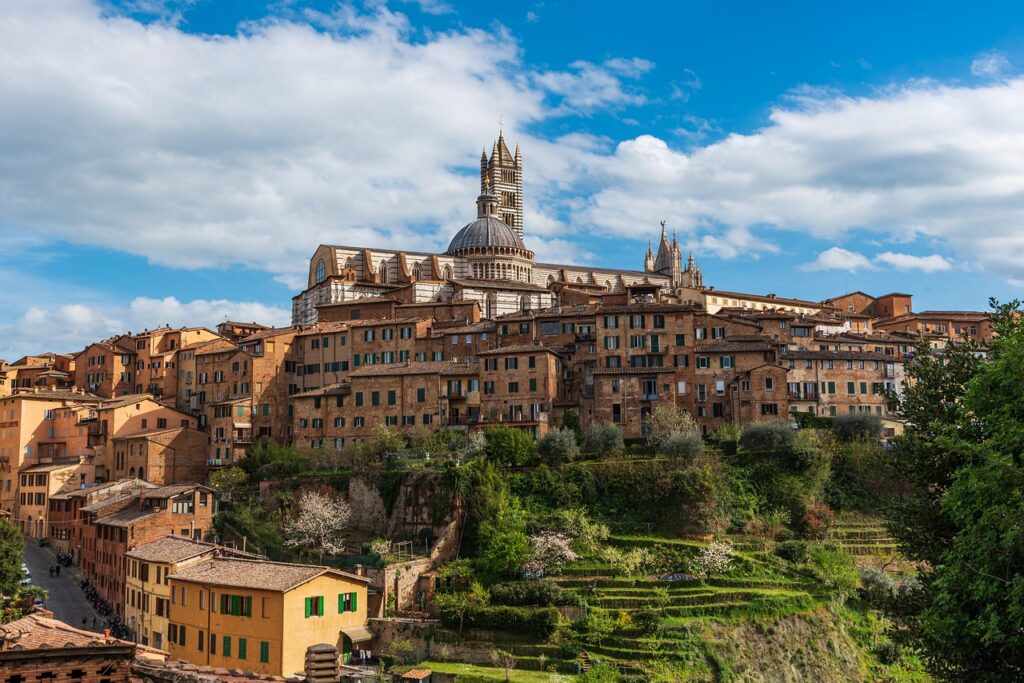
Siena, that compact medieval hill town in Tuscany, is known for its UNESCO-listed historic center, the thrilling Palio horse race—and above all for its artistic and spiritual crown jewel: the Duomo di Siena (Siena Cathedral). More than just a place of worship, the Duomo is a roofed museum where Gothic architecture, polychrome marble, painted panels and a rich collection of sculpture tell the city’s sacred and civic story. The statues and sculptural groups—whether gracing the façade, punctuating the side chapels or conserved in the Museo dell’Opera del Duomo—are emotional and visual anchors for every visitor. They create an ongoing dialogue between stone and light, between sculpted gesture and sacred narrative.
Getting up close to the Duomo’s statues means stepping into a sculptural language that spans the 13th, 14th and 15th centuries—works with highly expressive faces, sometimes polychrome, often placed at dizzying heights where your eyes must learn to read them within their monumental context. From the façade largely attributed to Giovanni Pisano to the marble panels of the floor, each statue marks a key moment: a patron saint, an ancient sibyl reworked for Christian symbolism, an angel announcing a mystery. The Duomo doesn’t simply freeze figures: it stages them, framing them with architecture and reliefs that amplify their narrative power.
This article offers an immersive, practical exploration of the Duomo of Siena’s most iconic statues: exact locations, how to see them, entrance fees, opening hours, and local tips to get the most out of your visit (best times for light, quieter routes, rules about silence and photography). We’ll also list the other parts of the cathedral complex worth visiting to complete your reading of the sculptures: the Cattedrale di Santa Maria Assunta (Duomo di Siena) itself, the Museo dell’Opera del Duomo, the Battistero di San Giovanni and the Libreria Piccolomini.
Before diving into details, a few essential practical notes: the Duomo complex sits in the heart of Siena at Piazza del Duomo, easily reached on foot from the Piazza del Campo (roughly 300–400 meters depending on your route). Religious services can restrict access to certain areas; museum-route tickets are not always included with attendance at services. Below we list addresses, indicative hours and typical ticket prices in euros to help you plan.
Main address of the complex: Duomo di Siena (Cattedrale di Santa Maria Assunta) — Piazza del Duomo, 8, 53100 Siena SI, Italy. Museo dell’Opera del Duomo: same address (entrance on Piazza del Duomo). Battistero di San Giovanni: inside the complex, access via the cathedral or the piazza. Practical information and prices change over time; we recommend checking the official pages of the Opera della Metropolitana di Siena or Siena’s tourist office before you go.
 Click here to book a day trip to Siena, San Gimignano and Pisa
The Giovanni Pisano Façade: External Statues and Their Language
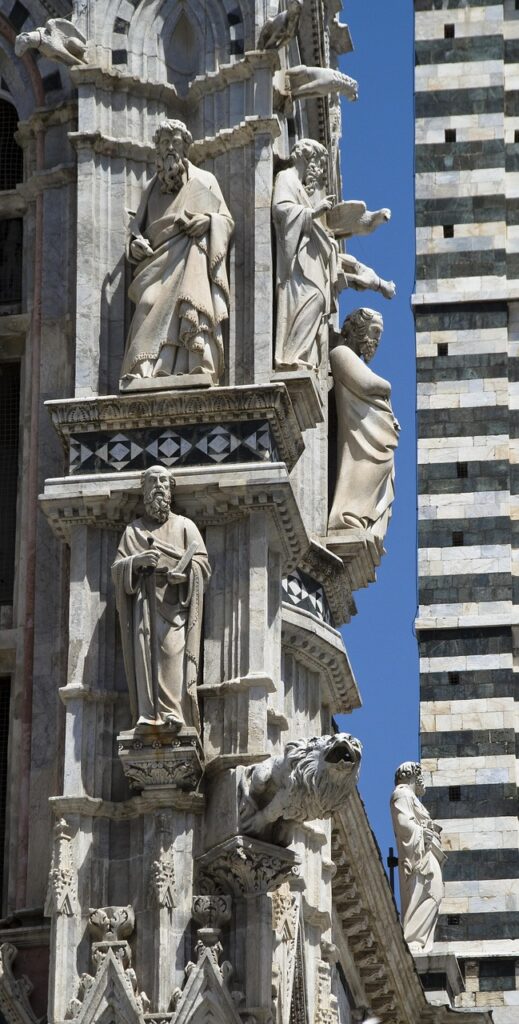
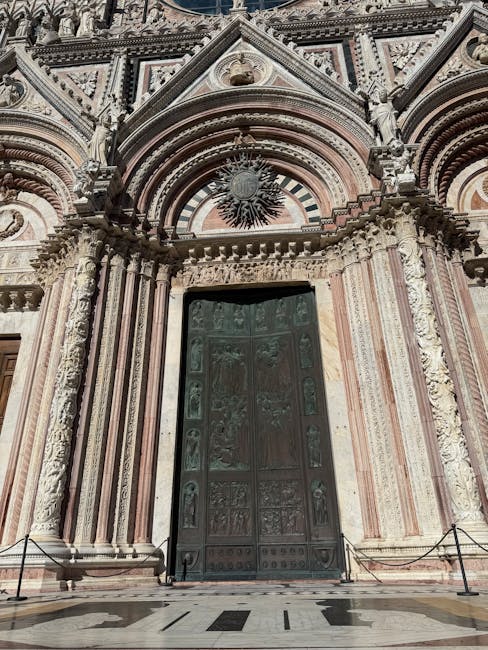
The Duomo’s façade is one of the first stops for anyone looking to spot the cathedral’s signature statues. Largely credited to Giovanni Pisano (late 13th–early 14th century), it shows a polychrome palette of white, green and red marble, punctuated by niches and tympana that house sculpted figures. The statues on the façade—apostles, prophets, sibyls, angels and saints—play a major iconographic role: they embody biblical tradition and the continuity of faith, while bringing together Classical and Christian references.
A sensory description: approach the façade slowly from Piazza del Duomo; study the deep modeling of the draperies, the liveliness of the faces, the range of postures. The high niches demand a perspective reading: the sizes are often adjusted so the figures read correctly from the ground. The contrast between smooth marble and carved decoration produces shadow effects that change throughout the day—morning brings softer light to the eastern section, while late afternoon emphasizes the lower reliefs.
Local practical tips:
- Best time to visit: early morning (8:30–10:30) to avoid crowds and enjoy gentle light on the eastern façade.
- Access: the square is open all day; the façade can be admired for free from outside.
- Respect: keep quiet and avoid elaborate photo poses in front of the doors during services.
Addresses and related hours:
- Duomo di Siena (façade) — Piazza del Duomo, 8, 53100 Siena SI, Italy. Exterior access free 24/7.
- Interior access — to enter the cathedral and get closer to other statues, see tickets and opening times below.
Click here to book a guided walking tour of Siena Cathedral
Interior Statues: Chapels, Transept and Master Sculptors
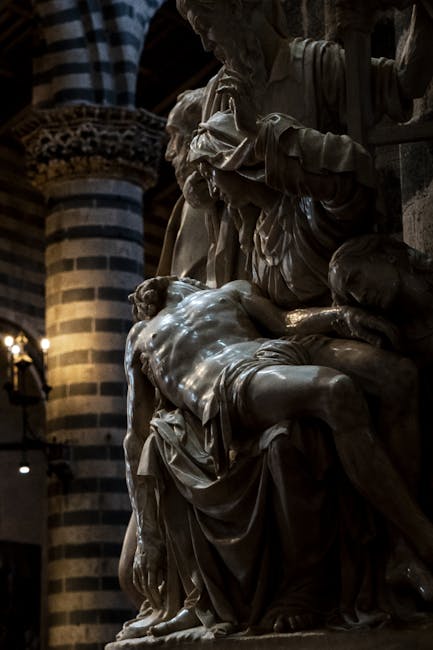
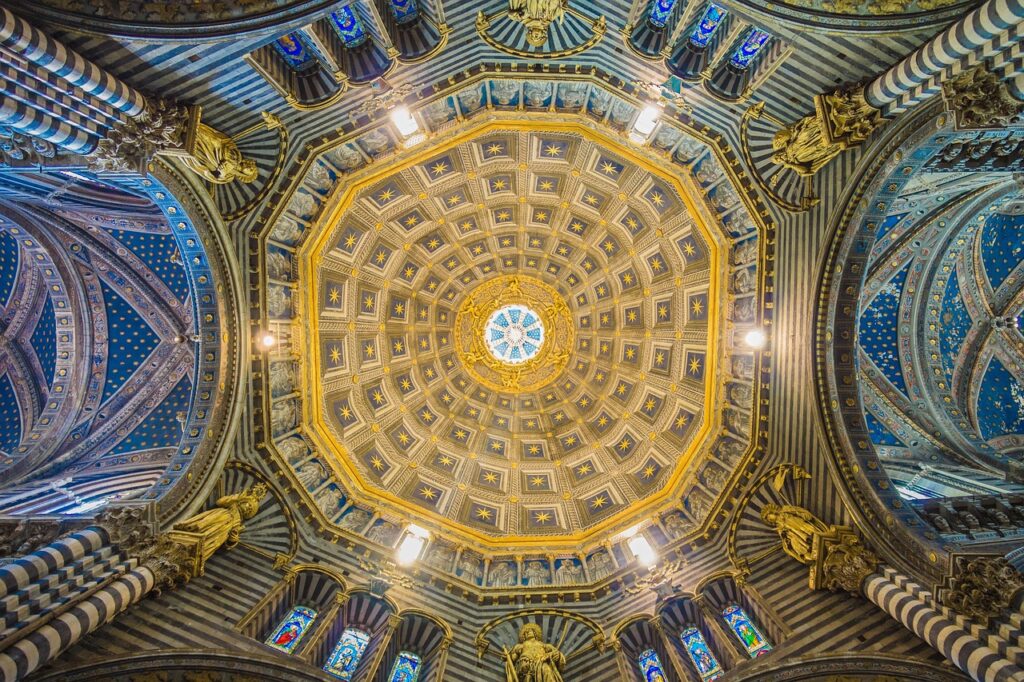
Once you pass through the heavy doors, you enter a world of marble, black-and-white columns and shafts of light that highlight the interior sculpture. The Duomo houses statues and reliefs placed throughout the side chapels, transept and choir. You’ll find patron saints, angels bearing liturgical attributes, as well as funerary statues and memorial monuments commissioned by Siena’s powerful families.
A close-up look: walk slowly down the nave; pause at each chapel to study the statues within their settings—how they converse with altars, frescoes and altarpieces. Some figures, set on plinths or in niches, are polychrome; others, in white marble, favor restraint. The famous marble pavement—il pavimento—serves as an iconographic base for certain sculpted scenes and changes the way your eye reads upright statues.
Not-to-miss highlights:
- Libreria Piccolomini (entry from the cathedral): though best known for Pinturicchio’s frescoes, the library includes carved elements that frame the reading spaces and complement the cathedral’s sacred statuary.
- Side chapels: each chapel keeps its own set of statues—bishops, local holy figures and funerary sculptures often attributed to regional workshops.
- Emotional charge: many of these statues were commissioned by families to mark their civic and religious contributions; reading the epitaphs helps you understand how sculpture and civic memory connect.
Local practical tips:
- Indicative opening hours: Duomo interior — 10:00–19:00 (hours change seasonally and for religious services).
- Prices: combined ticket (Duomo + baptistery + museum + terrace): typically between €10 and €20 depending on concessions; check the Opera della Metropolitana di Siena’s official site. Religious entry for Mass is free but access to museum areas may be restricted.
- Photography: photos are often allowed without flash; check onsite signage and ask staff about sensitive areas.
Masterworks in the Museo dell’Opera del Duomo and Their Associated Statues
A short walk from the cathedral, the Museo dell’Opera del Duomo brings together major pieces originally from the Duomo and the ecclesiastical complex: Duccio di Buoninsegna’s famous Maestà, marble sculptures and wooden works. The museum lets you study statues and carved fragments close-up—out of their monumental settings—revealing workshop finesse, lost polychromy and carving techniques.
Immersive description: step into the museum’s climate-controlled rooms and follow the explanatory panels. Unlike the larger in-situ statues, here the works are presented at eye level: you can examine faces, spot tool marks, notice old repairs and understand how the pieces were made. Funerary sculptures and architectural fragments show almost lifelike faces, with intensely modeled expressions.
Concrete points:
- Duccio di Buoninsegna — Maestà: though best known as a painted polyptych, its presence in the museum underlines the link between painting and sculpture in the Duomo and helps you picture the sculptural environment that once surrounded it.
- Sculptural fragments: heads, feet and narrative reliefs—clues to reconstruct the original sculptural staging of the cathedral.
- Museum presentation: the Museo dell’Opera contextualizes statues with models, labels and digital reconstructions, useful for placing works back in their original locations.
Click here to buy your ticket for the cathedral and Piccolomini

Practical info:
- Address: Museo dell’Opera del Duomo — Piazza del Duomo, 8, 53100 Siena SI, Italy (same complex as the cathedral).
- Indicative hours: 9:00–19:00 (last admission usually one hour before closing). Closed on some holidays; check ahead.
- Prices: museum-only ticket roughly €8–€12, combined Duomo ticket around €15–€22. Reduced rates for students and seniors.
The Battistero di San Giovanni and the Sculpted Baptismal Font
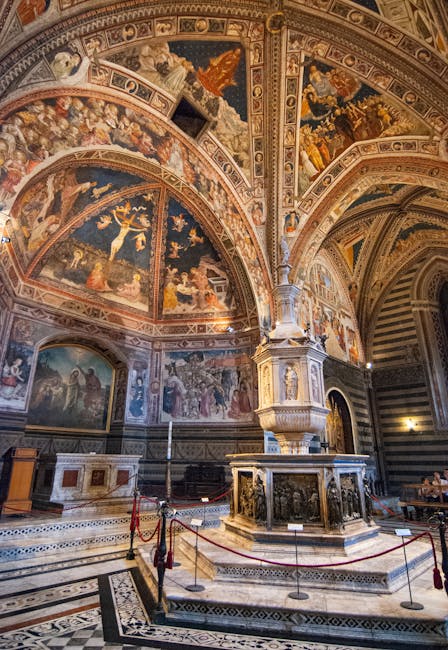
The Battistero di San Giovanni (Baptistry of Saint John) is part of the cathedral complex and contains sculpture related to the sacrament of baptism. At the center, the baptismal font—adorned with reliefs and figures—speaks to the ritual’s civic and religious importance in Siena. The baptistry’s statues and reliefs stage biblical episodes and symbolic figures of purification and renewal.
A sensory description: the dim interior of the baptistry, the worked stone and the patina of the reliefs create a contemplative atmosphere. The sculptures here are often human in scale and more approachable than those on the façade: you can get close, almost touch them, feel the marble’s texture and the softness of the carved volumes. Some fonts are topped with sculpted covers and surrounded by figurative ornamentation that narrates saints’ lives and Gospel scenes.
Practical tips:
- Hours: generally included with the Duomo combined ticket; open during the cathedral and museum’s opening hours.
- Price: see the combined Duomo/Museum prices above; visits are often included.
- Tip: aim for mid-afternoon for a quieter, more intimate atmosphere after the morning tourist rush.
Funerary Statues and Memorial Monuments: Siena Families’ Sculpted Memory
Throughout the Duomo and its side chapels you’ll encounter funerary monuments and commemorative statues commissioned by Siena’s leading families. These monuments blend portraiture and allegory: the deceased is often shown as a bust or full-figure effigy, surrounded by angels, personified virtues and family heraldry. Funerary sculpture offers a parallel reading of Siena’s social history, where art and family memory intersect.
A close look: read the inscriptions, dates and coats of arms—they help orient your understanding of each commission. The statues show a wide variety of styles—from flamboyant Gothic to the more humanist language of the Renaissance. Some tombs include effigies in prayerful poses, others present more heroic stances: each iconographic choice reveals how families wanted to be seen after death.
Visiting tips:
- Interpretation: read labels and, if possible, pick up a guidebook or use an audio guide to identify family names and artists.
- Respect: keep a respectful distance from tombs—some are still active places of memory.
- Photography: usually allowed without flash; avoid tripods in circulation areas.
Visitor Practices and Local Tips for Enjoying the Statues
To get the most from your visit to Siena Cathedral and its statuary, adopting a few practical habits is helpful. Here are recommendations based on visitors’ experience and the daily management of the site.
Concrete advice:
- Buy a combined ticket: if you want to visit the cathedral, Museo dell’Opera, the baptistry and the terrace, a combined ticket is usually the best value. Expect combined fares between €15 and €22 depending on concessions and season.
- Timing: aim for opening hours (9:00–11:00) or late afternoon (16:00–18:00); noon is the busiest time. Always check Mass schedules, which can limit interior access—services are sometimes held in the morning and late afternoon.
- Guided tour: choose a guided tour (in English/French/Italian) if you want precise interpretive keys to the statues and attributions. Official guides can provide documented information and engaging anecdotes.
- Accessibility: some parts of the Duomo are difficult for visitors with reduced mobility; contact the staff ahead of time and plan assistance if needed.
- Luggage and gear: there’s no official cloakroom; travel light and wear comfortable shoes for walking on marble pavements and Siena’s steep streets.
Click here to book skip-the-line tickets for the Duomo

Local Siena tips:
- Stop by the Bottega del Duomo (the museum shop) to pick up a printed guide and replicas of small reliefs—nice souvenirs that extend the visit at home.
- If you visit in summer, stay hydrated: Siena can be hot and dry from June to August; bring a water bottle (there are many public fountains).
- For photographers, nighttime offers interesting angles: the façade is lit and contrasts become dramatic—ideal for backlit shots.
Conclusion
Siena Cathedral is far more than a church: it’s a sculpted theater where statues tell the stories of faith, the city and the families who shaped Siena. From Giovanni Pisano’s monumental façade sculptures to the works displayed in the Museo dell’Opera del Duomo, and from funerary monuments and the marble pavement to the figures in the baptistry, every element contributes to a layered reading of the building. By observing closely and taking the time to explore chapels, annexed museums and shaded corners, you’ll discover a rich sculptural language made of expression, gesture and artistic intention that crosses centuries.
To best prepare your visit: note the main address—Piazza del Duomo, 8, 53100 Siena SI, Italy—and consider buying a combined ticket (usually between €15 and €22) if you want access to the cathedral, baptistry and museum. Hours vary with the seasons and religious services; check the Opera della Metropolitana di Siena’s official site for up-to-date information before you go. Wear sturdy shoes, respect places of worship and favor calm morning or late-afternoon hours for ideal light on the sculptures.
Finally, give yourself time: the Duomo’s statues don’t reveal everything at first glance. Some require you to look up; others that live low on the pavement need you to bend down and study a detail. They tell the story of Siena—its beliefs, struggles and love of beauty—and invite every visitor to read stone the way you read a history book. Enjoy your visit, and take a moment to listen to the silence among the sculptures: often that’s where the most meaningful conversation between art and viewer takes place.
Click here to reserve the cathedral complex pass with audio guide