






Introduction
Siena, a medieval gem in the heart of Tuscany, is famous for its Piazza del Campo, its magnificent cathedral and the legendary Palio. Yet beneath and between those landmarks lies another Siena: a city of narrow passages, discreet stairways and forgotten corridors that whisper centuries of history, rituals and daily life. Walking through Siena means embracing the pleasure of getting happily lost. It means plunging into lanes where the stone speaks, climbing staircases that lead to hanging gardens, and finding arcades that open onto secret loggias. These spots, often missing from standard tourist routes, offer an immersive, tactile glimpse of Siena’s past.
Tracing those curves through the centuries, you’ll uncover functional passageways — routes for livestock, access ways for confraternities or staircases that once led to palace terraces — which today serve as viewpoints, artisan studios or romantic shortcuts for photographers. The underground corridors and crypts, like those beneath the Complesso del Duomo, reveal archaeological layers: Etruscan-Roman foundations, medieval remnants and Renaissance adaptations. Far from being mere curiosities, these spaces shaped the city’s social layout, the life of the Contrade (the neighbourhoods), and the way Sienese people experienced their festivals, processions and civic clashes.
This article invites you on a guided wander — practical and sensory — to discover “Siena off the beaten path: hidden passages and secret stairways.” You’ll find precise addresses, opening hours and approximate prices, immersive descriptions and handy tips to explore at your own pace. Whether you’re hunting for a spiral staircase up to a panoramic terrace, a moss-covered medieval passage, or a secret descent into a crypt dominated by ancient frescoes, you’ll leave with concrete routes and local tricks to deepen your exploration. The city reveals itself in its interstices: moments of silence, starry nights above a roof, or the slanted light that picks out a carved doorstep — small treasures that make up Siena’s intimate, lesser-known side.
Before you set out, a few practical tips: wear comfortable shoes (the cobbles get slippery after rain), respect private property (some staircases lead to private spaces or workshops), and favour quiet hours in the morning or late afternoon for softer light and fewer crowds. Bring a flashlight if you plan to explore publicly accessible underground passages, and check accessibility — many historic sites aren’t suitable for visitors with reduced mobility. Finally, take the time to listen: locals often know these hidden gems and will happily share an anecdote or tip to help you find them.
The Underground Passages of the Complesso del Duomo and Santa Maria della Scala
In the heart of Siena, the Complesso del Duomo (Cattedrale di Santa Maria Assunta) and the former hospital Santa Maria della Scala form an inseparable pair — not only because they sit close to each other (Piazza del Duomo, 8 and Piazza del Duomo, 2, 53100 Siena SI) but also because of the network of underground passages and crypts that connect their histories. The Duomo di Siena (Piazza del Duomo, 8) is typically open from about 10:00 to 19:00; the combined “Duomo Pass” costs roughly €15–20 depending on season and exhibitions. The Santa Maria della Scala (Piazza del Duomo, 2) welcomes visitors and exhibitions from around 10:00 to 18:00, with tickets around €10–12.
Beneath these monuments lie chapels, crypts and corridors that have served in turn as necropolises, storage rooms and infirmaries. The Duomo Crypt, accessible from the cathedral via the nave or through the Museo dell’Opera Metropolitana (Piazza del Duomo, 8), reveals low columns, sculpted foundations and traces of tadelakt-like wall painting. The experience feels almost physical: the temperature drops, the air grows damp, and the stone — polished by centuries of hands — gives off the scent of old, wet rock.
 Click here to book your ticket for Siena Cathedral

Santa Maria della Scala, once a hospital and now a museum, offers routes that descend into underground rooms displaying old medical instruments, frescoes and relics. Santa Maria della Scala has subterranean galleries that sometimes connect to the cellars of neighbouring palaces; these passages were used to discreetly move patients and store provisions and medicines during sieges. The frescoes in the Sala del Pellegrinaio and the rotating exhibitions provide a bridge between social history and underground architecture.
Click here to buy the pass for the cathedral complex
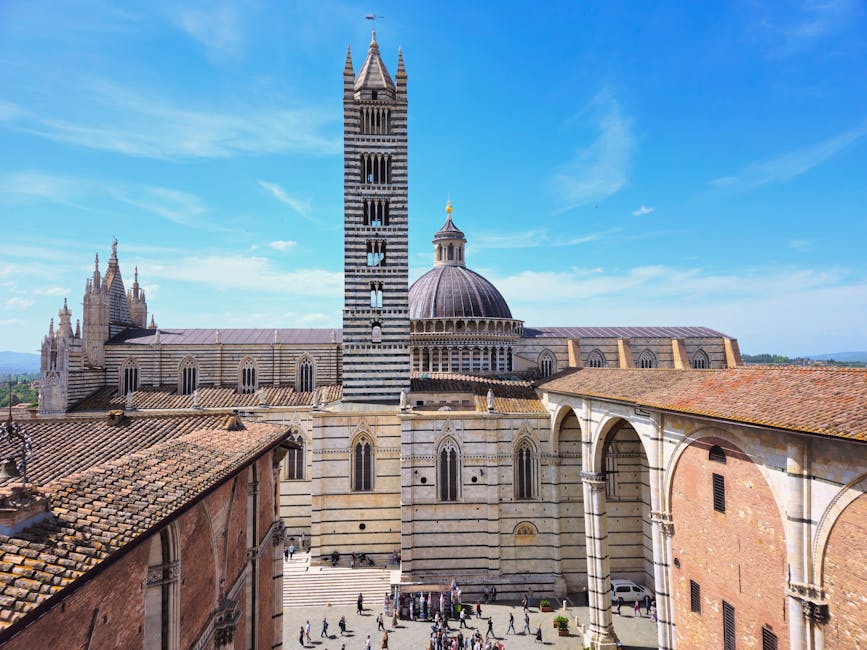
Practical tips: book the combined Duomo + Museo dell’Opera ticket to access the crypt and save money; bilingual guided tours (Italian/English) are often available and recommended to help decode the archaeological layers. Bring a light jacket for underground dampness and avoid large suitcases in these tight spaces. Access to the oldest areas can be limited during temporary exhibitions: check the official sites of the Opera della Metropolitana or Santa Maria della Scala before you go.
Secret stairways and viewpoints: from the Torre del Mangia to hidden gardens
The Torre del Mangia, attached to the Palazzo Pubblico (Piazza del Campo, 1, 53100 Siena SI), is iconic for its dizzying climb and the sweeping views over Siena’s rooftops. The office usually allows access to the tower top between roughly 9:30 and 19:30 (hours vary by season), with tickets around €10–12. The ascent, along a narrow, monumental stone staircase, already feels like entering a passage out of time.
Less well known are the small flights of stairs that run down the sides of the Palazzo Pubblico to private terraces and hanging gardens. For instance, taking Via di Follonica and turning onto Via delle Terme reveals hidden stairways that lead to viewpoints where you can observe the Piazza del Campo from a bird’s-eye angle, away from the crowds. The staircases on Via di Città, near the Biblioteca Comunale degli Intronati (Piazza del Campo, 4), form a network of small spiral steps opening onto loggias and patios with ochre façades.
Another offbeat route starts at the Porta Romana (Piazza Romana, 53100 Siena) and climbs via Via di Città to reach lesser-known secondary staircases. As you climb, you’ll spot plaques marking the Contrade (e.g. Contrada della Torre, Contrada dell’Oca), and behind some houses you’ll find terraced gardens accessed by short flights of stairs where locals grow native herbs. These stairways often offer privileged views over the Tuscan countryside, especially when morning mist lifts.
Click here to book a city tour with Duomo entry and panoramic views

Practical tips: the Torre del Mangia climb is not recommended for those with a fear of heights; book skip-the-line tickets in high season. For the hidden staircases, respect people’s privacy: many of these accesses serve private properties. The best time to enjoy the viewpoints is the golden hour (about an hour before sunset) for photos without crowds in the background. Carry water — the climb can be taxing in hot weather.
Lanes, vicoli and stone stairways: routes for wanderers
Siena is written as much in its grand squares as in its vicoli — narrow alleys — and scalette — little flights of stairs — that cut through the city. Starting from the Piazza del Campo, take Via Banchi di Sotto and then slip onto Via San Pietro or Via delle Terme, and you’ll come across short stairways lined with artisan shops, family-run eateries and stone façades cloaked in climbing vines. These routes are great for spotting goldsmiths’ workshops, ceramics studios and houses still hung with Contrada flags during the Palio.
Click here to book a private walking tour of hidden treasures
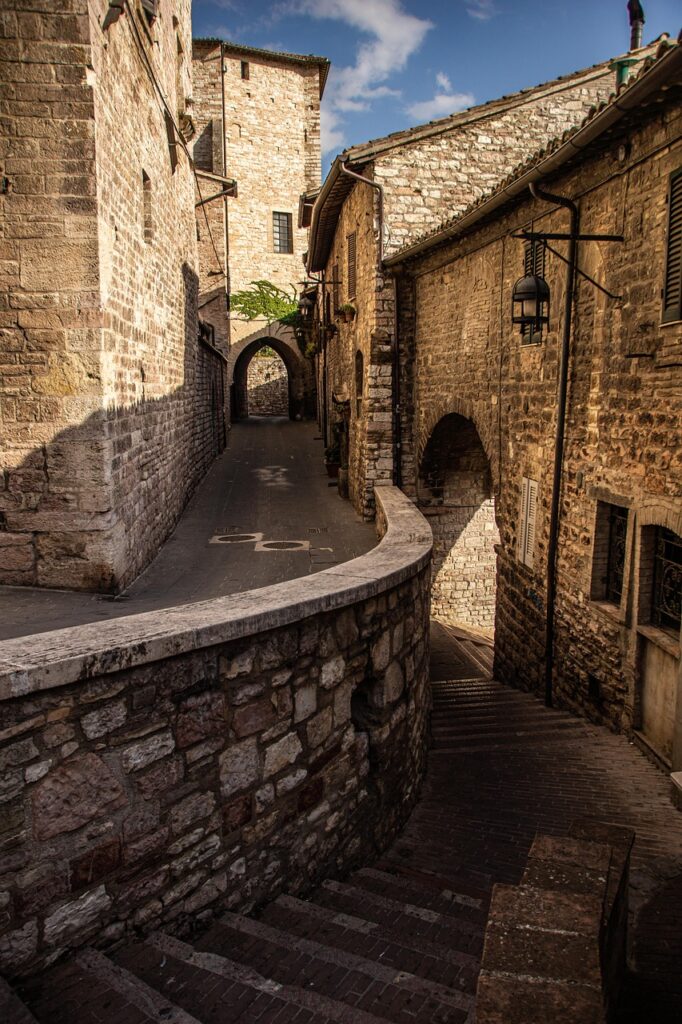
A typical example is the passage that starts on Via dei Termini and opens onto a small piazzetta behind the church of San Cristoforo (Piazza San Cristoforo, 53100 Siena). The stone steps there are often irregular, smoothed by centuries of use, with wrought-iron handrails. The contrast between the broad Piazza del Campo and the sudden intimacy of a shaded vicolo creates a feeling of discovery and seclusion.
For photographers, staircases that frame arcades and carved wooden doors provide perfect compositions to play with low-angle light. Many of these lanes carry small plaques with their historic names — for example, « Vicolo del Panicale » or « Scalette del Carmine » — hinting at the old function of the place. Don’t forget to look up: balconies, gargoyles and carved stones often appear at eye level, revealing architectural details easily missed from the main streets.
Practical tips: follow the Contrade signs to map themed routes. Buy a detailed local map (or use an offline app) because GPS can get confused in tight lanes. Small shops sometimes accept cash only; bring some bills. Finally, respect shop opening hours: many close between 13:00 and 16:00 for the pausa pranzo.
Reused and contemporary passages: workshops, cafés and quirky stays
Modern Siena has reinvented many historic passages and stairways as artist studios, intimate cafés and charming places to stay. In neighborhoods near the Palazzo Salimbeni (Piazza Salimbeni, 3, 53100 Siena), several former warehouses and cellars have been converted into cultural spaces and wine bars. These venues often retain an original staircase leading to a mezzanine where exhibitions or acoustic concerts take place.
One concrete example is a ceramics workshop-shop on Via San Pietro a Ovile 47 (address indicative for a local studio) — by appointment only, usually open around 10:00–13:00 and 15:30–19:00, with beginner workshops costing roughly €25–40. Visitors climb a staircase of ancient stones up to the kiln room, where the smell of clay and the oven blends with soft, filtered light. These places offer a tactile approach to the city: you can shape a piece, have it fired and leave with a truly Sienese souvenir.
Many B&Bs and agriturismi have adapted staircases and passages to provide private terraces overlooking the Tuscan hills. Look for properties advertising “terrace” or “panoramic view” — they often indicate a stair-access that alone can justify a booking. Hosts are usually happy to share secret routes and local tasting spots off the beaten path.
Practical tips: check recent reviews before booking a workshop or quirky accommodation to ensure the staircase access suits you. Workshops often require advance booking; arrive early to enjoy the best natural light and personalised advice from the artisan.
Conclusion
Siena truly reveals itself when you take the time to explore its interstices: narrow passages, discreet staircases, crypts and secret terraces. These elements form a complex urban fabric where every stone carries memory. By following the routes suggested here — from the Complesso del Duomo and Santa Maria della Scala to the stairways leading to viewpoints behind the Palazzo Pubblico, and through the vicoli where artisans and small families keep traditions alive — a visitor turns a visit into a series of intimate, illuminating moments.
Practical and respectful, the recommendations offered here will help you approach these places with curiosity and care: suitable shoes, combined tickets, respect for privacy and checking official opening hours before you go. The itinerary suits photographers seeking perfect frames as much as history lovers eager to feel the marks of time beneath their fingertips. Siena is as much a city to listen to as to see: the people, the patches of wall, the polished stones and the stairways tell a living city, not just a backdrop.
Finally, keep in mind that Siena’s unusual corners are often fragile: these passages and stairways need to be respected in order to endure. By discovering them responsibly you help preserve them — avoid graffiti, don’t move architectural elements and support small museums and local workshops. In doing so, you’ll contribute to safeguarding the treasures that make Siena one of Italy’s most charming and mysterious cities.