





Introduction
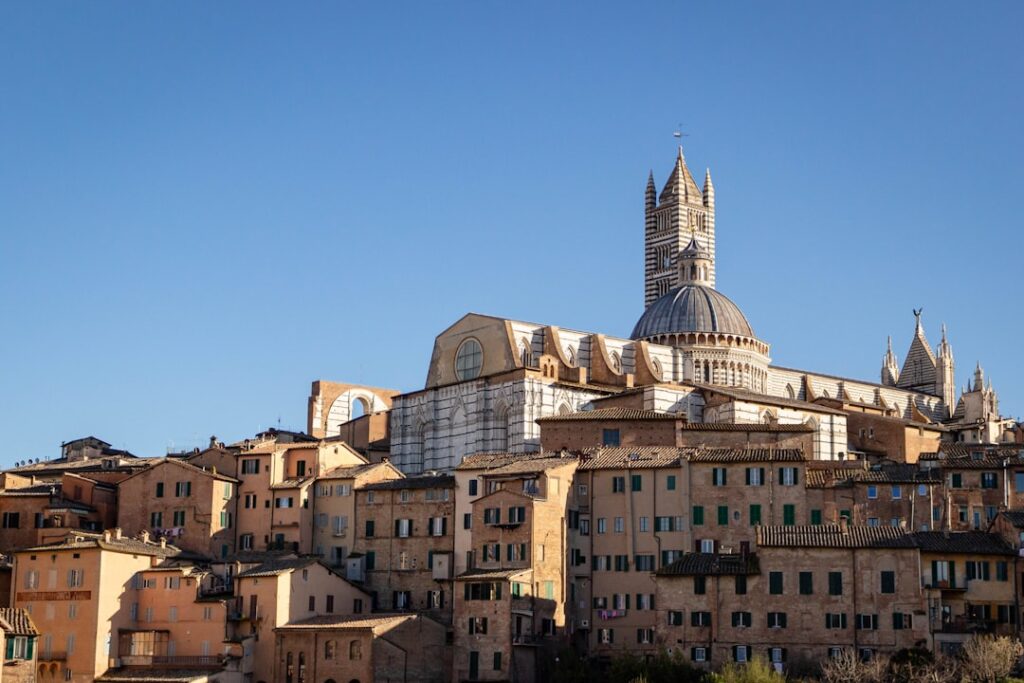
Siena, a medieval gem tucked into the Chianti hills of Tuscany, offers a day of discoveries where every alleyway tells a story. This open-air museum has kept its medieval layout, a Gothic soul and a rare local intensity: banded stone façades, cobbles polished by centuries and the famous contrada system that animates daily life like nowhere else. If you only have one day, expect a full but delicious pace: walk, look, listen for the bells and stop often to savor the moment. This one-day itinerary in Siena is designed to get you to the city’s essential highlights without giving up the pleasure of wandering.
You’ll start in the city’s vibrant heart, the Piazza del Campo, where urban space and time seem to slow down. Then head to the majestic Cattedrale di Santa Maria Assunta (the Duomo), a place packed with artistic masterpieces and jaw-dropping architecture. Between the cathedral, the Baptistery of San Giovanni and the Museo dell’Opera Metropolitana, the religious and artistic circuit flows naturally. For a rewarding panoramic view after a climb, the Torre del Mangia and the Palazzo Pubblico offer sweeping perspectives of red roofs and surrounding hills. The route also includes a stop at the museum and hospital complex of Santa Maria della Scala, a place steeped in social and artistic history.
In the sections that follow I’ll give exact addresses, opening hours, approximate prices, immersive descriptions of the monuments and practical local tips: where to buy skip-the-line tickets, the best times to avoid crowds, where to taste a typical Sienese dish like pici all’aglione, and how to walk between each stop. Image markers are placed at the most visual moments to help you picture the scene and prep your camera. Lace up your walking shoes, bring a reusable water bottle and your curiosity: Siena reveals itself slowly, and this day will give you an intense, memorable first glimpse.
Piazza del Campo and Palazzo Pubblico: Siena’s Beating Heart
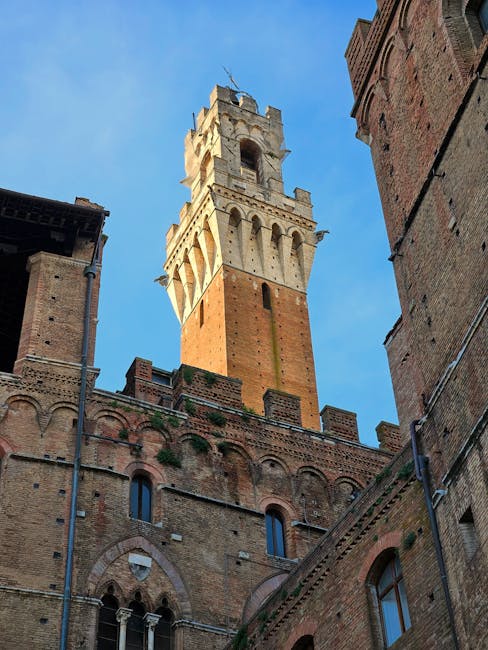
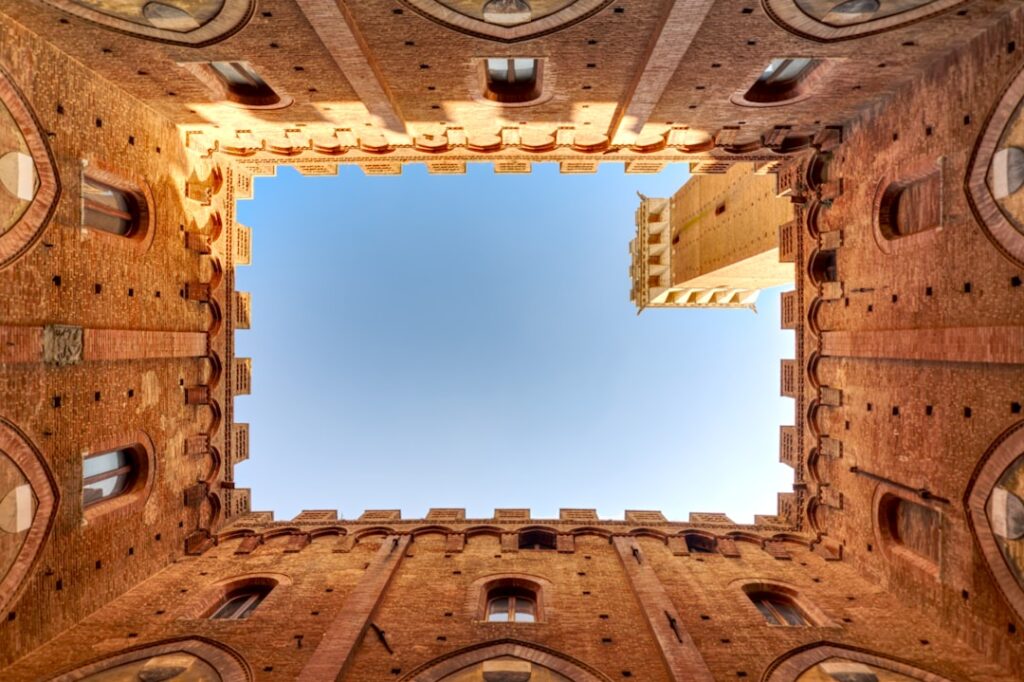
Start your day at the Piazza del Campo, one of Europe’s best-preserved medieval squares. Address: Piazza del Campo, 53100 Siena SI, Italy. This fan-shaped square, paved with red bricks, is lined with cafés, artisan shops and dominated by the Palazzo Pubblico and its tower, the Torre del Mangia. The morning atmosphere, when light softens the ochre façades and terraces slowly fill, is perfect for feeling the city’s soul. Take time to study the decorated façades, the contrade coats of arms and the alternating seating areas.
The Palazzo Pubblico / Museo Civico is located at Piazza del Campo, 1, 53100 Siena SI. Opening hours: typically 10:00–19:00 (check before you go). Price: roughly €8–€12 for Museo Civico entry. Inside, the municipal frescoes — including the famous cycle The Allegory and the Effects of Good and Bad Government — tell the story of Siena’s civic pride in the 14th–15th centuries. Tower admission is sold separately or in combination, depending on the season.
Practical tips: arrive early to avoid the tour groups and enjoy a coffee at one of the terraces by the basilica. If you visit during the Palio (twice a year, July 2 and August 16), the square becomes an arena — the atmosphere is unique but access is restricted. For striking photos, head to the southwest side of the square to capture the fan-shaped perspective of the paving and the silhouette of the Palazzo Pubblico.
 Click here to discover Siena with a guided Duomo walking tour
Duomo of Siena, Baptistery and Museo dell’Opera Metropolitana: A Concentration of Sacred Art
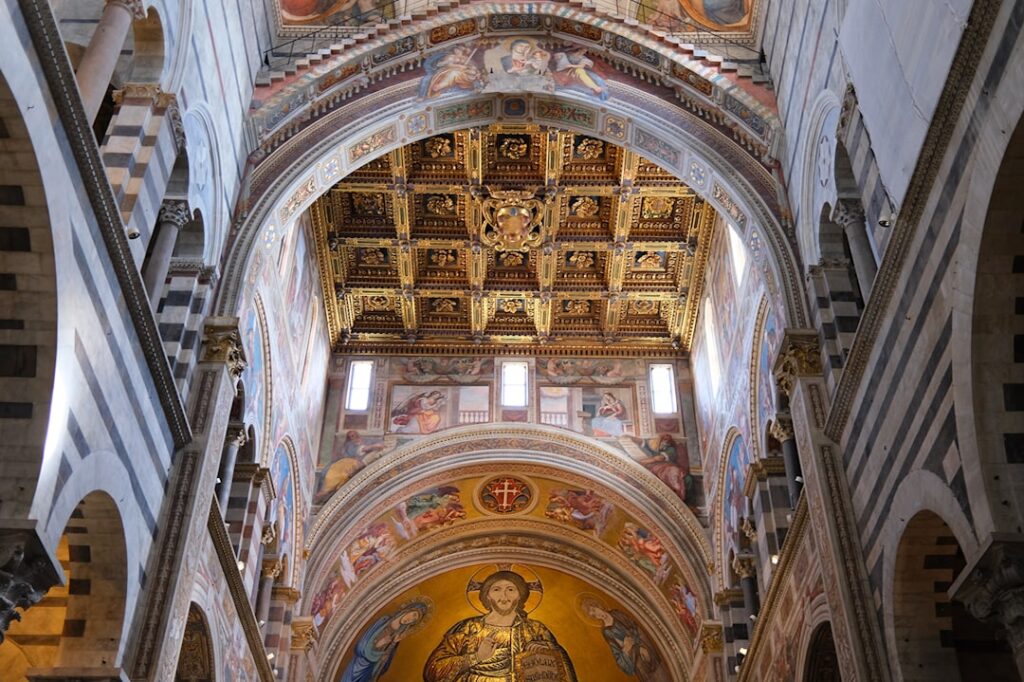
About a ten-minute walk from Piazza del Campo, the Cattedrale di Santa Maria Assunta (Duomo of Siena) announces itself with a polychrome façade and a richly decorated interior. Address: Piazza del Duomo, 8, 53100 Siena SI, Italy. Opening hours: generally 10:30–19:00 (vary with season and services). Price: access to the Duomo complex (including the cathedral, the Piccolomini Library, the Battistero di San Giovanni, the Museo dell’Opera Metropolitana and the panoramic Facciatone) is often via a combined ticket of about €15–€18.
The Duomo’s interior is spectacular: two-tone marbles, intricate floor mosaics with narrative panels, Nicola Pisano’s pulpit and breathtaking frescoes. Don’t miss the Libreria Piccolomini, decorated with illuminated manuscripts and Pinturicchio frescoes, and the adjacent Battistero di San Giovanni, famous for its baptismal font by Lorenzo di Pietro. The Museo dell’Opera Metropolitana (Piazza del Duomo, 14) houses sculptures and liturgical furnishings of great historical value.
Practical tips: buy the combined ticket online to skip the line and store large bags in a locker (some areas require you to leave them outside). The best times to visit are at opening or late afternoon, when the light plays on the marble. Respect the silence and the worship-only zones. For an iconic photo, climb to the Facciatone terrace (when open) to see the narrow street leading up to the Duomo and the rolling Tuscan hills beyond.
Click here to book your ticket for the cathedral and Piccolomini Library
Torre del Mangia, Santa Maria della Scala and the Hilltop Panorama
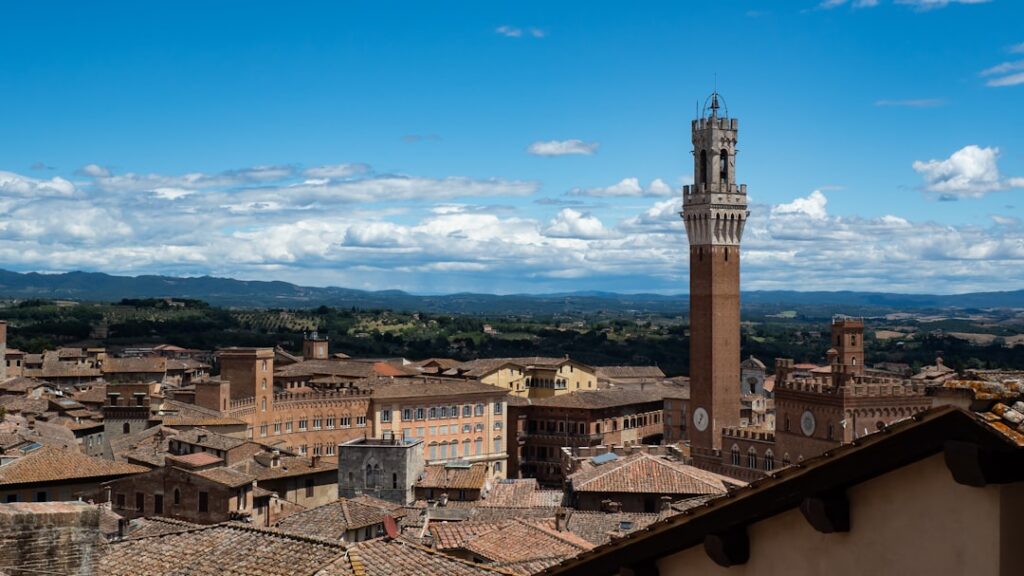
After the Duomo, return to Piazza del Campo to climb the Torre del Mangia, part of the Palazzo Pubblico. Tower/palace address: Piazza del Campo, 1, 53100 Siena SI. Opening hours: typically 10:00–19:00; Price: about €10–€12 for the climb. The ascent is steep and authentic, but it leads to a spectacular viewpoint: the sweep of red tiles, the cathedral and the maze of streets make for one of Italy’s finest vistas.
Next, weave through narrow lanes to reach the Santa Maria della Scala museum complex at Piazza del Duomo, 2, 53100 Siena SI. This former medieval hospital turned museum features vast halls that tell the story of Siena’s healthcare, social life and art. Opening hours: often 10:00–19:00; Price: about €8–€12. Exhibits combine archaeology, medieval art and contemporary installations in a space full of humanity.
Practical tips: to enjoy the viewpoint with fewer crowds, plan your Torre del Mangia climb early or later in the afternoon. Wear closed shoes for the stone stairs. At Santa Maria della Scala, follow the themed panels (in English and Italian) to understand the site’s evolution from the Middle Ages to today. After your visit, head up to the rocca (fortress) and the western heights for a wilder vantage point over the Sienese countryside: a few steps and trails deliver superb sunset photos.
Click here to book a walking tour with Duomo access and views
Practical Tips, Food and Getting Around for a Perfect Day
Getting around: Siena is best explored on foot; the historic center is largely pedestrian. Park or arrive by bus at Porta Tufi or Stazione di Siena (Piazza Gramsci) and walk 15–20 minutes to the center. Taxis exist but can be scarce; ask your accommodation for a local number. Bring comfortable shoes: cobbles and hills are everywhere.
Eating: to taste local specialties, look for a plate of pici (local hand-rolled pasta) with garlic and tomato — pici all’aglione. Recommended spots include Osteria Le Logge (Via del Porrione, 33, 53100 Siena SI) or the trattorie around Piazza del Campo. Budget: a meal in a typical trattoria ≈ €15–€30 per person depending on dish and wine. For a sweet break, try ricciarelli (almond cookies) at a traditional pastry shop.
Shopping and souvenirs: favor local products — extra virgin olive oil, Chianti Classico wines, ceramics and Tuscan linen. Avoid overly touristy items around the square and hunt for artisan workshops in the side streets.
Safety and etiquette: Siena is generally safe but stay alert for pickpockets in busy tourist zones. Respect church opening hours; some sacred areas prohibit photography. Carry water — summers can be very hot — and a light jacket if you visit off-season. Finally, check for religious services that might restrict access to the Duomo.
Click here to Book a guided culinary walking tour with meal
Conclusion
A day in Siena delivers a concentrated dose of art, history and Tuscan atmosphere: from the majesty of the Cattedrale di Santa Maria Assunta to the views from the Torre del Mangia, through the lively Piazza del Campo and the evocative rooms of Santa Maria della Scala. With this itinerary you’ll hit the essentials without losing the joy of slow discovery — wandering a lane, pausing for an espresso, studying a fresco in morning light. The addresses and opening times here let you plan your day concretely, but stay flexible: often it’s the unexpected — a craft shop or a local face — that makes the visit unforgettable.
Finally, think about what comes next: if you decide to stay longer, the region offers vineyard tours in Chianti, hilltop villages like San Gimignano or Monteriggioni, and winding roads perfect for a day trip by car.
Click here to book a Chianti vineyards and medieval castles tour
For a single day, though, follow this route, breathe in the history set in every stone, and let yourself be carried by the Sienese rhythm. You’ll leave with vivid images — red cobbles, striped marble, golden frescoes — and a desire to come back and explore deeper what you’ve only just touched.