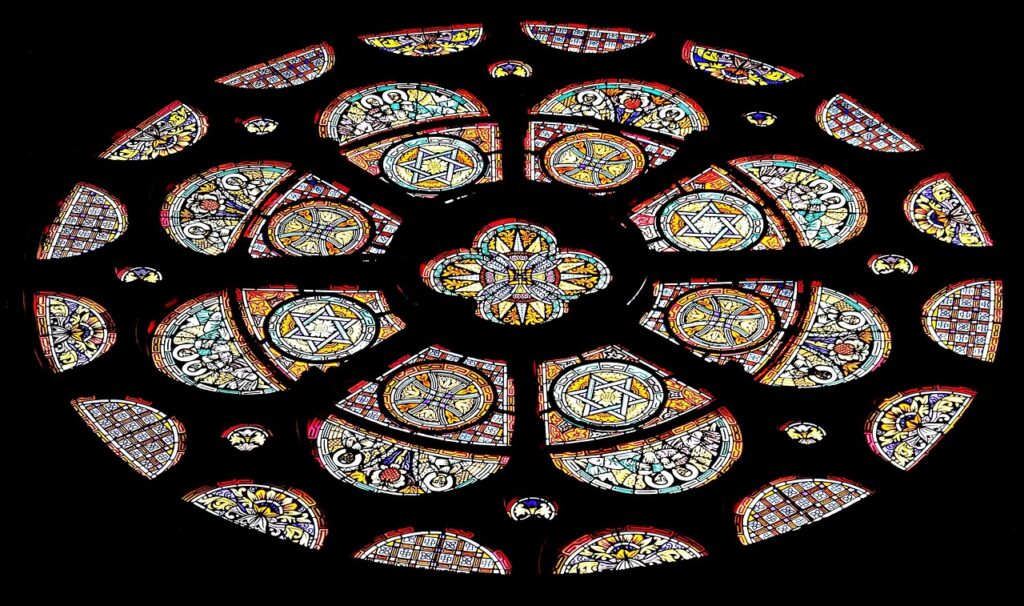






Introduction: The Duomo di Siena’s Colorful Breath
The Duomo di Siena, officially the Cattedrale Metropolitana di Santa Maria Assunta, dominates the Piazza del Duomo in the heart of medieval Siena. Its striking black-and-white marble stripes create a distinctive silhouette, while inside the cathedral a wealth of art places the stained glass windows in a starring role. Through their colored panes, the windows tell biblical stories, saints’ lives, civic symbols and episodes from Sienese history. Their purpose goes beyond decoration: they filter light, teach the faithful, and convey spirituality to visitors and worshippers alike.
Located at Piazza del Duomo, 8, 53100 Siena SI, Italy, the Duomo is part of a complex that includes the Cattedrale itself, the Museo dell’Opera del Duomo, the Battistero di San Giovanni, the Libreria Piccolomini and the famous Facciatone (the Opera’s unfinished terrace). The stained glass is mainly found in the nave, the side chapels and the choir, but a full understanding comes from visiting the other spaces where drawings, cartoons and models used in their creation are preserved.
Understanding the meaning of the Duomo of Siena’s stained glass requires a combined approach: iconographic (the figures and scenes depicted), technical (glass, lead, grisaille painting, enamel) and historical (patrons, art workshops, Gothic and Sienese influences). This article offers an immersive route mixing visual description, historical context, practical visit tips and concrete information (opening hours, prices, addresses) so your discovery is both sensitive and well-documented.
 Click here to book your ticket for the cathedral and the Piccolomini Library
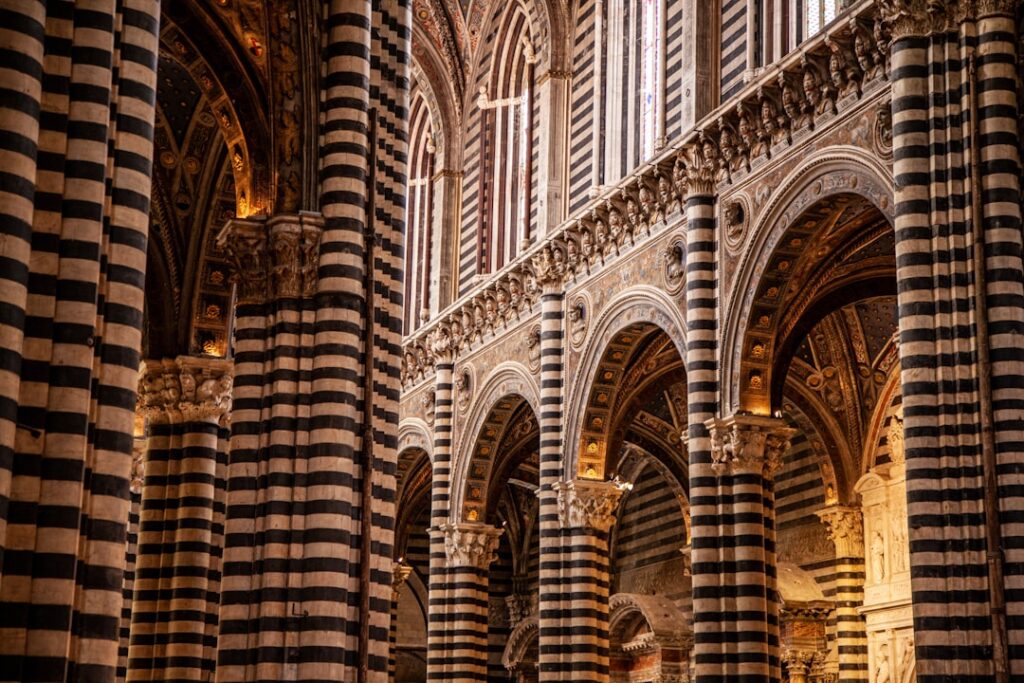
The Stained Glass: Artistic Origins and Materials
The stained glass of the Duomo di Siena is the product of a long Italian glassmaking tradition, shaped by northern workshops and local innovations. The earliest colored windows date back to the 13th and 14th centuries, but cycles of creation and restoration continued into the 16th century and much later. Master glaziers used a range of techniques: mouth-blown glass colored throughout, glass painted in grisaille, enamel highlights and gilding. The glass pieces were joined with lead cames (the lead network) and fired in a kiln to fix the paint.
Iconographically, the windows mix biblical scenes (Old and New Testaments), lives of the Virgin and local saints, and allegories of virtues. Some windows honor the cathedral’s patrons, others exalt the Republic of Siena, its martyrs and civic figures. You can spot French Gothic influences (in the verticality and register-based narrative) alongside a distinct Sienese sense of contemplative storytelling inherited from masters like Duccio di Buoninsegna and Simone Martini.
Technique and conservation: today the Opera della Metropolitana di Siena regularly carries out consolidation and cleaning interventions. These restorations aim to stabilize lead cames, remove wax residues from the glass and recover original hues without altering historic paint. They also help researchers understand the making process through laboratory analyses (spectrometry, radiography).
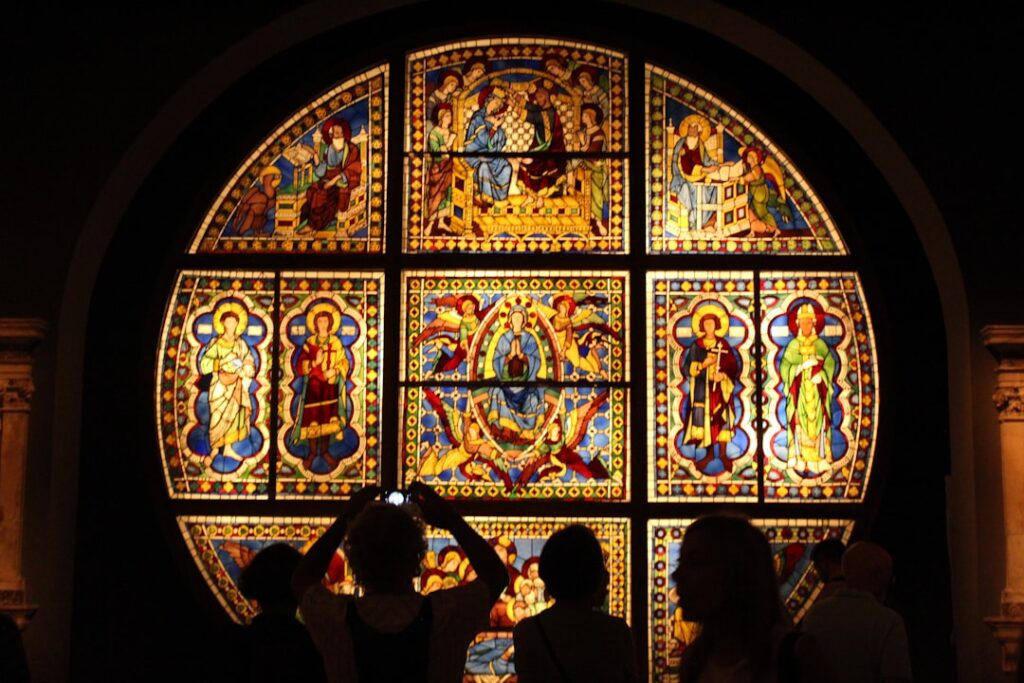
Iconographic Meaning: Reading Stories in Glass
The Duomo of Siena’s stained glass works like a picture-story: each panel and each register builds a narrative readable by the medieval worshipper and the modern tourist alike. Readings often follow a bottom-to-top order, with earthly scenes below and celestial figures above. Episodes from the life of the Virgin (Annunciation, Nativity, Presentation in the Temple) take center stage, reflecting the city’s strong Marian devotion.
In several choir windows you’ll find hagiographic cycles: the life of Saint Peter, Saint Catherine (an important Sienese figure) and other local saints. These windows are more than portraits: they include precise iconographic attributes (keys for Saint Peter, crown and book for Saint Catherine) that teach the faith through symbolism. Colors themselves convey meaning: blue for the divine or the Virgin, red for the Passion, green for hope and terrestrial scenes.
You can also decode civic and political messages: heraldic arms, emblems of sponsoring families and commemorative scenes. For example, some panels highlight the financial contributions of confraternities or patrician Sienese families, tying faith to power. These details turn each window into a historical document, revealing social networks and spiritual priorities of the time.
Visitor Route: Where to See the Windows and Practical Info
To fully appreciate the stained glass, plan your visit to include the complementary spaces of the Duomo complex. Main address: Piazza del Duomo, 8, 53100 Siena SI, Italy. The Museo dell’Opera del Duomo preserves cartoons and fragments related to the windows; the Libreria Piccolomini (Piccolomini Library) provides a refined baroque contrast that helps explain the Sienese taste for color and detail.
Indicative opening hours (check before you go on the Opera della Metropolitana di Siena official site):
- Duomo di Siena (Cathedral): generally open 10:00 – 19:00 (April – September); 10:00 – 17:00 (October – March).
- Museo dell’Opera del Duomo: often 10:00 – 18:00.
- Libreria Piccolomini: visits usually available 10:00 – 17:30 (hours may vary).
- Battistero di San Giovanni: 9:30 – 18:00 depending on the season.
Prices (indicative, in euros):
- Combined « Opera Complex » ticket (Cathedral + Museum + Baptistery + Terraces): around €15 to €18.
- Admission to the Cattedrale alone: about €5 to €7.
- Student, senior and group discounts: often available (check conditions).
Local practical tips:
- Arrive early in the morning or late afternoon to catch the low, slanted light that brings out the windows’ colors.
- Buy skip-the-line tickets during high season (July-August, Easter, Christmas) — queues can be long in the Piazza del Duomo.
- Respect silence and prayer: the Duomo is still an active place of worship.
- Bring a paper guide or download the official app to locate panels and understand the chronology of the windows.
- The marble floor is often polished and slippery: wear comfortable shoes with good grip.
Click here to book a walking tour and skip-the-line ticket for the Duomo
Click here to buy the cathedral pass with audio guide
Contemporary Interpretations and Cultural Impact
Today the Duomo of Siena’s stained glass nourishes not only devotion but also artistic research and cultural tourism. Art history students analyze techniques, photographers chase the perfect light, and conservators develop strategies to balance accessibility with preservation. The modern interpretation displays in the Museo dell’Opera help explain manufacturing methods and cross-influences.
Several recent temporary exhibitions have highlighted the relationship between panel painting and stained glass, showing how painters like Duccio may have influenced window compositions. Contemporary readings also focus on social aspects: who commissioned these windows, how they functioned as family memorials, and what role they played in religious and civic propaganda.
Impact on the city: the windows contribute to Siena’s tourist appeal and reinforce the city’s visual identity. Cultural events — sacred concerts, guided night visits — showcase the magic of filtered light. For the modern visitor, understanding the windows reconnects you to a way of seeing where artwork functioned as a visual manual, a school of devotion and an instrument of civic unity.
Click here to book an Italian opera concert in Siena
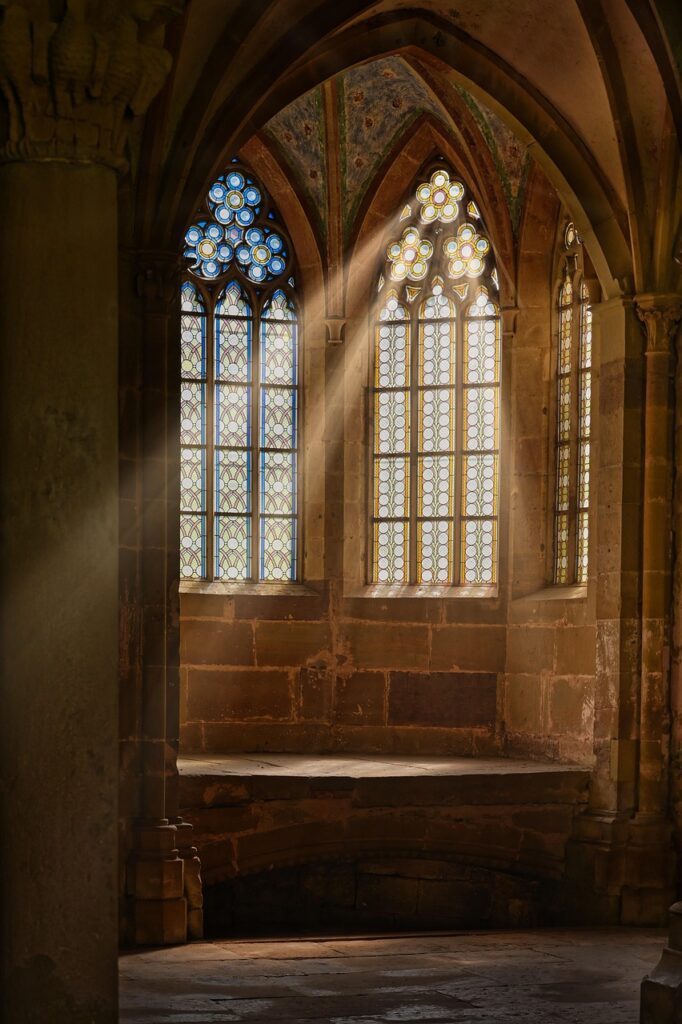
Conclusion: See, Understand, Feel
The Duomo di Siena’s stained glass panels are as much works of art as they are luminous texts that span centuries. They invite patient looking: observe the figures, recognize the symbols, follow the narrative progression and listen to how the light plays on the marble floor. Their meaning is not fixed; it changes with the gaze — devout, scholarly or aesthetic — of anyone standing beneath their colored scenes.
Visiting the Duomo of Siena means accepting a different rhythm: slow down to decode, let the light whisper its story and use the neighboring sites (Museo dell’Opera, Libreria Piccolomini, Battistero di San Giovanni) to complete your understanding. Practical details — address Piazza del Duomo, 8, 53100 Siena SI, combined tickets from €15, hours that vary by season — will help you plan a successful visit. Don’t forget to check exact opening times and up-to-date prices on the Opera della Metropolitana di Siena official site before you go.
Click here to book an exclusive morning visit to the Duomo
Finally, one essential tip: take a moment of quiet reflection after studying the windows. Whether you’re an art history enthusiast, a curious traveler or a pilgrim, the beauty filtered through these ancient panes tends to open both mind and heart. Reading the Duomo’s stained glass is an experience where visual impact meets Siena’s collective memory — a city that has inscribed its soul into glass, lead and light.