





Introduction
The Duomo di Siena, officially the Cattedrale di Santa Maria Assunta, is far more than just a religious building: it’s a concentrated dose of history, art and Sienese identity. Nestled in Siena’s medieval core, the cathedral dominates the Piazza del Duomo and has drawn pilgrims, artists and curious travelers for centuries. Visiting the Duomo today isn’t just about admiring a striped black-and-white marble façade; it’s stepping into a world where every stone, fresco and sculpture tells a singular story of devotion, civic rivalry, patronage and artistic excellence.
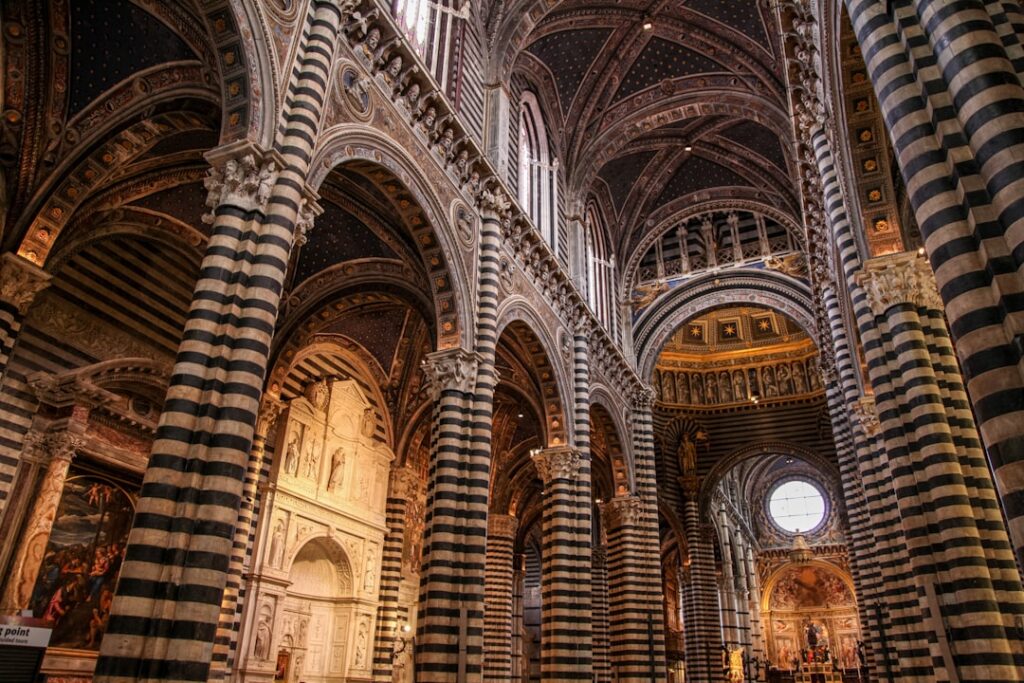
Once inside, you’re confronted with an almost overwhelming visual richness: floors inlaid with mosaics and polychrome marbles, side chapels housing Renaissance and Italian Gothic masterpieces, and the Piccolomini Library full of illuminated manuscripts and vivid frescoes. The Duomo is also a living museum — where religious architecture converses with sculptures by Nicola Pisano, paintings by Duccio di Buoninsegna and sumptuous altars, not to mention the recently restored crypt and the panorama from the Facciatone terrace.
Beyond the visual wonder, the Duomo di Siena embodies the collective memory of a city that, during the Middle Ages and the Renaissance, competed with Florence and helped shape an Italian art recognized worldwide. Visiting the Duomo today helps you understand how Siena forged its identity through ambitious artistic projects, often driven by religious institutions and lay confraternities. For the modern visitor, it’s also a sensory experience: light reflected off marble bands shifts throughout the day; the echo of footsteps on ancient slabs, the scent of wood and books in museum rooms — all combine to create a time-traveling moment.
This article offers a complete, practical immersion: exact addresses, opening hours, indicative prices, detailed descriptions of must-see spots, and local tips to make the most of your visit. Whether you’re into sacred art, a photographer hunting for unique angles, a curious traveler or a pilgrim seeking quiet reflection, Siena’s Duomo today delivers a memorable visit and a unique context for understanding medieval Tuscany and its artistic legacy.
The Duomo di Siena: architecture, façade and interior highlights
Address: Cattedrale di Santa Maria Assunta (Duomo di Siena), Piazza del Duomo, 8, 53100 Siena SI, Italy.
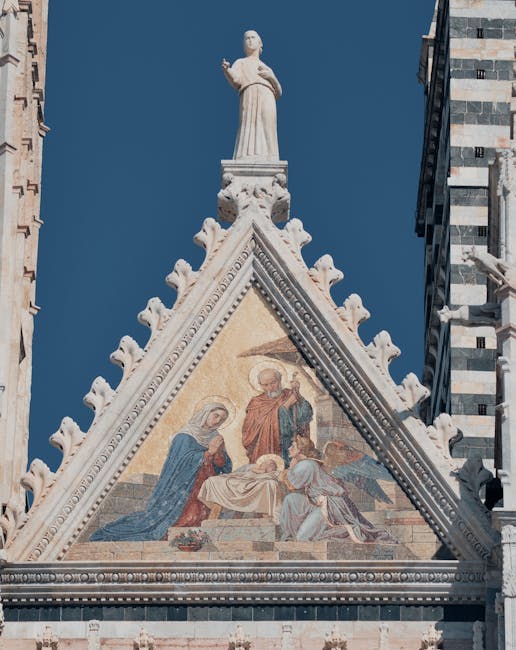
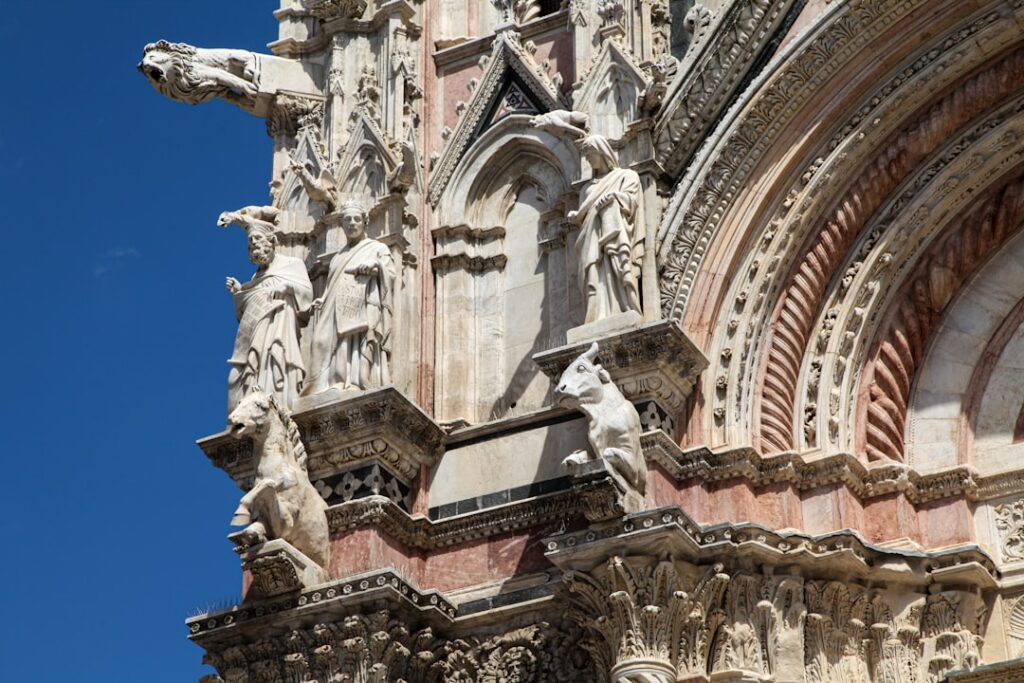
The first glimpse of the Duomo is often its neo-Gothic façade, an explosion of white, green-red (Prato stone) and black marble that catches the light differently depending on the hour. The current façade, reworked in the 15th and 19th centuries, blends medieval elements with later restorations; it reads like a civic and spiritual statement by the people of Siena. Passing under the rose window, visitors sense a transition: the restrained exterior gives way to a lavish interior.
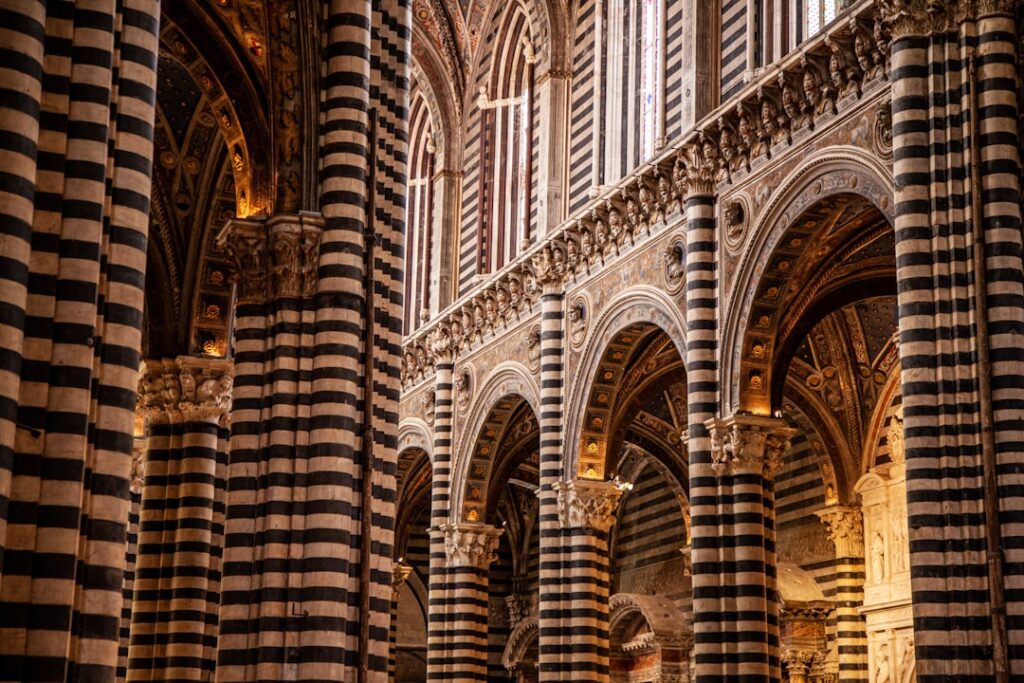
Inside, the nave and transept display the characteristic horizontal bands of black and white marble, but it’s the pavement that truly mesmerizes: 56 carved and inlaid panels cover the choir floor, created between the 14th and 16th centuries by artists such as Domenico di Bartolo and Lorenzo di Pietro (il Vecchietta). Each panel is a narrative composition that rewards close inspection.
The cathedral also houses the Piccolomini Library, a hidden gem: Pinturicchio frescoes, illuminated books and gilded woodwork. The Biblioteca Piccolomini was commissioned to hold the library of Cardinal Piccolomini (later Pope Pius II), and its frescoes are among the finest examples of Sienese Renaissance decorative luxury.
 Click here to book your ticket for the cathedral and Piccolomini Library
Indicative opening hours:
- Duomo di Siena (interior): generally open 10:30–19:00 (varies by season and services; may be closed in the morning for ceremonies).
- Piccolomini Library: often included in the Duomo circuit; hours similar to the Duomo.
Indicative prices:
- Combined Opera del Duomo ticket (access to the Duomo, Museo dell’Opera, Baptistery, Facciatone, Piccolomini Library): around €18 for an adult.
- Single access to the cathedral (as managed on-site): around €5 (religious services remain free for worshippers).
These prices can change; it’s strongly recommended to check online or at the official ticket office before your visit.
The Museo dell’Opera del Duomo, the Baptistery and the Crypt: deepen your visit
Address: Museo dell’Opera del Duomo, Piazza del Duomo, 8, 53100 Siena SI, Italy. Baptistery: Battistero di San Giovanni, Piazza del Duomo, 8, 53100 Siena SI, Italy. The crypt is accessible via routes within the complex.
The Museo dell’Opera del Duomo completes the story of the Duomo by displaying originals and items moved for conservation: medieval statues, façade fragments, wooden works, reliquaries and sculptures by masters like Giovanni Pisano. The museum lets you get up close to pieces normally out of reach, high on the façade or in altarpieces, and appreciate marble and woodcarving techniques.
Click here to buy the OPA SI pass for the Duomo complex
The Battistero di San Giovanni, attached to the cathedral, deserves special attention: the bronze baptismal font, the frescoes and the spatial arrangement reveal the continuity of sacred decoration. The baptistery retains a quieter, more intimate atmosphere — great for photographing liturgical objects and ornaments.
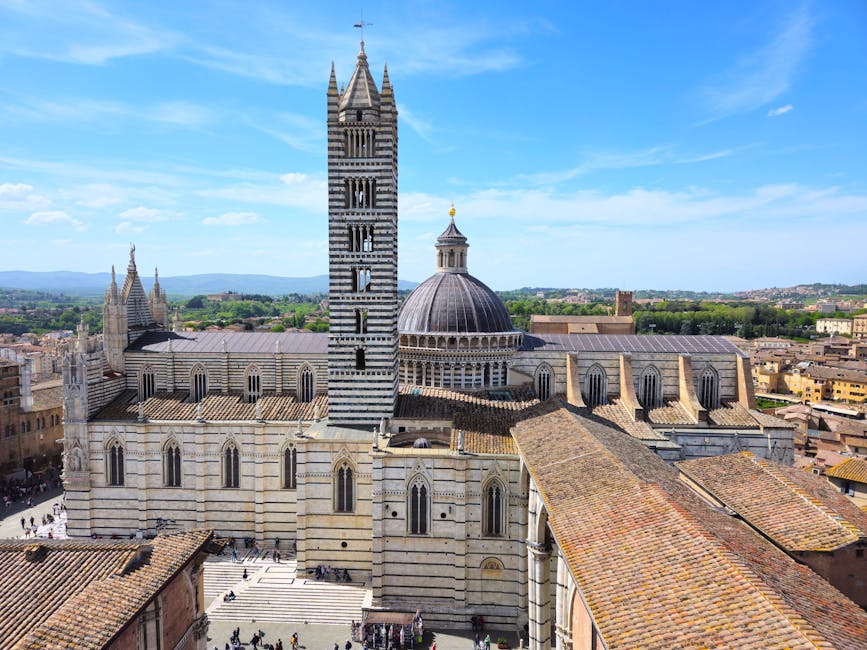
Exploring the restored crypt and underground levels offers an archaeological perspective: you’ll see fragments of older structures, tombs and remains that clarify the site’s historical layers. The museum route alternates between grandeur and intimacy, with explanatory panels in Italian and often in English.
Indicative hours and prices:
- Museo dell’Opera del Duomo: generally 10:00–19:00, ticket included in the combined ticket (see above: €18).
- Battistero di San Giovanni: included in the same combined ticket; if visited separately, count on about €5.
- Crypt: access depends on guided routes and conservation status; often included in the combined ticket.
The Facciatone terrace and the panorama: a surprising view over Siena
Access address for the terrace: Complesso Museale dell’Opera del Duomo / Facciatone, Piazza del Duomo, 8, 53100 Siena SI, Italy. The « Facciatone » is the large unfinished façade that now hosts a panoramic terrace.
Climbing the Facciatone terrace (sometimes called the « terrace of the unfinished façade ») is nearly a must for anyone wanting to understand Siena’s urban layout. From the terrace you can take in the Piazza del Campo, the city’s red roofs and the Tuscan countryside stretching to the horizon. The view changes your perception of the cathedral: you grasp why the original plans included a spectacular enlargement (the « Duomo Nuovo« ) that was later abandoned.
Click here to book a tour with Duomo entry and panoramic view
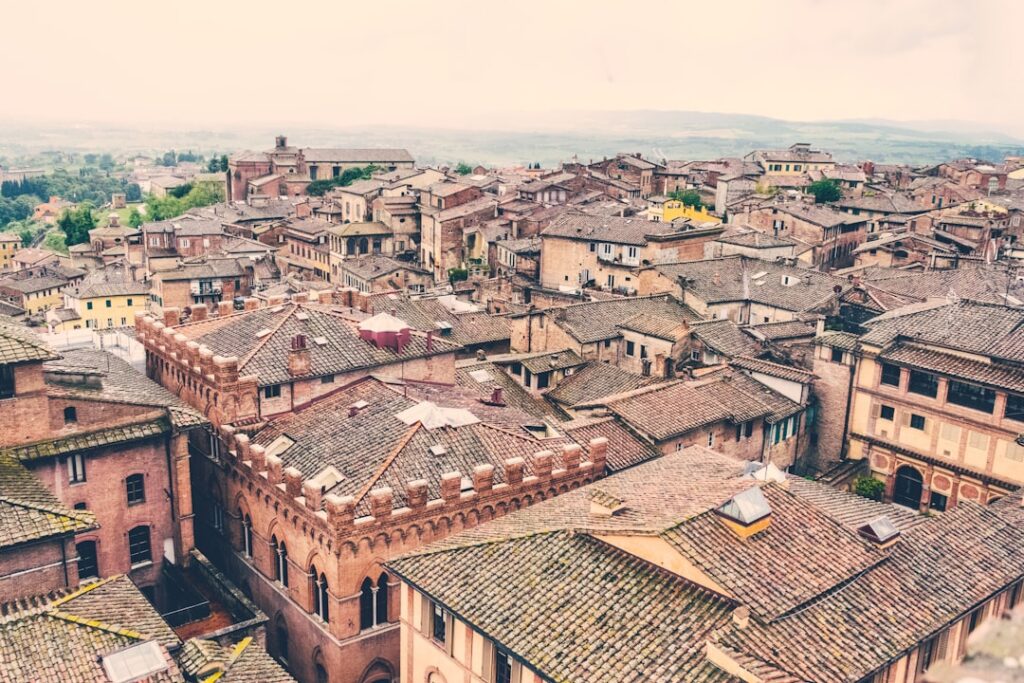
Practical tips for the terrace: arrive early morning or late afternoon to avoid harsh light and crowds; bring a light jacket as it can be breezy up high; pack a camera with zoom to capture roof details and distant hills. The climb involves steps and narrow spaces — the site is not fully accessible to visitors with reduced mobility.
Hours and prices:
- Access to the Facciatone terrace: generally included in the Opera del Duomo combined ticket; standalone visits often possible 10:00–18:00.
- Stand-alone price: around €6 if not included in the combined ticket.
Local practical tips: how to make the most of your visit today
Planning a visit to Siena’s Duomo today requires a few practical steps to enjoy the site without stress. Here are concrete tips based on travelers’ experience and local recommendations.
– Book your ticket in advance: to avoid lines and guarantee access to limited highlights (Piccolomini Library, Facciatone), buy a combined ticket online via the official Opera della Metropolitana di Siena website or at the ticket offices near the cathedral. The combined ticket is usually around €18.
Click here to book your ticket for Siena Cathedral and Piccolomini Library
– Best time slots: early morning (opening) or after 4:00 PM in low season. If you want photos without crowds, aim for the golden hour (just before sunset). Avoid 12:00–2:00 PM in high season when tour groups flood in.
– Respect and dress code: the cathedral is an active place of worship. Dress respectfully (shoulders and knees covered). Photos are generally allowed without flash, but follow signage in chapels.
– Accessibility and mobility: the complex includes many steps and some narrow spaces. Visitors with reduced mobility should inquire at the ticket office; partial solutions are available but full access to the terrace may be impossible.
– Transport and parking: Practical GPS address: Piazza del Duomo, 8, 53100 Siena SI. Siena’s historic center is largely pedestrian; park in a perimeter lot (for example Parcheggio Il Campo or Santa Caterina) and walk in. Use public transport or shuttle services if you’re arriving from the train station.
– Where to eat after your visit: try local trattorie near Piazza del Campo for pici all’aglione (Siena’s typical pasta) and regional wines. Look for places with menus in Italian/English and avoid terraces directly on the square if you want authenticity (quality and price are often better off the main piazza).
– Recommended duration: Allow 1.5 to 3 hours for the Duomo and its annexes (museum, baptistery, library, terrace). If you want an in-depth guided visit, plan for about 3 hours.
Experiences and anecdotes: why the Duomo still matters today
Visiting the Duomo di Siena today also reveals historical anecdotes and living elements of Sienese culture. For example, the famous rivalry between Siena and Florence isn’t just a myth: it’s written into the monumentality of the Duomo and the artistic campaigns aimed at outshining neighboring cities. The « Duomo Nuovo » project (an ambitious Renaissance enlargement) was ultimately abandoned after the 1348 plague, explaining the coexistence of a small medieval choir and large unfinished spaces.
Moreover, the Duomo continues to play a role in civic and religious life: processions, solemn services and cultural events regularly take place here. Recent restorations — notably of the pavements and the crypt — underline the care given to conservation and transmission: each intervention aims to preserve as much original material as possible while making the work legible for contemporary audiences.
Finally, the human side — listening to a local guide tell the origin of a painting, watching an Italian family pray or a student sketch a statue — gives the Duomo a living dimension. The Museo dell’Opera collections also offer a modern answer to conservation: climate-controlled rooms and display cases make fragile works accessible to the public without risk.
Click here to book a guided walking tour of Siena and the Duomo
Final practical resources and information
– Official site recommended for updates: Opera della Metropolitana di Siena (check hours and « Duomo di Siena » tickets).
– Useful number (check locally): the Duomo complex welcome office (see tourist signs in Siena or the official site).
– Maps and audioguides: often available in several languages at the museum ticket desk; reserve in advance if you want a private guide.
Conclusion
The Duomo di Siena remains a must-see today for several reasons: its extraordinary artistic density, its role as a living archive of Sienese history, its complementary museum routes (Museo dell’Opera, Baptistery, Piccolomini Library, crypt, Facciatone terrace) and the sensory experience it offers visitors. Crossing the cathedral threshold, you enter a narrative that blends faith, civic power, artistic creation and historical resilience. Practical facts — exact addresses, combined tickets around €18, standalone prices and indicative hours — are useful benchmarks, but the real value lies in experiencing the place: admiring mosaics, following marble veins, feeling the light shift in the nave, or breathing in the air on the terrace while gazing at the Tuscan countryside.
For today’s traveler, visiting the Duomo is more than a photo op in front of the façade; it’s an opportunity to learn, be amazed and pause. Following the practical tips — book online, pick the right timeslot, respect the site and explore the adjacent museums — will help you make the most of your visit. And remember that the Duomo sits within a living urban fabric: when you leave the cathedral, let yourself wander Siena’s lanes, taste the local cuisine and complete your visit with Piazza del Campo and its views. The Duomo di Siena, today as ever, promises emotion and a deep understanding of the Tuscan spirit.