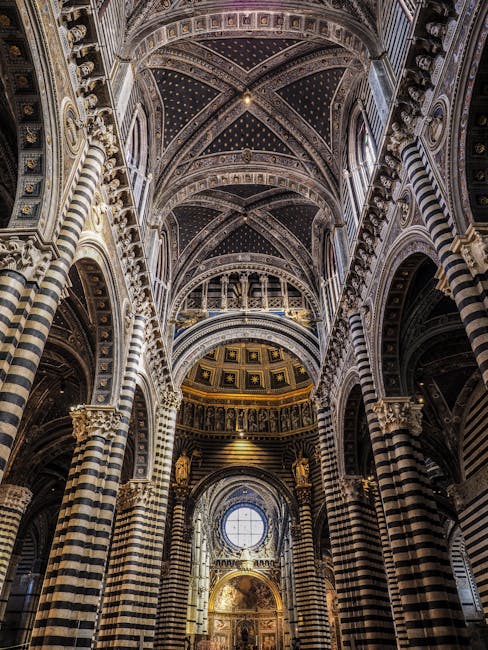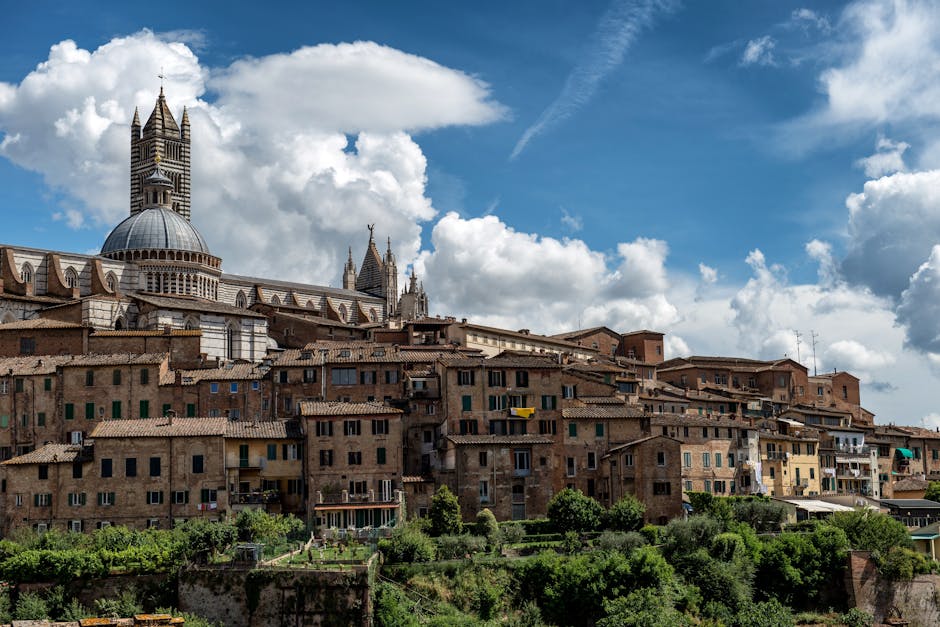






Introduction: The Duomo of Siena’s Floor, a Magnet for Specialists
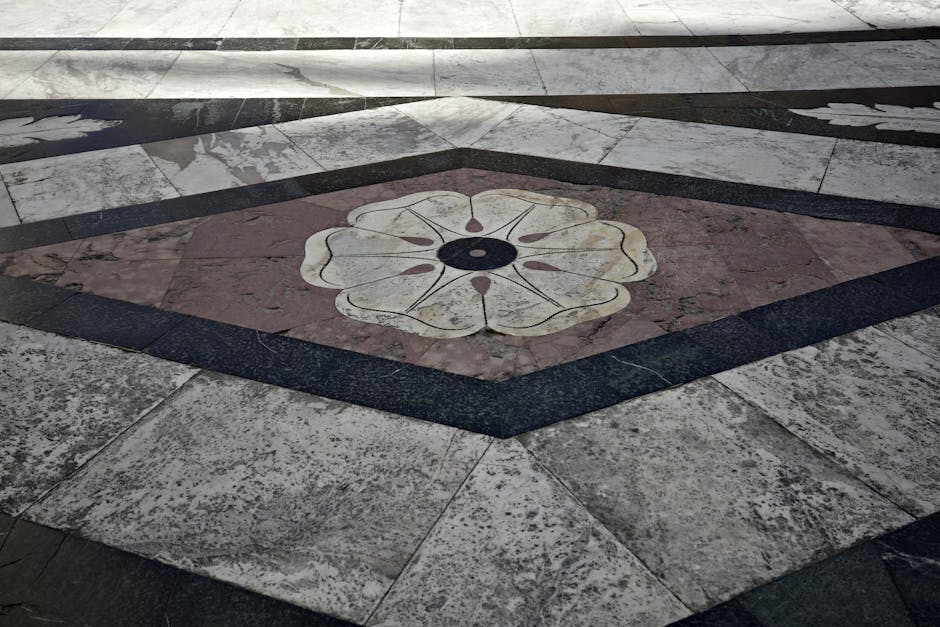
The pavement of the Duomo di Siena — officially the Cattedrale di Santa Maria Assunta — isn’t just a visual triumph; it’s a working laboratory for art historians, conservators, archaeologists and theologians. Located in the heart of Siena, Tuscany, this floor of inlaid marbles and intricate panels narrates, square by square, biblical episodes, moral allegories, traces of medieval and Renaissance artists, and laying techniques that span centuries. Experts flock here from across Europe and beyond not merely because it’s beautiful — though it undeniably is — but because the floor encodes a unique material and iconographic chronology, an archive tucked into the stone.
To a specialist, the pavement reads like a text: the carved and engraved scenes, hidden signatures, choices of marble (pavonazzetto, giallo antico, serpentino, white marble) and structural alterations all point to specific eras, commissions, workshop rivalries and vanished liturgical practices. Most of the panels (commissions carried out between the 13th and 19th centuries) were designed to be viewed from above, from the choir stalls, sometimes lit differently by the season, creating a complex iconographic reading. Conservators study patina, repairs and successive interventions; historians hunt for signs of transregional workshops; curators investigate laying methods and historic mortars, because understanding the past is key to protecting this fragile heritage.
Beyond the humanities, the pavement raises practical issues: protecting it from wear caused by tourism, the logistics of exposing certain slabs to the public (many are kept covered for large parts of the year), and implementing non-invasive safeguarding techniques. The juxtaposition of panels from different centuries also teaches about the evolution of artistic gesture — from Gothic realism to Renaissance inventions — and offers a remarkable corpus for anyone seeking to understand continuity and rupture in Italian sacred art. That’s why specialized conferences, conservation workshops and doctoral theses converge here: the pavement is a material palimpsest, a marble book in which every vein and joint has a story to tell.
History and Chronology of the Floor: Marble Archives
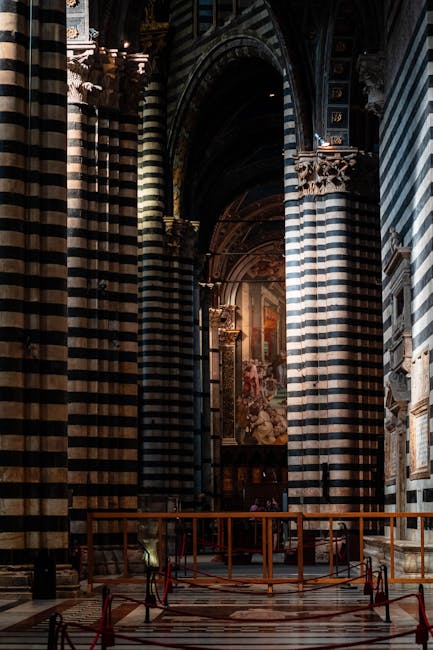
The creation of the Duomo of Siena’s pavement stretches over several centuries, beginning in the late 13th century and extending into the 19th. The marble panels were not made all at once but added over time as the city grew wealthier and confraternities, guilds and patrons commissioned scenes to decorate the nave and choir floors. This chronological layering makes the pavement a one-of-a-kind archive: you can read the shift in themes (from medieval symbolism to humanist subjects), styles and the religious and civic concerns of Siena.
The earliest surviving slabs highlight biblical scenes and allegorical figures, often tied to Christian virtues and models of civic life. By the Renaissance the visual language changes: artists experimented with perspective, introduced chiaroscuro and dramatic staging. The pavement became a register of references featuring both known and anonymous names; some panels still bear Latin inscriptions or workshop marks. For historians, these inscriptions are crucial: they help date pieces, identify patrons and reconstruct artistic networks.
Laying techniques vary by period: some panels combine marble mosaic and engraving, others favor intarsia, finely cut inlays and precise joinery. The iconographic sequences also reveal local preoccupations — for example, martyrdom narratives of saints under the city’s protection or allegories evoking justice, prudence and temperance, virtues particularly prized in Siena. Specialists therefore reconstruct not only an art history but a social history: who funded the work, who decided the subjects, and how these images contributed to shaping civic identity.
For the informed visitor, understanding this chronology lets you read the pavement not as a single homogeneous surface but as a visual library marked by stylistic breaks, restorations and sometimes conflicting intentions. That’s why diocesan archives and confraternity records are so important and frequently consulted by researchers before any intervention on the floor itself. In short, the history of the Duomo pavement is as much the history of Siena as it is of Western art, and its conservation remains a matter of collective memory.
Techniques, Materials and Conservation Secrets
The specialists who study the pavement first focus on materials: Carrara white marble, pavonazzetto (purple-veined marble), giallo antique (ancient yellow), serpentino (green), and fragments of stone from other regions. Each marble has distinct physical and chemical properties: porosity, reactions to cleaning agents, susceptibility to salts, and so on. Conservators run petrographic and spectrometric analyses to pinpoint the origin of slabs and to choose compatible conservation products. A wrong choice of mortar or consolidant can cause irreversible damage.
Panel installation employed a range of skills: intarsia (assembling cut marble pieces to create an image), low-relief carving, and sometimes metal inlays. Original joints, historic mortars and wear patterns reveal a slab’s life cycle. Modern conservation teams combine traditional methods (localized fills, lime injections) with advanced technologies (3D imaging, lidar, thermography). The goal is twofold: stabilize fragile panels and enable safe viewing without arbitrarily replacing originals.
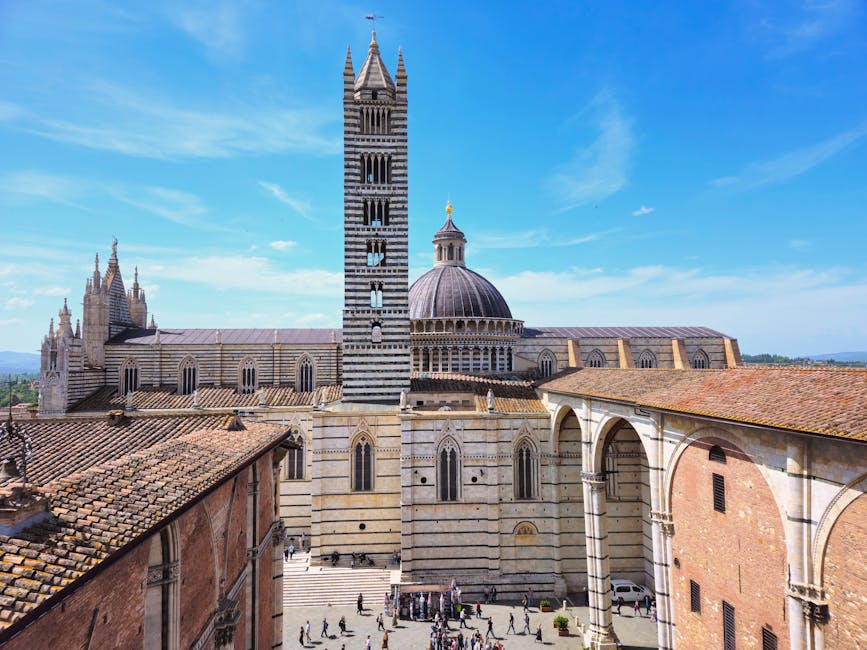
Another practical concern is crowd management. During the tourist season many slabs are covered with removable walkways to prevent erosion. Special openings, or controlled floor unveilings, are scheduled so visitors can admire select scenes — usually as paid, time-limited guided tours. These events are coordinated with conservators to minimize impact. Experts monitor them closely: moving a panel, even for display, carries mechanical and climatic risks.
Finally, scientific documentation is essential: surveys, UV photography, digital databases and specialist publications preserve a record of interventions. Major institutions sometimes partner with the Opera della Metropolitana di Siena (the body that manages the Duomo) on research projects, catalogs and international conferences, reinforcing the pavement’s role as a hub for study and conservation innovation.
Visiting the Pavement: Addresses, Prices, Hours and Practical Tips
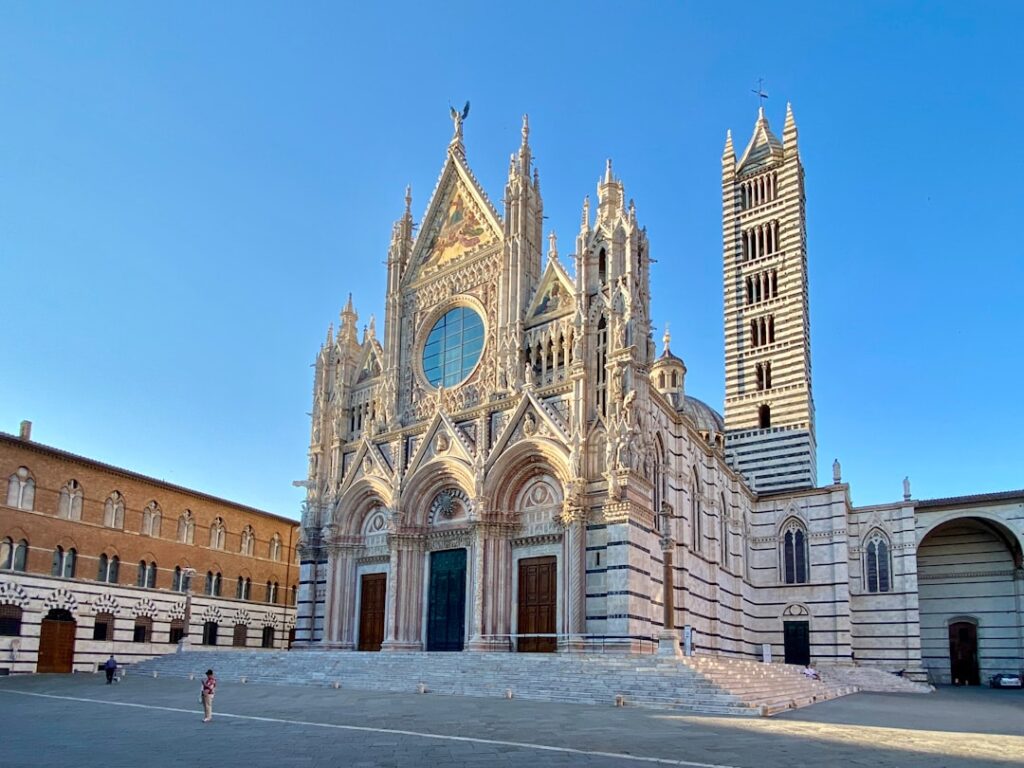
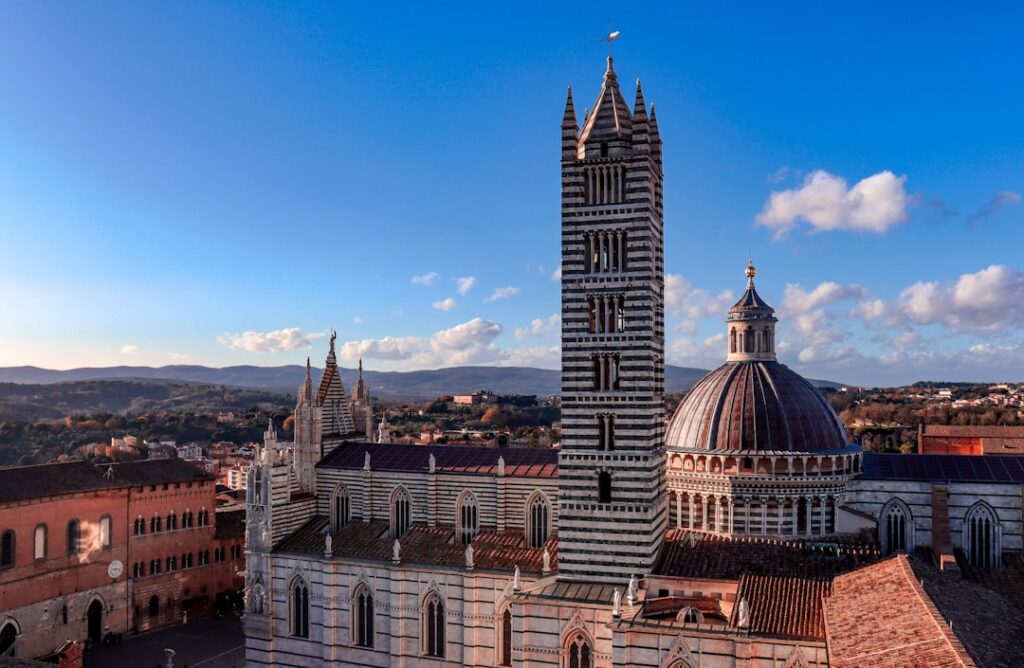
To see the pavement and plan a specialist visit, here are the essential practical details you should check before you travel. Main address of the Duomo: Cattedrale di Santa Maria Assunta, Piazza del Duomo, 8, 53100 Siena SI, Italy. Nearby sites that deepen your understanding of the pavement include the Museo dell’Opera Metropolitana and the Biblioteca Piccolomini.
Museo dell’Opera Metropolitana address: Museo dell’Opera Metropolitana, Via Duomo, 9, 53100 Siena SI, Italy — just steps from the Duomo. Biblioteca Piccolomini address: Biblioteca Piccolomini, inside the Cathedral, Piazza del Duomo, 8, 53100 Siena SI, Italy (the library is usually visited with the Duomo ticket or separately depending on the season). The Battistero di San Giovanni is also located in Piazza del Duomo and is often included in combined tickets.
Indicative prices (accurate at time of writing but subject to change — always check the Opera della Metropolitana di Siena’s official site): the combined « Duomo Pass » (which includes the Cathedral, the Baptistery, the Biblioteca Piccolomini, the Museo dell’Opera Metropolitana and the Facciatone terrace): roughly €15–€18 for adults. Single entry to the Cathedral: €6–€10. Museo dell’Opera Metropolitana: €6–€8. Biblioteca Piccolomini: €3–€5 if sold separately. Reduced fares for students, seniors and groups; free access possible for certain ages or roles. The special pavement openings that let you get close to the floor are often part of paid guided tours (€10–€15 extra depending on the operator).
Typical opening hours: the Cathedral generally opens in the morning and closes in the late afternoon, with seasonal variations and closures for religious services. Winter period (November–March): often 10:30–17:00; tourist season (April–October): 10:00–19:00. Museo dell’Opera Metropolitana: 10:00–18:00 (with last admissions in the late afternoon). Biblioteca Piccolomini follows group-related visiting schedules. Note: hours change frequently during religious festivals and local events (Palio di Siena, patronal feasts), so check the official site or Duomo ticket office the day before your visit.
Local practical tips: book tickets in advance, especially in high season (May–September). For researchers and conservators, request contact with the Opera della Metropolitana (often possible via the Museo dell’Opera) to arrange archive consultations or technical visits outside public hours. Wear comfortable, non-abrasive shoes — some areas are strictly controlled to prevent damage. If you want to take part in a pavement opening, find the exact dates in advance (they are announced ahead of time) and arrive early: groups are limited. Finally, follow staff instructions and avoid using flash near fragile panels. These precautions not only improve your visit but also help safeguard this collective treasure.
 Click here to book entry to Siena Cathedral and Piccolomini Library
Click here to book a skip-the-line Duomo walking tour
Click here to book exclusive morning Duomo visit with Clavigero
Conclusion: Why Experts Keep Coming Back to Siena
The pavement of the Duomo in Siena is not merely a decorative floor; it’s a documentary corpus in marble, a succession of artistic, social and technological layers that both fascinates and educates. Specialists return time and again because every survey, scientific examination and conservation intervention reveals new clues: a forgotten workshop gesture, a marginal inscription, a polishing technique that betrays a regional school, or the overlay of past restorations that tells its own story about how sacred art was received. The pavement thus stands at the intersection of art history, materials science, conservation practice and theological inquiry.
Practically speaking, the city of Siena and the Opera della Metropolitana have organized access and conservation in ways that balance public visitation with specialist research. Guided tours, special openings and available documentation make it possible to deepen understanding without compromising the monument’s integrity. For the scholar, it’s a living field site where long-term thinking is nourished by concrete observations and technical analyses. For the curious traveler, it’s an invitation to immerse yourself in an art of detail where even the floors tell multiple stories.
Beyond knowledge, the pavement is a sensory and emotional experience: when you lift your gaze from sculptures and vaults and then drop your eyes to the floor, you sense the unity of a sacred place in which every element — including the flooring — contributes to the visual liturgy. It’s this density of meaning, coupled with real conservation and interpretive challenges, that makes the Duomo of Siena’s pavement a true magnet for experts worldwide. If you’re passionate about history, art or conservation, plan your visit carefully: take time to read, listen to guides and, if possible, attend a pavement opening to feel the weight of time inscribed in the stone.