





Introduction
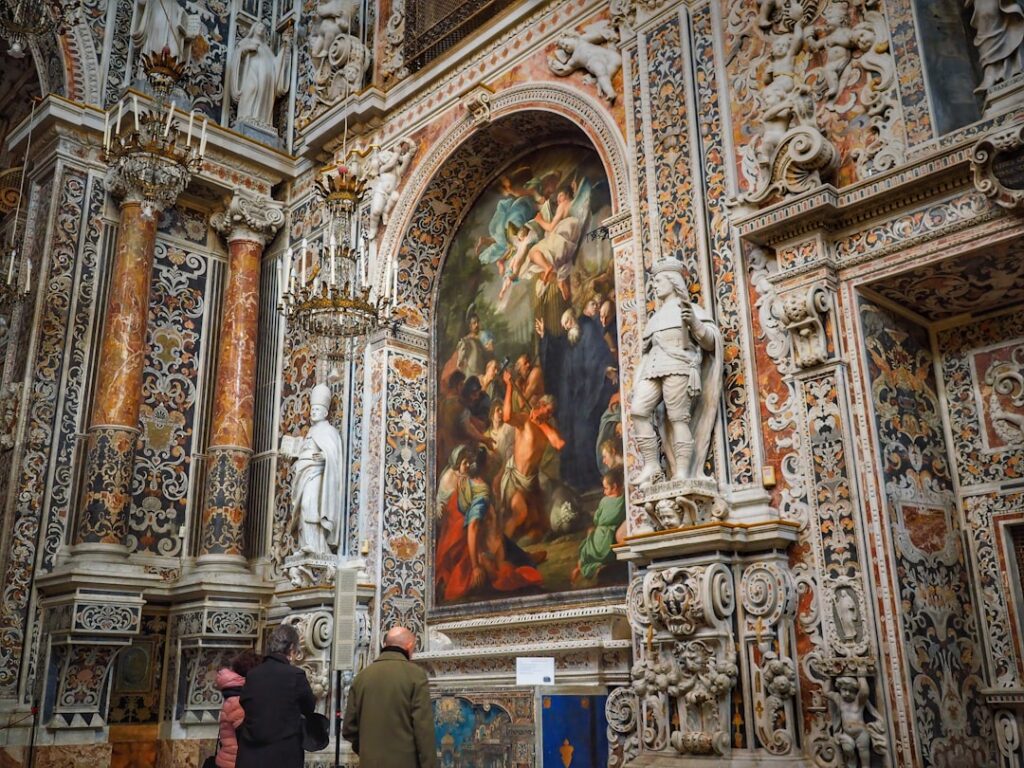
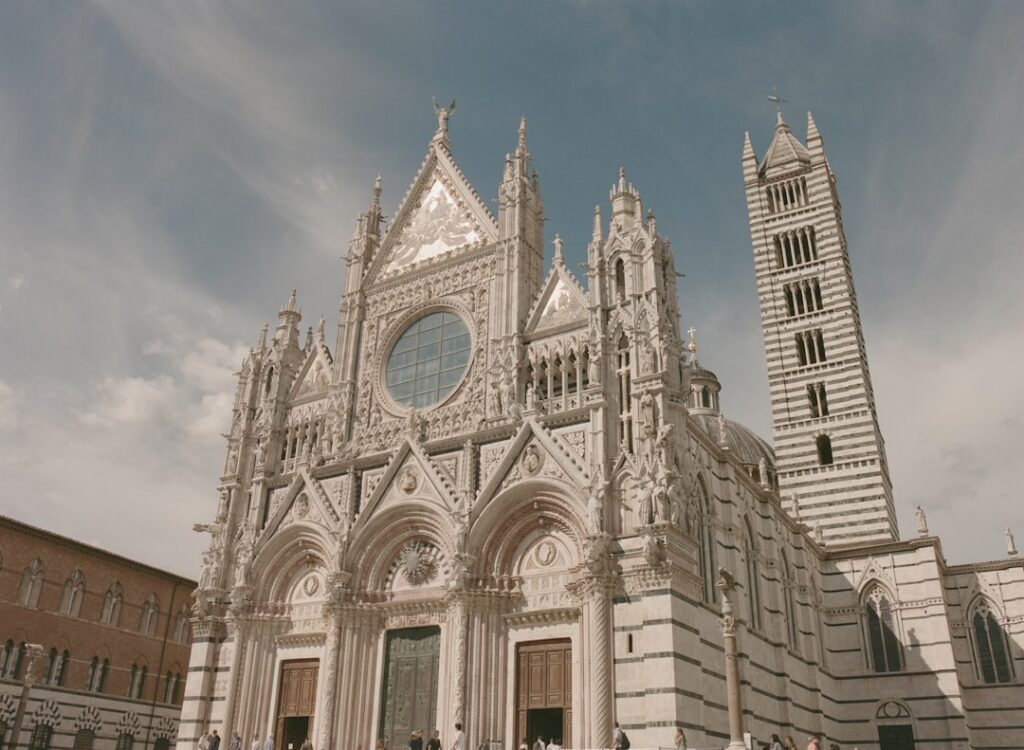
Siena, with its fan-shaped Piazza del Campo and its striking black-and-white Gothic cathedral, is one of Tuscany’s best-preserved medieval treasures. At the heart of the city, the Museo dell’Opera del Duomo di Siena is a jewel box that preserves and tells the material and spiritual history of a community that made public devotion and liturgy central to its identity. Liturgical art here appears as precious objects—reliquaries, embroidered chasubles, chalices, illuminated manuscripts, statues and altarpieces—that reveal the ongoing conversation between faith, artistic excellence and civic life over the centuries.
This museum, located at Piazza Duomo, 8, 53100 Siena SI, Italy, offers visitors not just a chronological overview of sacred art but a sensory dive into texture, color and symbolism. Many of the works on display come from the Duomo di Siena (Cathedral of Santa Maria Assunta) and the numerous ecclesiastical institutions that commissioned high-quality metalwork, textiles and sculpture over time. The Museo dell’Opera’s exhibition design emphasizes the liturgical function of each item: display cases highlight fine embroidery, the patina of chased silver, and the craftsmanship of polychrome panels, while labels place every object within its religious and civic usage.
Visiting this space is like stepping into a kind of « laboratory » of rites: processions, solemn services, private and public prayer, and civic ceremonies are all readable here. Attention to detail—the heavy scent of incense during Masses, the way light filters through Gothic stained glass and plays on gilded metals—is echoed in how these treasures are conserved and shown. Beyond their beauty, Siena’s liturgical objects help you understand how an item can act as an interface between the secular and the sacred, between spiritual authority and civic power.
This guide-article offers a detailed, practical immersion into the liturgical world of the Museo dell’Opera del Duomo di Siena: must-see masterpieces, sensible routes through the museum, tips for photographing without disturbing, practical info on prices, opening hours and services, and suggestions for extending your visit into the cathedral itself and the medieval streets of Siena. Whether you’re a fan of religious art, an art history student, a curious traveler or a pilgrim seeking spiritual resonance, you’ll find keys here to appreciate the richness and subtleties of the museum’s liturgical holdings.
 Click here to book your ticket for the cathedral and the library
The Museo dell’Opera del Duomo di Siena: overview and suggested route
The Museo dell’Opera del Duomo di Siena is housed in historic spaces adjacent to the Duomo di Siena, which makes combining visits to the whole monumental complex very easy. The official address is Piazza Duomo, 8, 53100 Siena SI, Italy. Entrance is usually through the Duomo perimeter, and combined tickets are often available to access the cathedral, the baptistery, the museum complex and the Museo dell’Opera. At the welcome desk you’ll find informational material in several languages, and paid audio guides are typically available.
The museum route is organized both chronologically and thematically. Many visitors begin in the medieval section, where masterpieces of metalwork and sculpture from the 12th to the 14th centuries are displayed. These pieces reflect religious and civic commissions of the time: reliquaries meant to house fragments of saints, chalices used during solemn Mass, and processional statues displayed during religious festivals. The quality of the finishing speaks to how much the Commune of Siena and the confraternities valued the splendor of worship.
From there, the route moves to painted panels and altarpieces from the Renaissance and Baroque periods, where you can trace shifts in pictorial language: compositions expand, perspective and naturalistic treatment reshape sacred scenes, and liturgical vestments grow more complex in texture and color. The museum also dedicates rooms to textile art: chasubles, dalmatics and embroidered textiles demonstrate the skill of local workshops and the trade networks that supplied silks and gold threads.
If you’re short on time, the museum offers « express routes » that highlight about ten key objects: outstanding reliquaries, an important group of panels by Matteo di Giovanni or Domenico Beccafumi, and notable pieces of goldsmithing from recognized workshops. Take a moment to read the labels that explain each object’s liturgical use: an item truly comes alive when you understand the service it was made for.
Click here to buy skip-the-line tickets for the Duomo
Highlights and must-see liturgical treasures
Among the most impressive works on display at the Museo dell’Opera del Duomo di Siena are several gold and silver reliquaries, processional crosses and chalices crafted by celebrated goldsmiths. Reliquaries—often topped with sculpted figures and set with semi-precious stones—should be seen not only as works of art but as essential components of popular and institutional devotion. Housing a relic could legitimize a church and attract pilgrims and offerings; in that sense, these objects became vectors of spiritual and economic power.
Another standout group consists of frescoes and altarpieces—especially works from the early Sienese Renaissance. You’ll find representations of the Virgin and Child, cycles of local saints and richly detailed gospel scenes. Altarpieces are often accompanied by inscriptions and carved elements that explain the patron, the intended liturgical context and theological symbolism. Visitors linger over finely rendered drapery, the color palette and the ways artists conveyed divine light.
Textiles are another major attraction: rare medieval chasubles embroidered in gold thread, Byzantine fabric fragments repurposed into liturgical panels, and later embroidered vestments showcase the trade routes and artistic influences that flowed through Siena. These fabrics reveal complex techniques—passementerie, raised embroidery and bead application—and they also teach the symbolism of liturgical colors: violet for penitential seasons, white for solemn feasts, red for martyrs—and how those colors mark the church calendar.
Don’t miss the illuminated manuscripts and liturgical chant books on display; these codices are invaluable witnesses to liturgical practice, with musical notation, rubrics and marginal paintings. Medieval scores reveal the richness of Siena’s sung repertoire and the central role of chant in worship.
Practical information: prices, opening hours, reservations and visitor tips
To plan your visit to the Museo dell’Opera del Duomo di Siena, here are the essentials. Address: Piazza Duomo, 8, 53100 Siena SI, Italy. Indicative opening hours (subject to seasonal changes or religious events): open daily from 10:00 to 19:00, last entry at 18:30. It’s strongly recommended to check opening times on the day you plan to visit via the official website or by contacting the welcome desk, since liturgical celebrations or cultural events can affect access.
Typical ticket prices (indicative and subject to change): standard ticket €15.00 for access to the Museo dell’Opera del Duomo (often offered as a combined ticket with the cathedral). Reduced fare €8.00 for young adults (usually EU citizens aged 18–25), and free admission for under-18s. There are sometimes family or group rates, and individual tickets for each section of the Duomo complex. Audio guides are generally available for about €4–6.
Reservations: during high season (April–October and holiday periods), it’s advisable to buy tickets online in advance to avoid queues, particularly if you plan to visit the cathedral and the Piccolomini Library on the same day. Group visitors or those with special requirements (licensed guides, school visits) should notify the museum ahead of time. Combined tickets sometimes include a timed entry for the cathedral; respect the times shown on your voucher.
Accessibility and services: the museum offers elevators and facilities for visitors with reduced mobility, but certain areas of the complex may remain challenging to access due to historic architecture. There are restrooms, a museum shop and an information point at reception. Photography: taking pictures is generally allowed without flash, but check for restrictions in fragile rooms or with delicate objects. Keep noise to a minimum and avoid touching the exhibits.
Local tips: dress respectfully (shoulders covered and modest clothing) if you plan to visit the Duomo and active chapels. Wear comfortable shoes—the cobbles of Siena can be slippery. In summer, visit early in the morning or late afternoon to avoid heat and crowds. For lunch, favor small trattorias around Via Duomo or a terrace café on Piazza del Campo; try local specialties like pici with ragù or panforte.
Click here to reserve the OPA SI pass for the cathedral complex
Click here to book a tour with Duomo entry and panoramic views
Historical and ritual contexts: understanding how liturgical objects were used
To fully appreciate the liturgical art at the Museo dell’Opera del Duomo, it helps to place objects within their historical and ritual contexts. Reliquaries, for instance, were often carried in annual processions or displayed during patronal feasts; showing a relic could express the city’s protection or commemorate a miracle. Religious confraternities, guilds and noble families commissioned objects to express piety and social status. In short, the production of liturgical art responded not only to religious needs but also to civic prestige.
Stylistic changes in objects also reflect theological and pastoral shifts. In the Middle Ages, emphasis was placed on symbolism and the transfiguration of the sacred: use of gold, enamel and precious stones aimed to evoke the glory of Paradise. During the Renaissance, there was greater attention to naturalism, expressive faces and narrative detail that instructed the faithful. In the 16th and 17th centuries, liturgical reforms (notably after the Council of Trent) pushed toward clearer forms and decorations geared to a more intelligible, disciplined liturgy.
Rituals themselves require specific objects: the Eucharist needs a chalice, paten and ambo; processions call for banners, crosses and portable statues. Liturgical fabrics are not merely decorative but mark the hierarchy of celebrations. Understanding these uses lets visitors read museum labels differently: a chalice is not just a precious vessel—it’s a sacred instrument that, at consecration, was believed to contain the eucharistic presence.
Finally, conservation raises its own questions, and the museum addresses preservation issues: why are certain textiles kept away from light? How are gilded metals stabilized? Informational panels discuss restoration methods and research campaigns, showing that every displayed object is also the product of ongoing scientific conservation.
Extend your visit: routes around the Duomo and recommended spots
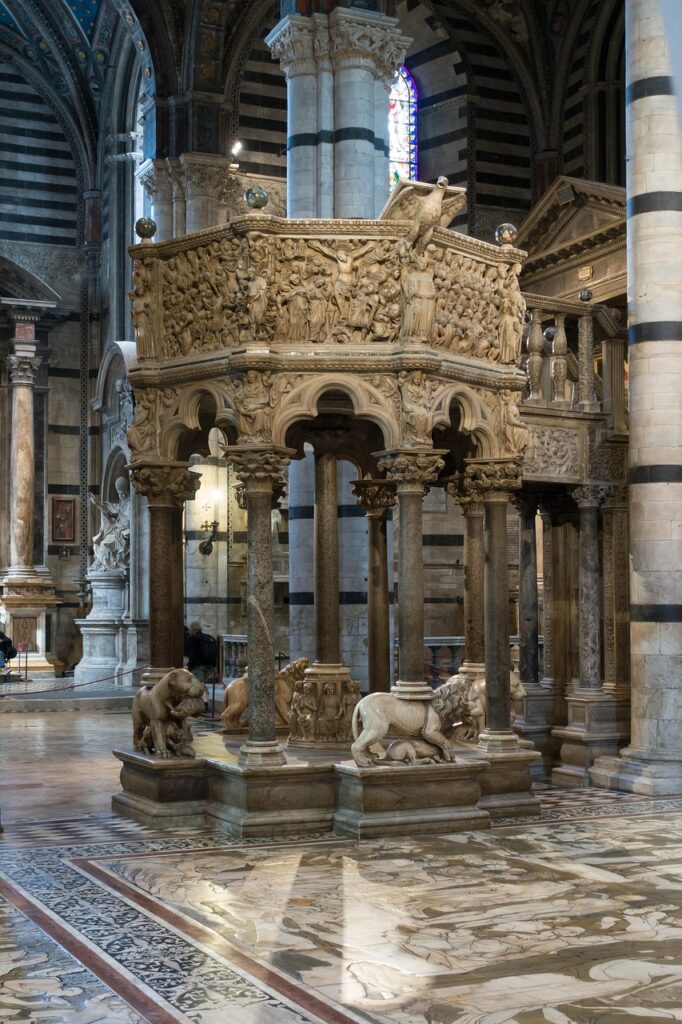
After immersing yourself in the Museo dell’Opera’s liturgical art, take time to explore the rest of the complex and nearby streets. Siena Cathedral (Duomo di Siena / Cattedrale di Santa Maria Assunta) is a Gothic masterpiece whose polychrome façade and marble interior provide an essential complementary experience. Cathedral address: Piazza Duomo, 8, 53100 Siena SI, Italy (same square as the museum). Nearby are the Battistero di San Giovanni (Baptistery) and the Libreria Piccolomini, renowned for its frescoes and manuscripts.
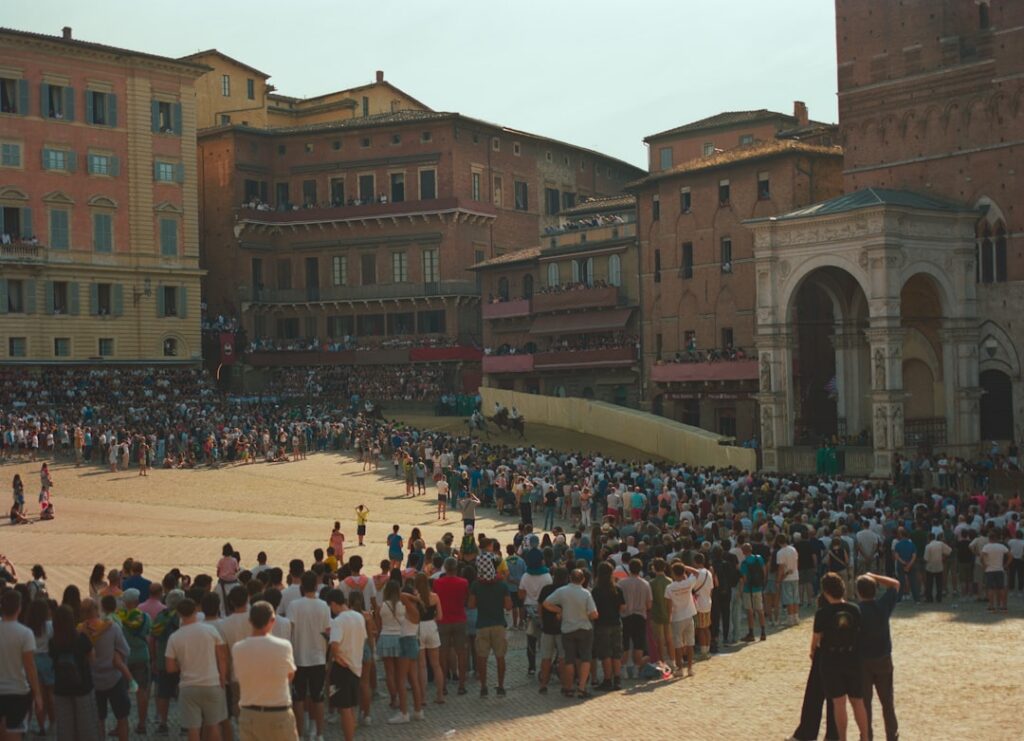
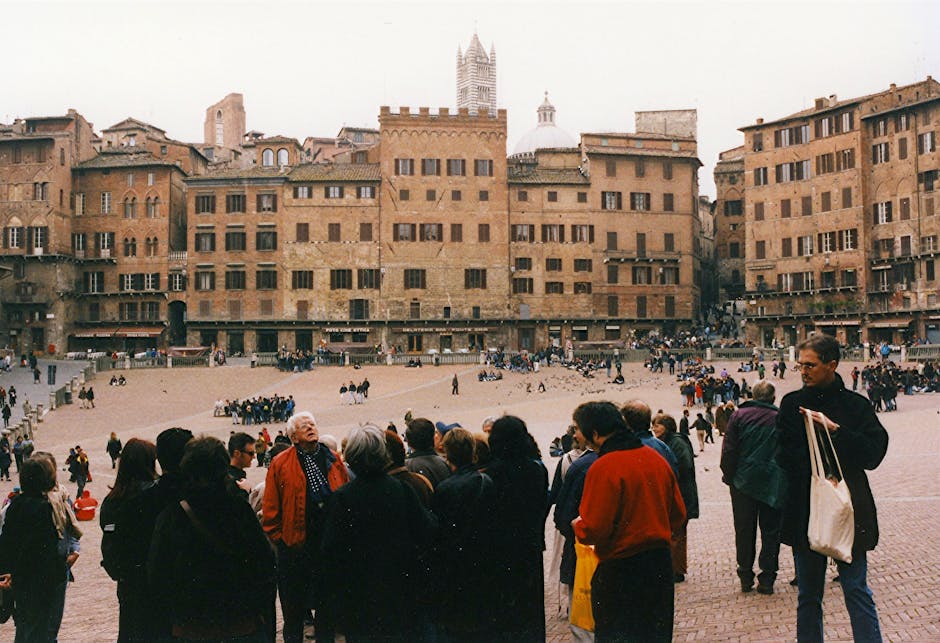
Suggested route: start at Piazza del Duomo and the cathedral, then head up to the Museo dell’Opera to deepen your understanding of the liturgical objects, and descend toward Piazza del Campo via Via di Città to soak in Siena’s medieval atmosphere. On Piazza del Campo, a stop at the Museo Civico (Palazzo Pubblico) lets you see the famous Maestà frescoes and enjoy the view from the Torre del Mangia.
Where to eat: for a traditional lunch try Trattoria Papei (Via Giovanni Dupre, 35) or Osteria Le Logge (Via del Porrione, 33) for refined Tuscan cooking. For a quick, authentic snack, look for shops selling panforte di Siena, ricciarelli and cantucci. For coffee or gelato, Piazza del Campo and its winding alleys offer plenty of charming options.
Practical tip: buy souvenirs in the museum shop if you want reproductions of manuscripts or scholarly publications. If you’re in town for a religious festival (for example the Assumption of Mary or a Contrada feast), expect colorful local celebrations, music and processions—perfect occasions to see liturgical objects in their original context.
Click here to book a guided walking tour of Siena and the Cathedral
Conclusion
The Museo dell’Opera del Duomo di Siena is far more than a repository of old objects: it offers a window into how a medieval city built its identity around the sacred. By closely observing reliquaries, chalices, textiles and manuscripts, visitors can reconstruct liturgical gestures, public celebrations and the aesthetic choices that shaped Siena for centuries. Every piece on display becomes tangible evidence of a ritual, a prayer or a community. The material beauty of these works is accompanied by a strong narrative thread, making the museum both a historical classroom and an aesthetic experience.
Practically speaking, the museum’s central location and its immediate proximity to the Duomo di Siena and Piazza del Campo make it easy to include in a half-day or full-day itinerary. Key practical info—address: Piazza Duomo, 8, 53100 Siena SI, Italy; indicative hours: open daily 10:00–19:00 (last entry 18:30); indicative prices: €15.00 full, €8.00 reduced—will help you plan. Be sure to check exact times and any closures due to liturgical events.
To get the most from your visit, take time to read labels, listen to an audio guide if possible, and study material details: stitching on embroidered garments, tooling on metalwork, wear on a carved stone. These physical traces reveal the passage of time and the central role these objects played in Siena’s religious and civic life. Whether your interest is artistic, historical or spiritual, a visit to the Museo dell’Opera del Duomo in Siena promises a rich and memorable experience in a city where art and faith have been in dialogue for centuries.