




Introduction — Siena for urban photographers
Siena is one of Italy’s best-preserved medieval cities and a real playground for urban photographers looking for texture, lines, light and historic atmosphere. Built across three hills and centered on the spectacular Piazza del Campo, Siena offers a rare visual density: cobbled alleys with age-worn arcades, ochre brick facades streaked with white travertine, steep stairways opening onto unexpected viewpoints and quiet squares where the light can shift dramatically with the weather and the hour. For the urban photographer, Siena is more than a collection of heritage objects; it’s a laboratory of human interactions, cast shadows and architecture forming long leading lines that beg to be framed.
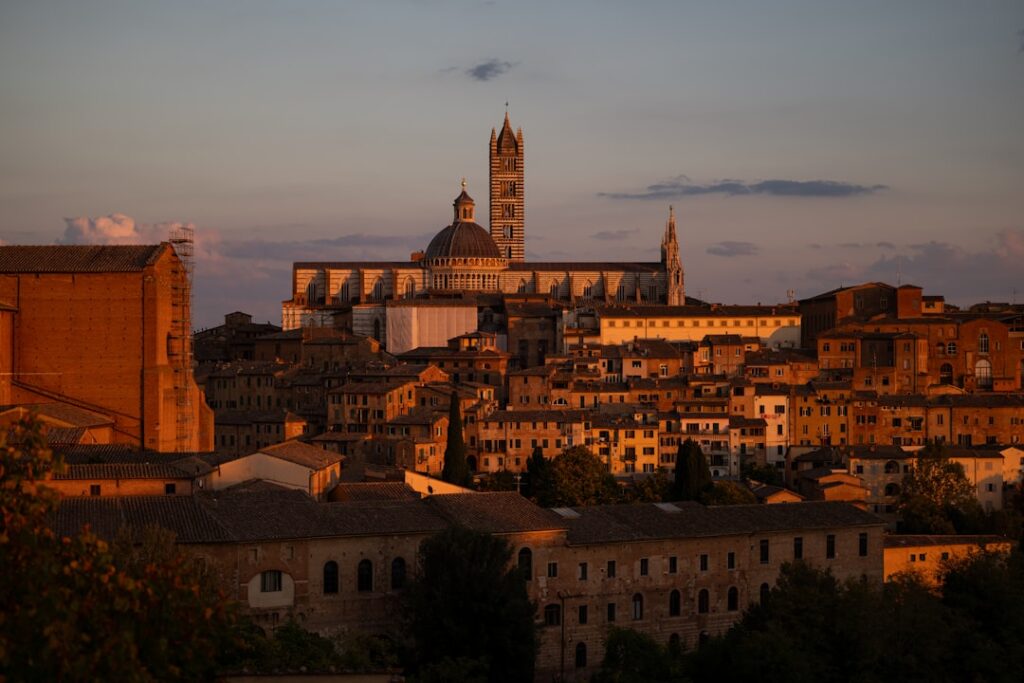
Choosing Siena for a photo series means working with a very specific color palette: ochre, brown, brick red, veined white marble and skies that swing from pale blue to warm gold at sunset. The unquestionable focal point is the Cathedral of Santa Maria Assunta (Duomo di Siena) with its striped façade and an interior richly decorated with mosaics and polychrome marble; a stone’s throw away, the museum and the dramatic Torre del Mangia overlooking the Piazza del Campo provide vertical and panoramic compositions you can’t ignore. But beyond the icons, it’s the details that will catch a photographer’s eye: the way light plays on worn steps, wrought-iron signs, cats lounging on windowsills, pop-up markets, and the colorful flags of the contrade (neighborhoods) that animate the city in preparation for the Palio.
This article is designed to guide the urban photographer step by step: which spots to visit, where to position yourself for the best light, which focal lengths to favor, how to respect local rules and monument opening hours, plus practical info (exact addresses, prices in euros, opening times) to prepare an efficient shooting day. Whether you’re planning a black-and-white series focused on Siena’s medieval geometry or a color portfolio highlighting textures and the city rituals around the Palio, you’ll find routes, gear tips and framing suggestions here. Finally, precise time cues will help you plan sessions for the best hours, from dawn to the golden night lights that make Siena’s stones look almost liquid.
Must-see icons: Duomo di Siena, Piazza del Campo and Torre del Mangia
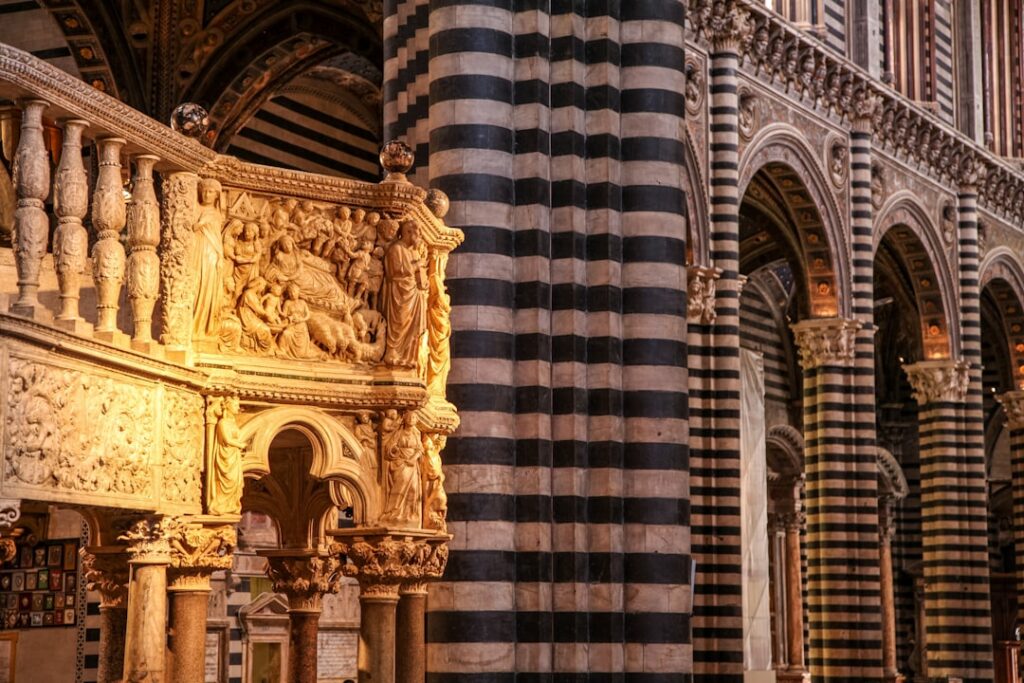
The Cattedrale di Santa Maria Assunta (Duomo di Siena) is the city’s Gothic jewel. Address: Piazza del Duomo, 8, 53100 Siena SI, Italy. The façade alternating bands of white and dark marble is a masterclass in contrast for photographers; inside, the mosaic floor and chapels offer details best captured with a medium telephoto or macro lens. Prices (indicative): combined ticket Duomo+Museo dell’Opera+Complesso Museale around 15–18 €. Usual opening hours: the Duomo is generally open from 10:00 to 19:00 (seasonal variations, sometimes closing earlier in low season). For tripod-free photos, favor the morning opening hours to benefit from side light and fewer people.
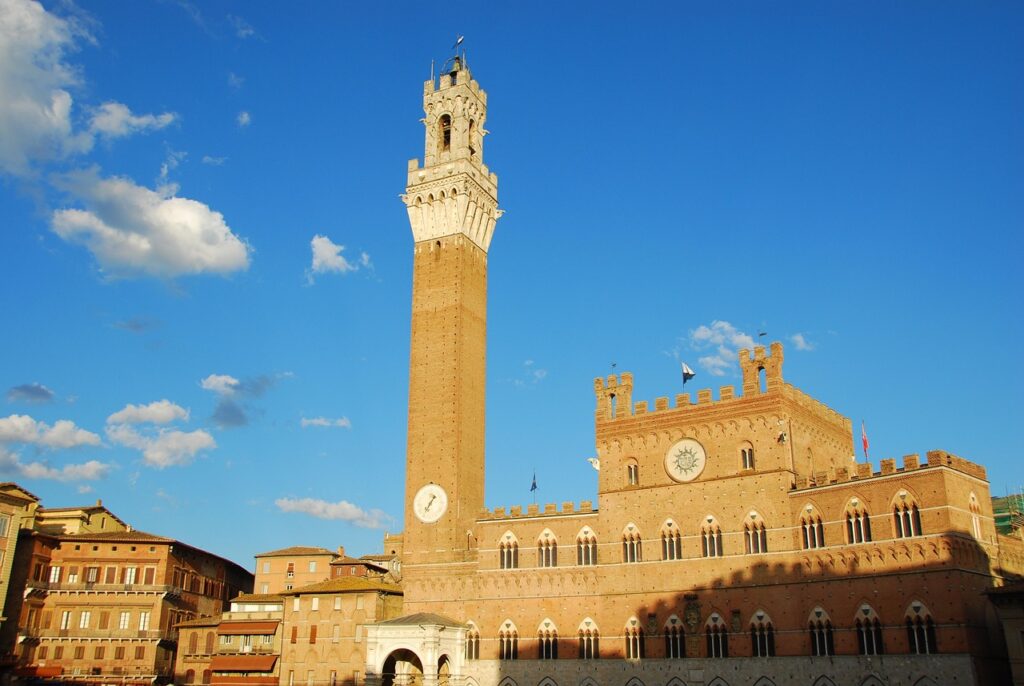
The Piazza del Campo (address: Piazza del Campo, 1, 53100 Siena SI) is a shell-shaped square, sunken toward the center, where streets and terraces converge. This is where the Palio di Siena takes place. The Palazzo Pubblico and its Museo Civico dominate the square; museum address: Piazza del Campo, 1, 53100 Siena SI. Museo Civico entrance: about 8–12 €. Typical hours: 9:00–19:00, varying by season. From the square, mid-range focal lengths (24–70 mm) will capture crowds, perspectives and architectural detail; in the evening, the lighting creates striking contrasts for street photography.
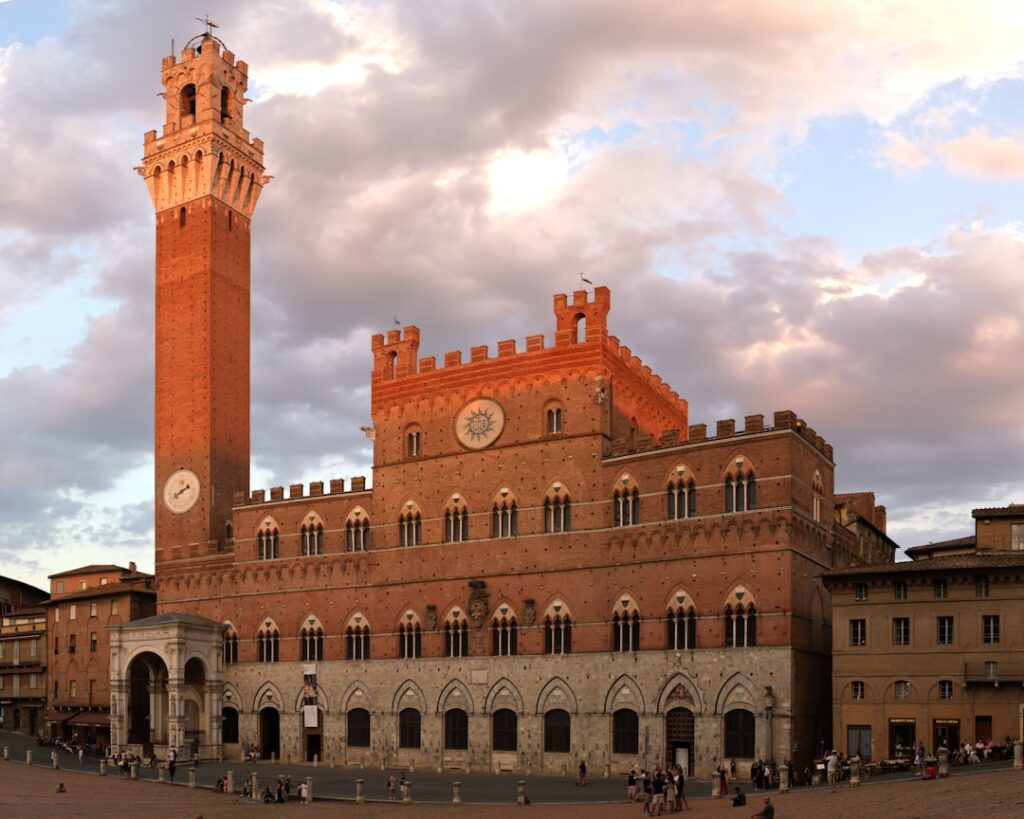
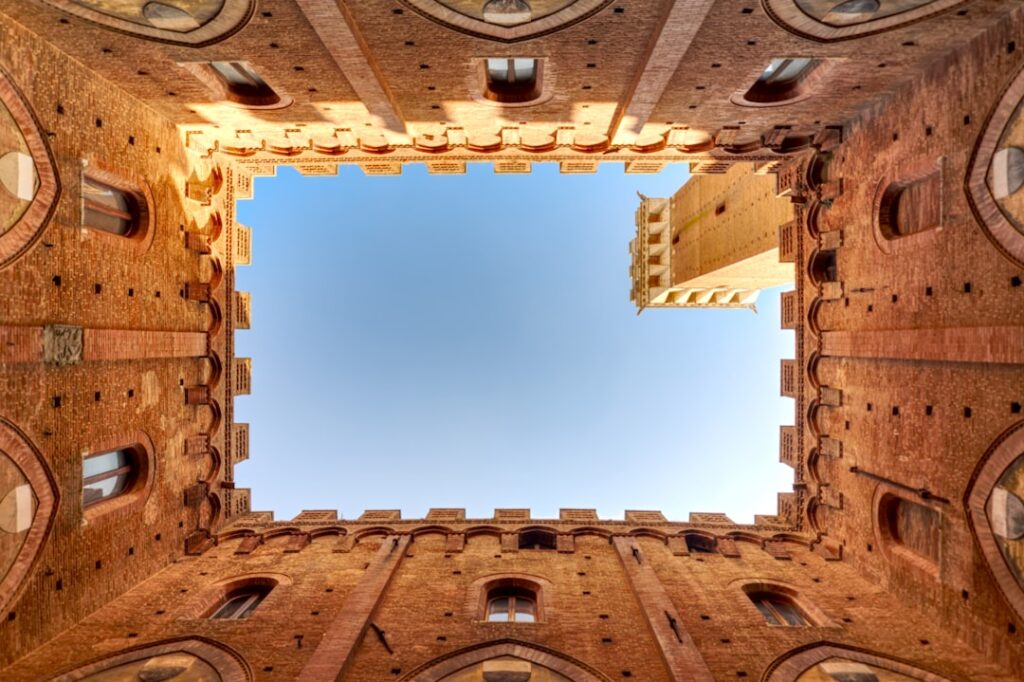
For an overview of the town, nothing beats the Torre del Mangia (address: Piazza del Campo, 1, 53100 Siena SI). Climbing the narrow stairs leads to a 360° panorama of red-tiled roofs and the Tuscan hills. Ascent fee: about 10 € per person; hours: generally 10:00–18:30 (check for closures due to weather). Clear mornings and late-afternoon golden hours are ideal; a wide-angle or 16–35 mm zoom will give you the sense of depth needed for expansive shots.
 Click here to book your entry ticket for Siena Cathedral
Click here to book a Siena city tour including Duomo entry
Detailed photo routes: alleys, viewpoints and market scenes
Start your photo route early: morning light enhances brick tones and helps avoid crowds. A suggested route: from the Duomo (Piazza del Duomo, 8) head down via Banchi di Sopra toward Piazza Salimbeni (address: Piazza Salimbeni, 53100 Siena SI), then follow Via di Città to Piazza del Mercato and finally arrive at the Piazza del Campo. These streets showcase old shop signs, uneven sidewalks and arches that sculpt shadows. For compositions, look for leading lines, natural frames (doors and windows), and use reflections in shop windows to add a narrative layer.
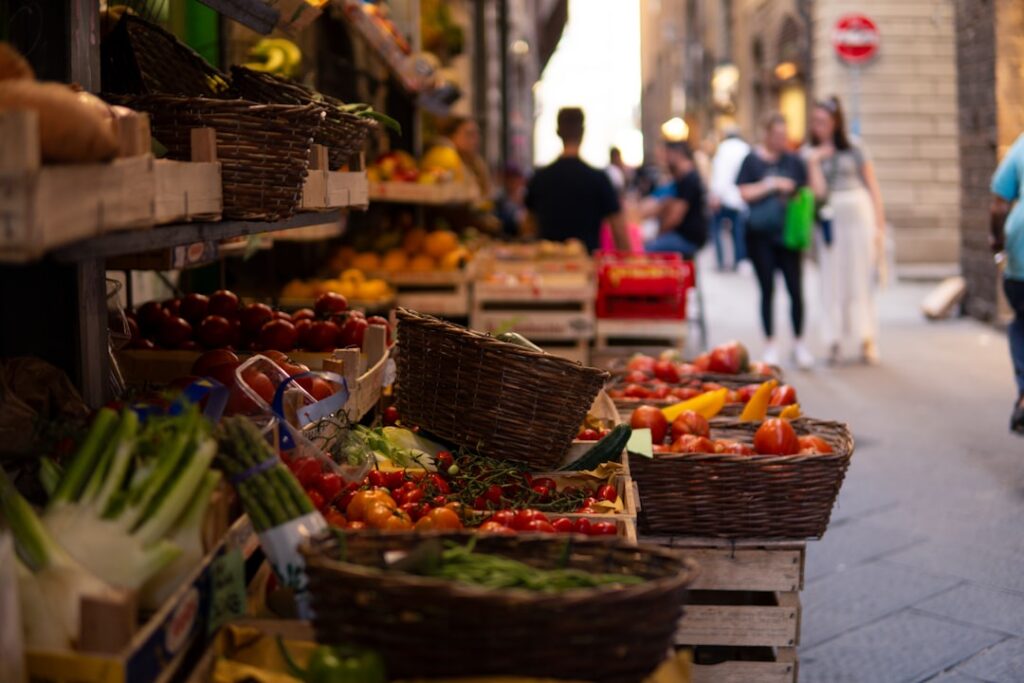
The market at Piazza Carlo Alberto (address: Piazza Carlo Alberto, 53100 Siena SI) and the small stalls of the Contrada della Torre are perfect for micro-documentaries of daily life. Morning markets are rich in texture — cheeses, cured meats, baskets of herbs — and work well with a 50 mm for environmental portraits or an 85 mm to isolate faces and expressions. Practical tips: ask permission for tight portraits, offer a smile, and avoid direct flash which can startle your subjects.
Click here to taste wines in Siena’s historic centre
Click here to sample wine and charcuterie in downtown Siena
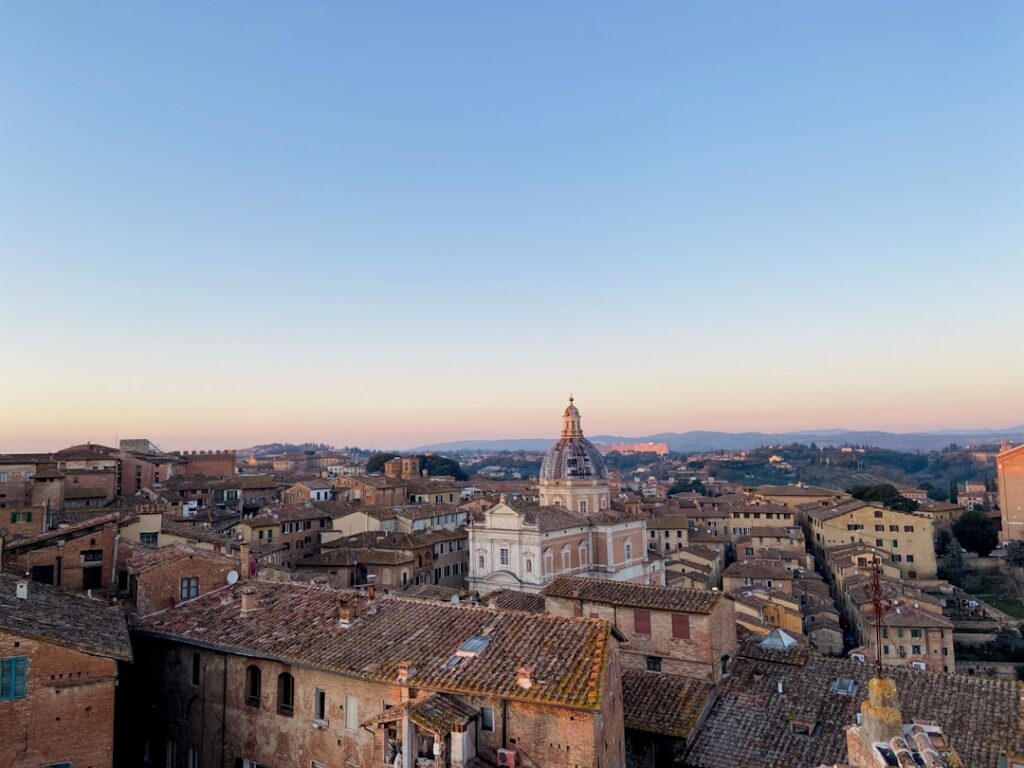
For lesser-known high viewpoints, look for overlooks on Via dei Montanini and the Loggia della Mercanzia. These spots offer layers of roofs and chimneys to compose in thirds and create depth. Late afternoon light streams down narrow streets at an oblique angle — a perfect time to capture wall texture and silhouettes of passersby. Logistics reminder: some streets are pedestrian-only or have restricted vehicle access; bring spare batteries and an offline map to avoid unnecessary breaks.
Secondary monuments and museums useful for composition
The Museo dell’Opera del Duomo (address: Piazza del Duomo, 9, 53100 Siena SI) houses sculptures, bas-reliefs and original medieval works from the cathedral. Price: often included in the Duomo combined ticket, otherwise around 10–15 €. Hours: generally 10:00–18:00. Photography: interior lighting is controlled, ideal for working on color rendition and material textures.
The Santa Maria della Scala (address: Piazza del Duomo, 2, 53100 Siena SI) is a former hospital converted into a museum space, with frescoes, courtyards and roofs that may be accessible during temporary exhibitions. Ticket: variable, often 8–12 €. Hours: typically 10:00–19:00. Courtyards are perfect for symmetry shots and working with shallow depth of field.
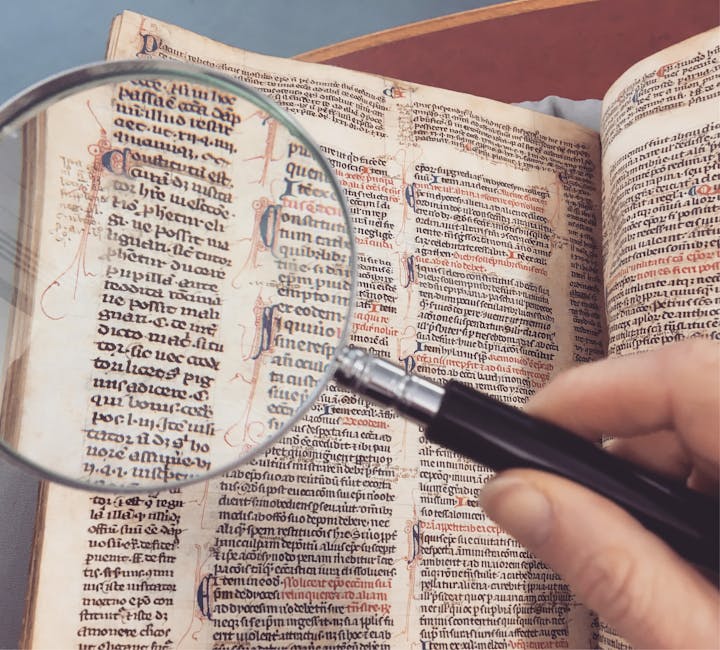
Don’t miss the Biblioteca Comunale degli Intronati and the Biblioteca Piccolomini (inside the Duomo), rich with illuminated manuscripts and frescoes — great for shots that highlight historical detail. Biblioteca Piccolomini address: Piazza del Duomo, 6, 53100 Siena SI. Interior lighting is often dim; favor higher ISO settings with bodies that perform well in low light or ask about special permissions for professional equipment.
Click here to book your entry ticket for Siena Cathedral
Technical and practical tips on the ground
Recommended gear: a full-frame body for handling highlights on facades and deep shadows, a wide-angle lens (16–35 mm) for panoramas and squares, a standard zoom 24–70 mm for versatility, and an 85–135 mm for portraits and architectural details. A lightweight tripod can be useful for night shots and interiors, but note that some museums prohibit tripods without permission. Bring multiple memory cards and spare batteries — light-driven shooting sessions can run long.
Timing and weather: the best light arrives early morning (6:00–9:00) and late afternoon (17:00–20:00 depending on season). Midday can be harsh for contrast but useful for isolating details and saturated colors. Winter brings dramatic skies and fewer tourists; summer gives clear skies but larger crowds. Check seasonal opening times for monuments (Duomo, Museo Civico, Torre del Mangia) since they vary; consider buying tickets online to skip queues.
Local respect: Siena is a living city with families and residents. Be discreet when photographing people, obey “no photography” signs in religious spaces and ask permission for close portraits. If you shoot during the Palio (a heavily regulated event), find out in advance about rules, restrictions and access fees for reserved contrada zones.
Night routes and compositions for artificial light
At night, Siena transforms. Streetlights and spotlights on monuments create warm color tones. The Piazza del Campo and the Duomo façade take on an almost charcoal texture with golden highlights: use a tripod, a remote release and long exposures (5–30 s) to capture car light trails and blurred crowds. Small lanterns in alleyways and shop windows create pockets of light ideal for portraits at 35 mm or 50 mm wide open.
For nocturnal architecture shots, compose in layers: dark foreground, illuminated central subject, blurred urban background. Mind your white balance — sodium lamps can cast an orange hue; favor a slightly cooler treatment in post to recover natural stone tones. Final tip: check the switching-on times for illuminations (often around sunset) to synchronize your sessions.
Logistics: transport, safety and recommended spots
Siena is mainly explored on foot: narrow streets and the historic zone (ZTL) restrict car access. The main train station address is: Stazione di Siena, Piazza Vittorio Emanuele II, 53100 Siena SI. From the station, a bus or a 20–30 minute walk brings you to the historic center. If you rent a car, park on the outskirts (perimeter parking lots) — recommended parking: Parcheggio Il Campo (via Montanini) and Parcheggio Santa Caterina.
Safety: Siena is generally safe; however, keep your gear close in tourist areas and at night. Restaurateurs and locals are usually welcoming — don’t hesitate to pop into a café to photograph an interior or ask permission for a portrait. Staying centrally will save time between morning and sunset sessions.
Click here to book a day trip to Siena from Florence
Click here to book a day trip to Siena from Florence
Conclusion — Building a unique urban portfolio in Siena
Siena gives the urban photographer a rare mix of monumental heritage and everyday details that tell a living story. From the majesty of the Duomo di Santa Maria Assunta (Piazza del Duomo, 8) to the sweeping scene of the Piazza del Campo (Piazza del Campo, 1), every street corner becomes a compositional opportunity. By planning your sessions around the light, respecting opening hours and site rules (indicative fees: Duomo/Opera 15–18 €, Torre del Mangia around 10 €, Museo Civico 8–12 €), and choosing appropriate focal lengths, you can capture wide-angle images, environmental portraits and textured details that together form a coherent, evocative portfolio.
Favor careful observation: the best images often come from quiet moments — a ray of light on an old door, a lively market conversation or a contrada flag snapping in the wind. Remember to respect local life, buy tickets in advance when needed and take care of your gear. Finally, give yourself time: Siena reveals itself at a leisurely pace, and its visual secrets are rewarded to those who walk its streets with patience and curiosity. Enjoy your photographic journey and happy shooting!