






Introduction
Siena, a medieval gem in Tuscany, is best explored on foot. Leaving the car behind on this route is an advantage: cobbled alleys, stairways, charming squares and viewpoints reveal themselves slowly, step by step. This article lays out a complete, doable one-day itinerary without a car, starting from the train station or another central meeting point. The goal is to see the essentials — the Duomo di Siena (Cattedrale di Santa Maria Assunta), the Piazza del Campo, the Palazzo Pubblico and the Torre del Mangia — while taking time to notice the details: marble façades, frescoes, the mosaic pavement, flower-filled terraces and local artisans.
This guide includes exact addresses, typical opening hours, indicative prices in euros, immersive descriptions of the sites and practical tips to organize a stress-free day. You’ll also find recommendations for eating and drinking, alternatives in case a site is closed, and tips to avoid the crowds — very useful during high season or the Palio di Siena (the traditional horse races). The route is designed to be accessible by public transport: Siena station (Stazione di Siena) is a short walk from the historic center, and many regional buses stop near the city walls.
Siena isn’t just a string of monuments; it’s an atmosphere: the warm air on the Piazza del Campo at first light, the Duomo bells ringing, stained glass piercing the dim interior, the aromas of coffee and Tuscan wine, and lively chatter on terraces. This guide helps you plan your day so you can enjoy all of that without rushing, giving precise temporal and geographic reference points. Practical tips cover clothing, safety, payment and logistics (public toilets, luggage storage, etc.). Read this itinerary before you leave to optimize your movements and leave time to wander — because one of the best ways to discover Siena is simply to let a side street surprise you.
 Click here to Book a guided walking tour of Siena
Before You Go: Practical Info and Preparation
A few checks and preparations before you arrive in Siena will make your day a lot easier. First, know your starting point: if you arrive by train, you’ll come to Stazione di Siena (approximate address: Piazza Montanini / Piazza Gramsci, often listed as Piazza della Stazione, 53100 Siena SI). The historic center is about a 15–25 minute walk (depending on route and pace). If you arrive by bus from Florence, Pisa or other towns, get off at Piazza Gramsci or near the walls and follow signs for « Centro » or « Duomo. »
Second, pack appropriately: comfortable walking shoes with non-slip soles (the cobbles and steps are worn and can be slippery), a reusable water bottle (Siena has drinkable fountains, notably near the Duomo and at several points around town), a light jacket (even summer evenings can be cool) and some small change (coins for public toilets or a quick coffee). Bring a paper map or download an offline map (Maps.me, Google Maps offline) to avoid connectivity issues in narrow streets.
Hours and tickets: for the Duomo di Siena and the Museo dell’Opera del Duomo (several monuments within the complex), opening times vary by season; generally they open between 10:00 and 11:00 and close between 17:00 and 19:00. Indicative price: Duomo Complex combined ticket (Cattedrale, Battistero di San Giovanni, Museo dell’Opera or Museo dell’Opera Metropolitana, and the Libreria Piccolomini) around €15–18 per adult. For the Torre del Mangia (Piazza del Campo, Torre del Mangia, 53100 Siena SI): ticket about €8–10 for the climb (reduced rates for students/children). Palazzo Pubblico and Museo Civico (Piazza del Campo, 1, 53100 Siena SI): entry around €8–12. History and prices can change — it’s recommended to buy tickets online in advance to avoid queues and secure access, especially in high season.
Practical services: luggage storage is available near the station or at some accommodations; check the day before. Public toilets (sometimes pay toilets) are located around the Piazza del Campo and near the station; some charge approximately €1. Many cafés accept cards, but carry some cash for small purchases. Finally, respect mass times and silence rules in places of worship; to visit the Duomo and chapels, modest dress (shoulders and knees covered) is often required.
Click here to book a day trip to Siena and San Gimignano
Morning: Discover the Duomo di Siena and the Religious Complex
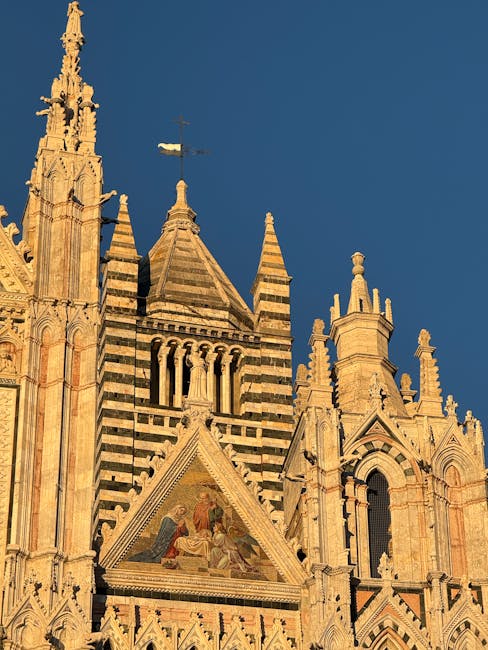
Start your day with the city’s religious jewel: the Duomo di Siena, officially named Cattedrale di Santa Maria Assunta. Address: Piazza del Duomo, 8, 53100 Siena SI. This Gothic marble church in white and green is famous for its carved façade, striped interior and the mosaic pavement crafted by Siena’s greatest artists. Arrive early, ideally at opening (check today’s times) to avoid the crowds and admire the morning light that brings out the marble’s colors.
Tickets and route: the Duomo Complex (Cattedrale, Museo dell’Opera del Duomo, Libreria Piccolomini, Battistero di San Giovanni, and the cathedral terrace) is often sold as a single combined ticket — indicative price: €15–18 per adult. The Libreria Piccolomini is a richly decorated library with Pinturicchio frescoes and is well worth the visit. The Battistero di San Giovanni (Baptistery), beneath the Duomo, houses baptismal fonts and ancient sculptures; entry is generally included in the ticket.
Immersive experience: take your time to study the Duomo pavement (Pavimento del Duomo), a set of finely carved marble panels. These fragile works are sometimes partially covered for protection, but when visible they depict biblical and allegorical scenes with astonishing finesse. Also try to reach the cathedral terrace or panoramic terrace if accessible (seasonal and weather dependent) for an unforgettable view over red-tiled roofs and the Tuscan hills.
Practical morning tips:
- Arrive at opening (often between 10:00 and 10:30) to avoid tour groups.
- Book tickets online if possible — school groups and guided tours can fill time slots quickly.
- Take an audio guide or a paper guide to understand the pavement panels and the works in the Libreria Piccolomini.
- Respect no-photo areas (the library may restrict photography).
Click here to book your ticket for Siena Cathedral
Noon: Piazza del Campo, Lunch and Local Vibes
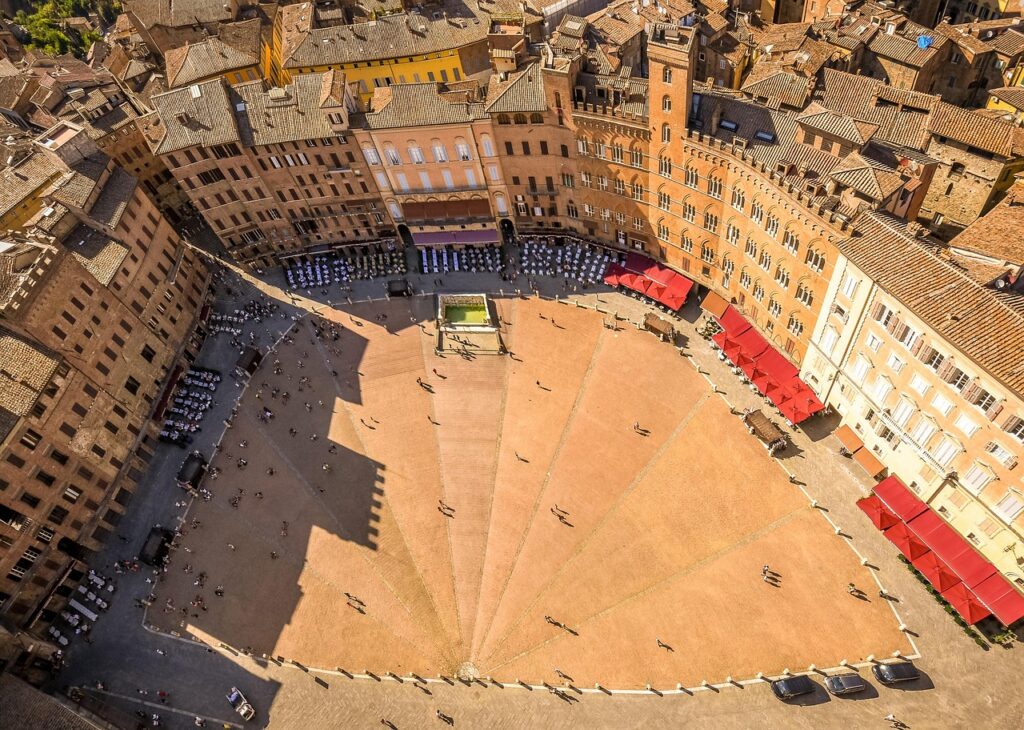
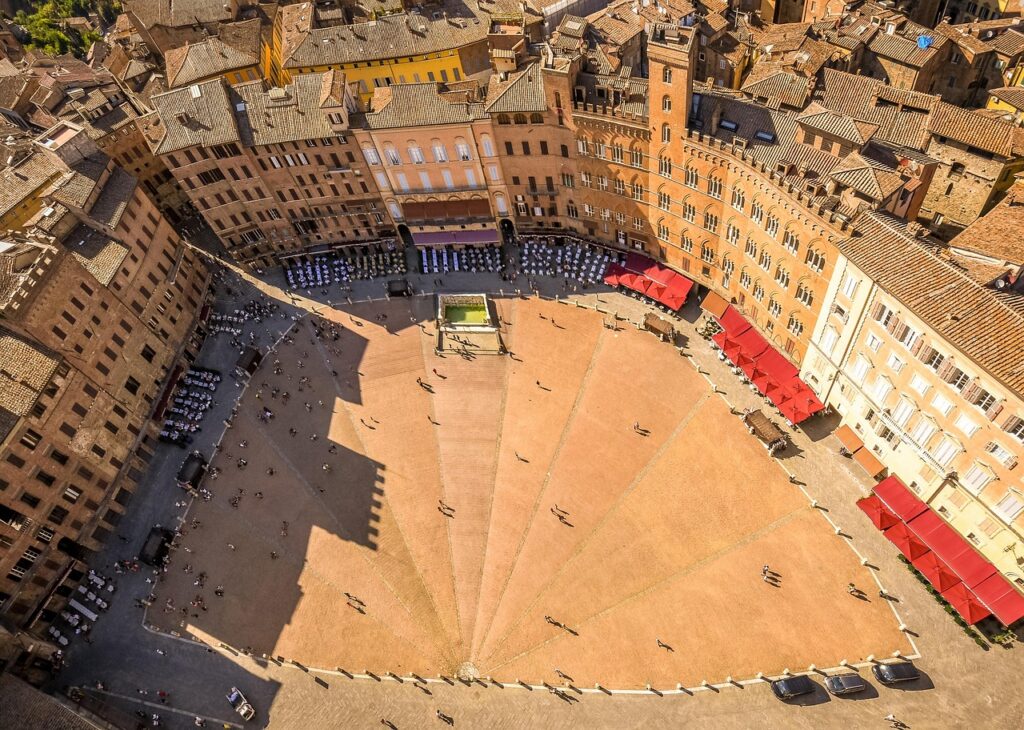
Next, head down to the Piazza del Campo, the civic and social heart of Siena. Address: Piazza del Campo, 53100 Siena SI. This fan-shaped square is lined with cafés and dominated by the Palazzo Pubblico and its tall Torre del Mangia. The atmosphere is lively all day: locals grabbing coffee, tourists snapping photos and the occasional street musician depending on the season.
Lunch: for an authentic Tuscan mid-day meal without a car, you’ve got several options around the square and in the nearby alleys:
- Traditional trattorie (fresh pasta, pici with wild boar ragù, ribollita): look for places with menus in Italian and local ingredients.
- Sandwich bars and panini shops for a quick, budget-friendly meal (€5–8).
- Osterie offering tastings of Tuscan cured meats and cheeses (approx. €12–20 per person depending on selection).
Prices: a cappuccino costs around €1.20–2.50 at the counter; a full lunch in a trattoria (starter, main, a glass of local wine) can range from €12–30 per person. Local tip: drinking at the bar is usually cheaper than sitting at a terrace table (restaurants may add a « coperto » or service charge).
Activities and landmarks:
- Visit the Palazzo Pubblico (Piazza del Campo, 1) and the Museo Civico to see the Maestà fresco and the Sala del Concistoro. Indicative price €8–12 and typical hours 10:00–19:00; check before you go.
- Climb the Torre del Mangia (entrance Piazza del Campo 1) for a spectacular view of the square and the Tuscan countryside. Be ready for narrow steps; visitor numbers are limited by time slot.
- If you’re in town for the Palio (July 2 and August 16), the square becomes the race track — organization and security change access, so check ahead.
Afternoon: Palazzo Pubblico, Torre del Mangia and Historic Lanes
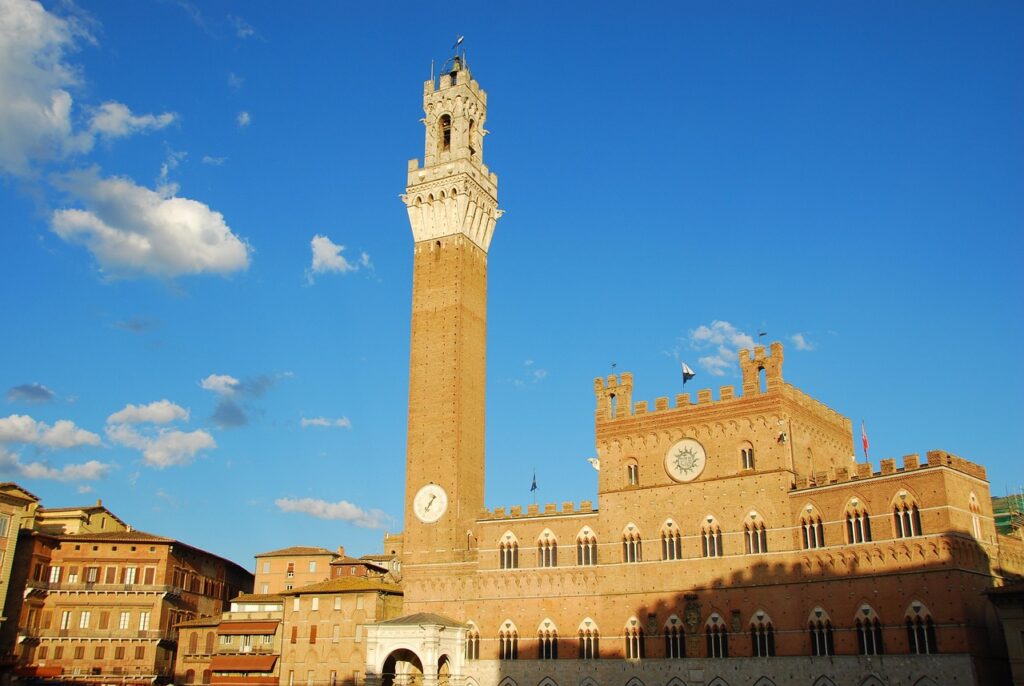
After lunch, spend time at the Palazzo Pubblico and the Torre del Mangia. The Palazzo Pubblico (Piazza del Campo, 1, 53100 Siena SI) houses the Museo Civico, where you can admire Simone Martini’s famous Maestà and scenes of civic life. This Gothic building, constructed between the 13th and 14th centuries, was built to host the institutions of the Sienese Republic and sits at the heart of the city’s history.
Museum and frescoes: visiting the Museo Civico helps you understand Siena’s political and artistic role in the Middle Ages. The richly frescoed halls are masterpieces of Sienese art and tell the story of local government, guilds and public ceremonies. Take time to study the Sala della Pace and the Sala del Mappamondo; explanatory panels are usually available in several languages.
Torre del Mangia: access point — Piazza del Campo, 1. Climbing the Torre del Mangia is a physical but rewarding experience: roughly 400 narrow, sometimes steep steps and no elevator. Indicative fee €8–10 (reduced rates for students and children). From the platform, the 360° view over the city and surrounding countryside is one of Tuscany’s finest — hills, vineyards and red roofs stretch as far as the eye can see.
Streets and craftsmanship: after the visit, intentionally lose yourself in the medieval lanes. Head for Via di Città and Via Banchi di Sopra to find craft shops, antiques and small deli shops selling olive oil, Chianti wines and cantucci (local biscotti). Look out for leather and ceramic workshops for authentic souvenirs.
Practical tips:
- If the Torre is full or closed, opt for the view from the Fortezza Medicea (Piazza del Mercato): a lovely panorama and a peaceful garden.
- Stay hydrated and take breaks — Siena has many benches and tiny squares to sit down.
- Narrow streets can become maze-like for children — set a meeting point (for example a statue or the Piazza del Campo).
Click here to book a city tour including Duomo entry
Evening: Sunset Views, Aperitivo and Car-Free Return
The end of the day in Siena is perfect for slowing down and savoring the Tuscan calm. For an aperitivo with a view, head to a terrace overlooking the city or walk just outside the walls for a sunset vantage point. Two recommended options: the Fortezza Medicea (Viale Vittorio Emanuele II, near Porta Camollia) which offers green space and sometimes concerts, or the Duomo Terrace (if accessible) for a close-up view of the rooftops and the cathedral.
Aperitivo and dinner: the Italian aperitivo tradition is alive in Siena. Order a glass of Vernaccia di San Gimignano if you want a local white wine, or a Chianti Classico to pair with cicchetti (small bites). For dinner, choose an osteria serving Tuscan dishes — reserve in high season. Restaurant hours usually start around 19:30–20:00. Budget ranges: an aperitivo €6–12; dinner €20–45 depending on wine and courses.
Car-free return: if you’re staying outside the center and need to catch a bus or train, be aware that night services may be limited. Allow 15–25 minutes on foot to return to the station from the historic center. If you have luggage, check shuttle or taxi availability (taxis are limited and can be found near the station or pre-booked). For a slower, scenic option, finish the evening with a walk along the old city walls and gardens.
Night safety and comfort tips:
- The central streets remain generally safe at night, but take usual precautions (keep your phone and wallet secure).
- If you’re traveling alone, always tell someone your plan; some neighborhoods outside the center can be quieter after 22:00.
- Check your accommodation’s check-in policy for late arrivals; many hotels accept late check-in by arrangement.
Click here to Reserve a sunset dinner among Chianti vines
Suggested Hour-by-Hour Itinerary and Variations
Here’s a detailed hour-by-hour plan to make the most of a car-free day in Siena. Times can be adjusted depending on season and attraction opening hours; tweak as needed.
Sample itinerary (on foot, 1 day):
- 08:30 — Arrive at Stazione di Siena / starting point. Quick coffee near the station.
- 09:00 — Walk to the Duomo (Piazza del Duomo, 8). Wander the lanes and take initial photos.
- 10:00 — Enter the Duomo di Siena and visit the Museo dell’Opera and Libreria Piccolomini (combined ticket €15–18).
- 12:30 — Head down to Piazza del Campo for lunch (trattoria or panini €8–20).
- 14:00 — Visit Palazzo Pubblico and Museo Civico (€8–12), then climb Torre del Mangia if available (€8–10).
- 16:00 — Stroll Via di Città for artisan shopping (olive oil, wine, leather).
- 17:30 — Coffee or gelato break, then walk toward the Ospedale di Santa Maria della Scala area (Via dell’Ospedale, 53100 Siena SI), which houses an interesting museum (entry approx. €10–12).
- 19:00 — Aperitivo on a terrace, or head up to the Fortezza Medicea for sunset.
- 20:30 — Dinner at a local osteria, then walk back to the station or your accommodation.
Useful variations:
- Traveling with children or people with reduced mobility: focus on Piazza del Campo and ground-floor museums; skip the Torre del Mangia and choose a restaurant close to the square.
- If you love religious art: extend your Duomo visit and check for special openings of the pavement and showcases.
- Short on time (half-day): see the Duomo exterior, grab a coffee at Piazza del Campo and take a short walk to Palazzo Pubblico.
Local Tips, Safety and Final Recommendations
A few final local tips, based on on-the-ground experience, will help you get the most out of your car-free day in Siena. First, respect the Italian pace: breaks matter. A quick coffee at the bar will recharge you. Second, opening hours can change because of holidays and religious services: check official sites before your visit (for example Opera della Metropolitana di Siena for the Duomo).
Money and payments: most places accept cards, but small shops and markets may prefer cash. Bring €20–50 in notes and coins for small expenses. For museum tickets, buying online is recommended; print or keep the confirmation on your phone.
Respect the heritage: Siena protects its historic centre. Follow the rules (don’t climb on monuments, don’t litter) and obey signs and museum staff. You can freely photograph most exteriors; inside, some rooms prohibit photos or require silence.
Accessibility: like many medieval towns, Siena presents challenges for visitors with reduced mobility — cobbles, steps and slopes. Contact tourist offices for accessible routes and adapted entrances. Major museums often have limited lifts or ramps.
Useful numbers and resources:
- Siena Tourist Office (IAT) — often located near the Duomo or on the Piazza del Campo — ask locally for the exact address depending on the season.
- Italy emergency number: 112 (police and emergency services).
- Opening times and reservations: check official museum sites (Opera della Metropolitana di Siena, Museo Civico Palazzo Pubblico, Ospedale di Santa Maria della Scala) for up-to-date information.
Conclusion
Visiting Siena in one day without a car is not only possible, it’s recommended if you want to fully soak up the city’s unique atmosphere. Walking lets you feel the textures — polished marble, worn stones, terracotta roofs — and gives you time to hear the stories carved into façades and alleys. This route balances iconic sights (Duomo di Siena, Piazza del Campo, Palazzo Pubblico, Torre del Mangia) with leisurely wandering that makes the visit memorable. Addresses, indicative prices and hours help with planning, while local tips preserve your comfort and safety.
Remember that Siena is a living place: markets, craftspeople, cafés and local traditions (like the Palio) shape the experience. Plan, but leave room for the unexpected — a tiny museum found down a lane, a delicatessen, or a chat with a local artisan. And above all, take time to pause: the view from the Torre del Mangia or the silhouette of the Duomo at sunset will be among your most treasured memories.
Have a great trip to Siena! Whether you come for art, history, food, or simply the beauty of its streets, a day on foot will give you a rich and lasting impression of this unforgettable Tuscan city.